




BY DEFENCE JOURNALIST SAHIL | T.I.N. NETWORK
भारत की स्वॉर्म ड्रोन क्रांति: ‘शेषनाग-150’ और ‘अभिमन्यु’ से बदलता युद्ध का भविष्य
मेहर बाबा प्रतियोगिता से शुरू हुई आत्मनिर्भर ड्रोन शक्ति की कहानी
भारत में स्वदेशी स्वॉर्म ड्रोन तकनीक की नींव वर्ष 2018 में भारतीय वायु सेना द्वारा शुरू की गई मेहर बाबा स्वॉर्म ड्रोन प्रतियोगिता से पड़ी थी। यह सिर्फ एक तकनीकी प्रतियोगिता नहीं थी, बल्कि देश को भविष्य के नेटवर्क-सेंट्रिक और स्वायत्त युद्ध के लिए तैयार करने की रणनीतिक पहल थी। तीन वर्षों की समयसीमा में इस प्रतियोगिता ने देश के निजी रक्षा स्टार्टअप्स को एक मजबूत प्लेटफॉर्म दिया। बेंगलुरु स्थित न्यूस्पेस रिसर्च एंड टेक्नोलॉजीज (NRT) ने “स्वॉर्म आर्किटेक्चर” का खिताब जीता, जबकि फ्लेयर अनमैन्ड सिस्टम्स ने “कम्युनिकेशन आर्किटेक्चर” और धाक्षा अनमैन्ड सिस्टम्स ने “ड्रोन आर्किटेक्चर” में बाज़ी मारी। इसी के साथ भारत ने ड्रोन टेक्नोलॉजी में आयात पर निर्भरता कम कर आत्मनिर्भरता की दिशा में बड़ा कदम बढ़ाया। NRT, जिसे पूर्व वायु सेना अधिकारी समीर जोशी चला रहे हैं, ने भारतीय सेना से 15 मिलियन डॉलर का स्वॉर्म ड्रोन ऑर्डर हासिल कर यह साबित कर दिया कि भारत की निजी कंपनियां अब रक्षा क्षेत्र में वैश्विक स्तर की प्रतिस्पर्धा कर सकती हैं।
शेषनाग-150: दुश्मन की रक्षा प्रणाली को ध्वस्त करने वाला स्वदेशी स्वॉर्म ड्रोन
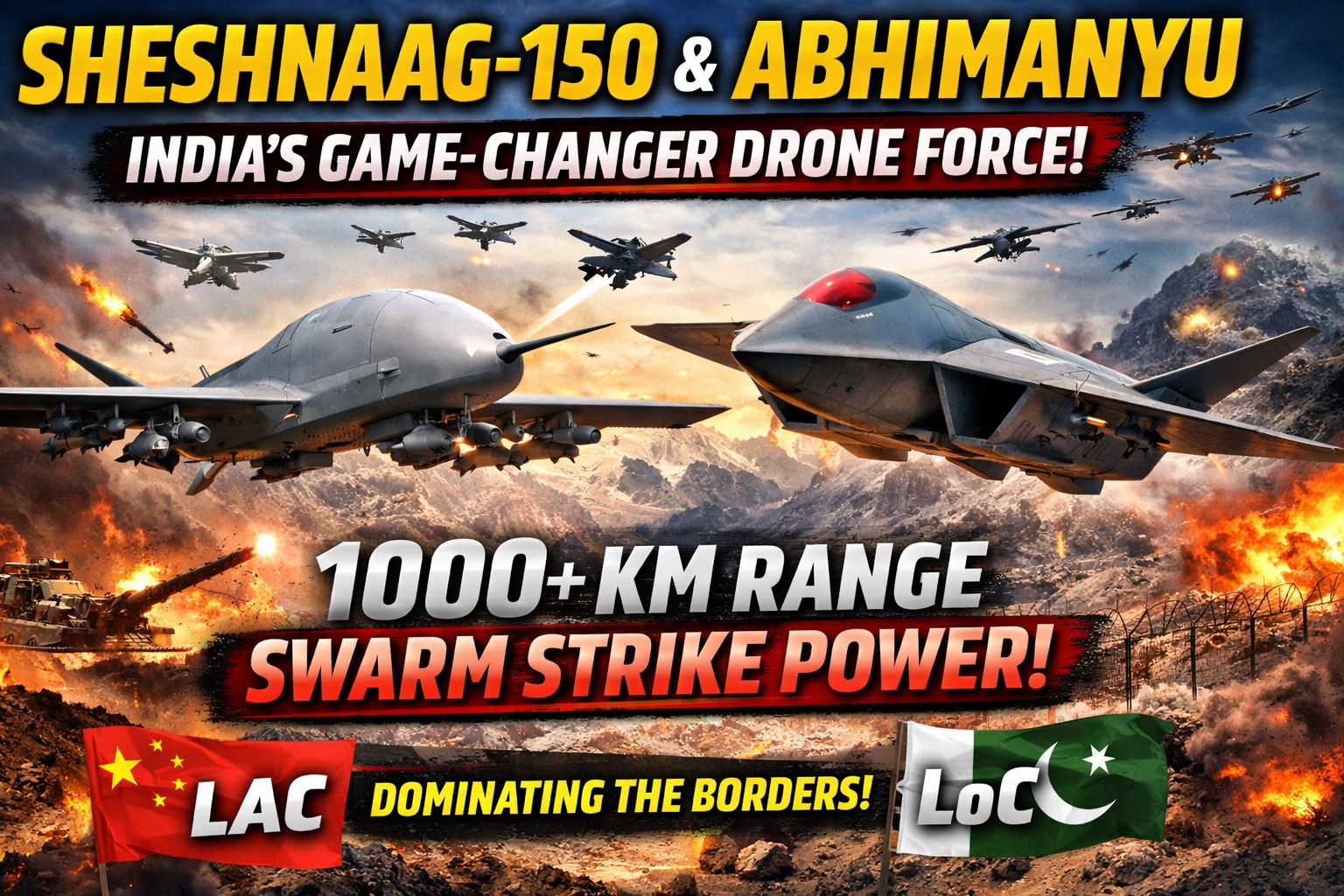
भारत की रक्षा तकनीक में एक ऐतिहासिक उपलब्धि के रूप में NRT ने अपने शेषनाग-150 लॉन्ग रेंज ड्रोन सिस्टम का सफल परीक्षण किया है। यह अत्याधुनिक स्वॉर्म ड्रोन सिस्टम सामूहिक हमले (Collaborative Attack) के सिद्धांत पर आधारित है, जिसमें कई ड्रोन एक साथ मिलकर दुश्मन के एयर डिफेंस सिस्टम को भेदने और सटीक हमले करने में सक्षम हैं।
शेषनाग-150 की सबसे बड़ी ताकत इसकी 1000 किलोमीटर से अधिक की रेंज और 5 घंटे से अधिक की उड़ान क्षमता है। यह ड्रोन लक्ष्य क्षेत्र के ऊपर लंबे समय तक मंडरा सकता है, जिससे रियल-टाइम निगरानी और हमला दोनों संभव होते हैं। इसमें 25 से 40 किलोग्राम तक के वारहेड ले जाने की क्षमता है, जो दुश्मन के सैन्य ठिकानों, वाहनों और सैनिक जमावड़ों को भारी नुकसान पहुंचा सकता है। इसकी आर्टिफिशियल इंटेलिजेंस आधारित प्रणाली इसे स्वायत्त बनाती है, जिससे यह बिना मानवीय हस्तक्षेप के लक्ष्य की पहचान, ट्रैकिंग और हमला कर सकता है।
LAC और LoC पर रणनीतिक बढ़त: अब हर मूवमेंट पर रहेगी नजर
शेषनाग-150 का सबसे बड़ा सामरिक उपयोग भारत की संवेदनशील सीमाओं—लाइन ऑफ एक्चुअल कंट्रोल (LAC) और लाइन ऑफ कंट्रोल (LoC)—पर देखा जा रहा है। ऊंचाई वाले और दुर्गम क्षेत्रों में जहां सैनिकों की तैनाती चुनौतीपूर्ण होती है, वहां ये ड्रोन एक गेम चेंजर साबित हो सकते हैं।
यह ड्रोन रियल-टाइम इंटेलिजेंस, सर्विलांस और रिकॉनिसेंस (ISR) मिशन के तहत दुश्मन की हर गतिविधि पर नजर रख सकता है। जैसे ही किसी घुसपैठ या संदिग्ध गतिविधि का पता चलता है, यह तुरंत कार्रवाई करते हुए दुश्मन के ठिकानों को निशाना बना सकता है। इससे न केवल सैनिकों की सुरक्षा बढ़ती है, बल्कि सीमा पर भारत की प्रतिक्रिया क्षमता भी तेज और सटीक हो जाती है। आतंकवाद विरोधी अभियानों में भी यह ड्रोन बेहद प्रभावी साबित हो सकता है, जहां यह आतंकियों के ठिकानों पर सटीक हमला कर सकता है और उनकी संचार प्रणाली को बाधित कर सकता है।
मल्टी-डोमेन वारफेयर: ISR से लेकर इलेक्ट्रॉनिक वॉरफेयर तक
शेषनाग-150 केवल एक अटैक ड्रोन नहीं है, बल्कि यह मल्टी-डोमेन ऑपरेशन का हिस्सा है। यह इलेक्ट्रॉनिक वॉरफेयर (EW) मिशन में दुश्मन के रडार और संचार प्रणाली को जाम कर सकता है। इसके अलावा यह नेटवर्क-सेंट्रिक वॉरफेयर में एक महत्वपूर्ण नोड की तरह काम करता है, जहां यह डेटा इकट्ठा कर अन्य सैन्य प्लेटफॉर्म्स के साथ साझा करता है।
यह सिस्टम भारतीय सेना, वायु सेना और नौसेना तीनों के लिए उपयोगी है। सीमित रक्षा बजट के बीच यह एक किफायती समाधान प्रदान करता है, जो महंगे फाइटर जेट्स और मिसाइल सिस्टम्स का पूरक बन सकता है। भविष्य के युद्धों में जहां गति, सटीकता और सूचना सबसे महत्वपूर्ण होंगे, वहां शेषनाग-150 भारत की ताकत को कई गुना बढ़ा सकता है।
चुनौतियां भी कम नहीं: इंटीग्रेशन, साइबर सुरक्षा और सैन्य सिद्धांत
हालांकि शेषनाग-150 एक क्रांतिकारी तकनीक है, लेकिन इसे पूरी तरह सैन्य ढांचे में शामिल करना आसान नहीं होगा। सबसे बड़ी चुनौती इंटरऑपरेबिलिटी की है, जहां इसे मौजूदा कमांड एंड कंट्रोल सिस्टम, सेंसर और अन्य प्लेटफॉर्म्स के साथ सहज रूप से जोड़ना होगा।
इसके अलावा ऑपरेशनल ट्रेनिंग और सैन्य सिद्धांत (Doctrine) विकसित करना भी जरूरी होगा, ताकि सैनिक इन स्वायत्त प्रणालियों का सही उपयोग कर सकें। साइबर सुरक्षा भी एक बड़ा मुद्दा है, क्योंकि नेटवर्क आधारित सिस्टम हैकिंग और इलेक्ट्रॉनिक हमलों के लिए संवेदनशील होते हैं। इसके साथ ही स्वायत्त हथियारों के उपयोग से जुड़े रणनीतिक और कूटनीतिक प्रभावों को भी नजरअंदाज नहीं किया जा सकता।
नौसेना के लिए ‘अभिमन्यु’: भविष्य का लॉयल विंगमैन सिस्टम
जहां एक ओर शेषनाग-150 जमीन और सीमा पर भारत की ताकत बढ़ा रहा है, वहीं NRT नौसेना के लिए अभिमन्यु नामक नेवल कोलैबोरेटिव कॉम्बैट एयर व्हीकल (N-CCAV) विकसित कर रहा है। यह एक ऐसा अनमैन्ड एयरक्राफ्ट होगा जो मिग-29K और भविष्य के राफेल-M जैसे फाइटर जेट्स के साथ मिलकर काम करेगा।
अभिमन्यु को लो रडार क्रॉस सेक्शन (Low-RCS) डिजाइन के साथ तैयार किया जा रहा है, जिससे यह दुश्मन के रडार से बच सके। इसका मॉड्यूलर डिजाइन इसे विभिन्न भूमिकाओं—जैसे निगरानी, इलेक्ट्रॉनिक वॉरफेयर और सटीक हमले—के लिए अनुकूल बनाता है। भारतीय नौसेना ने इसके लिए न्यूनतम खरीद मात्रा (MPQ) तय कर दी है, जो इस प्रोजेक्ट के महत्व को दर्शाता है।
अभिमन्यु बनाम CATS वॉरियर: किसके हाथ में होगी भविष्य की कमान
भारत में इस समय दो प्रमुख लॉयल विंगमैन प्रोग्राम्स चल रहे हैं—NRT का अभिमन्यु और HAL का CATS वॉरियर। जहां CATS वॉरियर ने इंजन ग्राउंड रन जैसे महत्वपूर्ण परीक्षण पूरे कर लिए हैं, वहीं अभिमन्यु को ज्यादा लचीला और किफायती प्लेटफॉर्म के रूप में देखा जा रहा है।
अभिमन्यु का हल्का और मॉड्यूलर डिजाइन इसे तेजी से उत्पादन और बड़े पैमाने पर तैनाती के लिए उपयुक्त बनाता है। वहीं CATS वॉरियर अधिक भारी और पारंपरिक मिशनों के लिए डिजाइन किया गया है। भविष्य में इन दोनों प्रोग्राम्स के एकीकरण की संभावना भी जताई जा रही है, जिससे भारत को एक मजबूत और एकीकृत कॉम्बैट ड्रोन सिस्टम मिल सकता है।
नेटवर्क-सेंट्रिक और स्वायत्त युद्ध की ओर भारत का बड़ा कदम
शेषनाग-150 और अभिमन्यु जैसे प्लेटफॉर्म यह स्पष्ट संकेत देते हैं कि भारत अब पारंपरिक युद्ध प्रणाली से आगे बढ़कर नेटवर्क-सेंट्रिक और स्वायत्त युद्ध की दिशा में तेजी से कदम बढ़ा रहा है। ये सिस्टम केवल हथियार नहीं हैं, बल्कि एक पूरे इकोसिस्टम का हिस्सा हैं, जहां ड्रोन सेंसर, शूटर और कमांड नोड—तीनों की भूमिका निभाते हैं।
इससे युद्ध के मैदान में तेजी से निर्णय लेने, बेहतर स्थिति की समझ और लचीलापन मिलता है। भविष्य के युद्धों में वही देश आगे रहेगा, जिसके पास स्मार्ट, स्वायत्त और नेटवर्क से जुड़े सिस्टम होंगे—और भारत इस दिशा में तेजी से आगे बढ़ रहा है।
आत्मनिर्भर भारत की रक्षा शक्ति का नया अध्याय
शेषनाग-150 और अभिमन्यु जैसे स्वदेशी प्लेटफॉर्म भारत की रक्षा क्षमताओं में एक नए युग की शुरुआत कर रहे हैं। ये केवल तकनीकी उपलब्धियां नहीं हैं, बल्कि आत्मनिर्भर भारत के विजन को साकार करने वाले मजबूत स्तंभ हैं।
आने वाले समय में जब भारत को चीन और पाकिस्तान जैसे दोहरे मोर्चे की चुनौतियों का सामना करना पड़ेगा, तब ये स्वायत्त सिस्टम भारत को रणनीतिक बढ़त दिलाने में निर्णायक भूमिका निभाएंगे। अब जरूरत है तेज़ी से इन तकनीकों को सेना में शामिल करने, मजबूत नीतियां बनाने और भविष्य के युद्ध के लिए पूरी तैयारी करने की—क्योंकि आने वाला युद्ध इंसानों का नहीं, बल्कि मशीनों और आर्टिफिशियल इंटेलिजेंस का होगा।
BY DEFENCE JOURNALIST SAHIL | T.I.N. NETWORK
India’s Swarm Drone Revolution: Sheshnaag-150 & Abhimanyu Signal a New Era of Autonomous Warfare
From Mehar Baba Competition to Battlefield Reality: The Evolution of India’s Drone Ecosystem
India’s journey toward indigenous swarm drone capability began with a visionary push by the Indian Air Force in 2018 through the Mehar Baba Swarm Drone Competition. This initiative was not merely a technological contest but a strategic blueprint aimed at fostering domestic innovation in unmanned warfare systems. Over a defined three-year timeline, some of India’s most promising private defence startups emerged as pioneers. Bengaluru-based NewSpace Research & Technologies (NRT) secured the prestigious “Swarm Architecture” award, while Flaire Unmanned Systems and Dhaksha Unmanned Systems took the honours for “Communication Architecture” and “Drone Architecture” respectively. This competition laid the foundation for India’s transition from dependence on imported UAV technologies to a robust, self-reliant drone ecosystem. Notably, NRT, led by former Indian Air Force officer Sameer Joshi, quickly translated innovation into operational capability, securing a $15 million swarm drone order from the Indian Army—marking a significant milestone in public-private defence collaboration.
Sheshnaag-150: India’s Long-Range Autonomous Strike Swarm Takes Flight
In a major breakthrough for indigenous defence technology, NRT has successfully flight-tested the Sheshnaag-150 Long Range Drone System, a next-generation swarm drone platform designed for collaborative and coordinated attack missions. This system represents a paradigm shift in modern warfare, where autonomous drones operate in swarms to overwhelm enemy air defences and execute precision strikes with minimal human intervention.
With an operational range exceeding 1,000 kilometers and endurance of over five hours, the Sheshnaag-150 offers unprecedented reach and persistence. Its ability to loiter over target zones allows continuous surveillance and dynamic targeting, giving commanders real-time decision-making advantages. Equipped to carry warheads ranging between 25 to 40 kilograms, these drones possess the destructive capability to neutralize enemy infrastructure, armored assets, and personnel concentrations with high precision. The integration of advanced AI-driven software ensures that these drones can autonomously identify, track, and engage targets, significantly reducing response time in high-intensity combat scenarios.
Autonomous Warfare and Tactical Superiority Along LAC and LoC
The Sheshnaag-150 is not just a technological achievement—it is a strategic force multiplier for India’s military posture along sensitive borders such as the Line of Actual Control (LAC) with China and the Line of Control (LoC) with Pakistan. In high-altitude and contested environments, where human deployment is risky and logistically challenging, these swarm drones offer a decisive advantage.
By conducting Intelligence, Surveillance, and Reconnaissance (ISR) missions in real-time, the Sheshnaag-150 can detect enemy troop movements, infiltration attempts, and forward deployments with unmatched accuracy. In the event of an incursion, the system can autonomously engage hostile targets, neutralizing threats before escalation. This capability not only enhances India’s defensive readiness but also reduces the risk to soldiers on the ground. Furthermore, the system’s application in counter-terror operations is significant, enabling pre-emptive strikes on terror camps, tracking infiltration routes, and disrupting enemy communication networks deep inside hostile territory.
Multi-Domain Operations: ISR, Electronic Warfare, and Deep Strike Capability
Beyond direct combat roles, the Sheshnaag-150 is designed for multi-domain operations, including electronic warfare (EW) and network-centric warfare environments. Its sophisticated electronic systems allow it to jam enemy communications, disrupt radar systems, and act as a force multiplier in coordinated military campaigns. The drone’s ability to integrate into a broader battlefield network ensures that it functions not just as a weapon, but as a critical node in India’s evolving digital warfare architecture.
Crucially, the system addresses India’s deep strike requirements across all three services—the Army, Air Force, and Navy—offering a cost-effective solution amid budgetary constraints. In an era where precision and speed define battlefield success, the Sheshnaag-150 bridges critical capability gaps without the need for expensive manned platforms.
Challenges Ahead: Integration, Cybersecurity, and Strategic Doctrine
Despite its transformative potential, the rapid integration of the Sheshnaag-150 into India’s armed forces presents several challenges that must be addressed systematically. Interoperability remains a key concern, as seamless coordination between swarm drones and existing command-and-control systems, sensors, and platforms is essential for operational success. Equally important is the development of comprehensive training programs and doctrines to ensure that military personnel can effectively harness the full potential of autonomous systems.
Cybersecurity is another critical dimension, given the vulnerability of networked systems to electronic attacks and data breaches. Ensuring secure communication channels, robust encryption, and efficient data management frameworks will be vital. Additionally, the deployment of autonomous lethal systems raises broader strategic and diplomatic considerations, including escalation risks and international norms governing AI-driven warfare. India will need to carefully balance technological advancement with responsible military doctrine.
Navy’s Future Combat Vision: The Rise of Abhimanyu N-CCAV
Parallel to the development of swarm drones, NRT is spearheading another revolutionary program—the Naval Collaborative Combat Air Vehicle (N-CCAV), based on its Abhimanyu loyal wingman concept. Under a contract with the Indian Navy, this unmanned aircraft is being designed to operate alongside frontline fighter jets such as the MiG-29K and the upcoming Rafale M, forming a manned-unmanned teaming ecosystem.
The Abhimanyu platform is envisioned as a low radar cross-section (RCS), lightweight, jet-powered unmanned aircraft capable of performing a wide range of missions, including surveillance, electronic warfare, and precision strikes. Its modular architecture allows rapid adaptation to different operational roles, making it a versatile asset in naval aviation. The Indian Navy’s commitment through a minimum purchase quantity (MPQ) underscores the strategic importance of this program.
Abhimanyu vs CATS Warrior: The Future of India’s Loyal Wingman Programs
India’s collaborative combat aircraft ecosystem is currently witnessing parallel developments, with NRT’s Abhimanyu and Hindustan Aeronautics Limited’s CATS Warrior emerging as key contenders. While the CATS Warrior has already achieved milestones such as engine ground runs of a full-scale demonstrator, the Abhimanyu is being designed with a focus on cost-effectiveness, scalability, and rapid deployment.
The Abhimanyu’s smaller size and modular design may offer operational flexibility, especially for naval missions, while the Warrior is expected to cater primarily to the Indian Air Force. However, the possibility of future consolidation between these programs remains open. A unified approach could enhance efficiency, reduce duplication, and accelerate deployment timelines. The key question facing India’s defence planners is whether a single platform can meet the diverse requirements of both the Navy and Air Force, or whether specialized solutions will prove more effective.
The Strategic Shift: Toward Network-Centric and Autonomous Warfare
The emergence of platforms like the Sheshnaag-150 and Abhimanyu signals a broader transformation in India’s military strategy—from platform-centric warfare to network-centric and autonomous operations. These systems are not standalone assets but part of an interconnected ecosystem where drones act as sensors, shooters, and communication nodes simultaneously.
Such capabilities enable faster decision-making, enhanced situational awareness, and greater operational flexibility. In future conflicts, the side that can deploy intelligent swarms and integrated combat networks will hold a decisive advantage. India’s investments in indigenous drone technologies reflect a clear understanding of this evolving battlefield paradigm.
Conclusion: India’s Leap Toward Defence Self-Reliance and Technological Superiority
The successful development and testing of the Sheshnaag-150, coupled with the ambitious Abhimanyu program, mark a defining moment in India’s defence modernization journey. These platforms not only enhance operational capabilities but also reinforce the vision of Atmanirbhar Bharat in the defence sector.
As India faces complex security challenges across multiple fronts, the integration of autonomous systems into its military arsenal will be crucial in maintaining strategic superiority. The road ahead will require careful planning, robust infrastructure, and forward-looking policies, but the direction is clear—India is rapidly emerging as a global leader in next-generation warfare technologies.






Leave a Reply