








BY DEFENCE JOURNALIST SAHIL | T.I.N. NETWORK
Military Intelligence Training School & Depot Hosts Seminar on Technological Advancements in Intelligence Capabilities: Shaping the Future of Indian Army Intelligence
New Delhi |
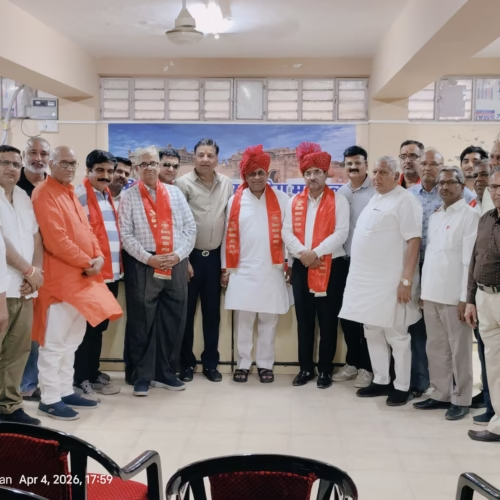
The Military Intelligence Training School and Depot (#MINTSD), operating under the aegis of Headquarters Army Training Command (#HQARTRAC), successfully hosted a high-level seminar on 01 December 2025 titled “Technological Advancement in Intelligence Capabilities – Way Forward to Overcome Current and Future Challenges.” The event brought together senior military officers, intelligence experts, and technical specialists to deliberate on the evolving landscape of military intelligence and the transformative role of modern technology in enhancing operational effectiveness.
Setting the Tone: Keynote Address by Lt Gen Devinder Pal Singh
The seminar commenced with a keynote address by Lieutenant General Devinder Pal Singh, AVSM, SM, Commandant of MINTSD, who outlined the importance of technological integration in modern military intelligence. Addressing a gathering of senior officers and subject-matter experts, Lt Gen Singh emphasized that intelligence capabilities are the backbone of informed operational decision-making and strategic planning. He highlighted how emerging threats in conventional and non-conventional domains, cyber warfare, and hybrid conflict scenarios require the Indian Army to adopt a forward-looking intelligence posture that leverages cutting-edge technologies.
He stressed that the focus must not only be on collecting information but on processing, analyzing, and synthesizing actionable intelligence efficiently, ensuring commanders at all levels have timely and accurate situational awareness. Lt Gen Singh underscored the dual challenges faced by military intelligence today: staying ahead of adversaries’ evolving tactics and integrating diverse intelligence disciplines into a coherent framework that maximizes operational advantage.
Seminar Focus: Bridging the Gap Between Technology and Intelligence
The core of the seminar revolved around identifying current challenges in the intelligence domain and exploring technological solutions to overcome them. The sessions were structured to cover the spectrum of intelligence activities including Human Intelligence (HUMINT), Technical Intelligence (TECHINT), and the increasingly important integration of both disciplines to form a holistic intelligence picture.
Experts discussed emerging technologies such as artificial intelligence, machine learning, predictive analytics, advanced geospatial intelligence, automated signal and cyber intelligence systems, and next-generation surveillance platforms. The discussions highlighted how these technologies can enhance the speed, accuracy, and reliability of intelligence, while also improving the decision-making process at tactical, operational, and strategic levels.
A significant portion of the seminar focused on bridging the gap between traditional HUMINT operations and TECHINT capabilities. Participants explored innovative ways to integrate field intelligence with technical reconnaissance and cyber-derived data, enabling a multi-dimensional view of the battlefield. Emphasis was placed on the need for real-time data fusion, cloud-enabled intelligence platforms, and AI-assisted pattern recognition to pre-empt adversarial maneuvers.
Distinguished Panel and In-Depth Deliberations
The seminar brought together a distinguished panel comprising senior Indian Army officers, intelligence analysts, technical experts, and scholars. Panelists shared insights on past operational experiences, emerging threats, and the technological trends shaping global military intelligence. The discussions were highly interactive, with participants debating the challenges of data management, operational security, ethical use of AI in intelligence, and the integration of cross-domain capabilities to create a future-ready intelligence ecosystem.
Specific case studies were examined, ranging from recent tactical operations along the northern and western borders to lessons from multinational exercises and counter-terrorism missions. Participants also deliberated on cyber threats, unmanned aerial systems, electronic surveillance technologies, and the potential for autonomous intelligence collection systems to reduce human risk in high-threat environments.
Recommendations for the Future
The seminar concluded with a set of actionable recommendations aimed at strengthening India’s military intelligence capabilities. Key takeaways included:
- Establishment of integrated intelligence fusion centers to combine HUMINT, TECHINT, cyber intelligence, and open-source data for enhanced situational awareness.
- Investment in AI and machine learning tools for predictive threat analysis and anomaly detection.
- Development of secure, resilient, and interoperable digital platforms to facilitate real-time intelligence sharing across commands and allied agencies.
- Continuous training and upskilling of intelligence personnel to leverage technological innovations effectively.
- Structured experimentation with unmanned systems, automated surveillance platforms, and advanced sensor technologies to improve data collection and operational safety.
Lt Gen Devinder Pal Singh emphasized that these recommendations would guide future doctrine, training, and operational planning at MINTSD and beyond, ensuring that Indian Army intelligence remains agile, technologically advanced, and capable of supporting national security objectives in increasingly complex conflict scenarios.
Conclusion: Preparing for a Technology-Driven Intelligence Future
The seminar at MINTSD marked a significant step in aligning India’s military intelligence training and operational strategies with the demands of modern warfare. By bringing together experts from diverse backgrounds and facilitating in-depth discussions on technology, integration, and future challenges, the seminar reinforced the Indian Army’s commitment to building a future-ready intelligence capability.
As global security environments evolve with hybrid threats, cyber warfare, and advanced surveillance technologies, the insights from this seminar are expected to directly influence the design of training programs, operational doctrines, and technological adoption in the Indian Army’s intelligence community. With a focus on innovation, integration, and agility, MINTSD continues to play a pivotal role in shaping India’s military intelligence for the challenges of tomorrow.
BY DEFENCE JOURNALIST SAHIL | T.I.N. NETWORK
मिलिट्री इंटेलिजेंस ट्रेनिंग स्कूल और डिपो में सेमिनार: तकनीकी उन्नति के माध्यम से भविष्य की खुफिया चुनौतियों से निपटने की दिशा
नई दिल्ली / मुंबई
भारतीय सेना के खुफिया संचालन और रणनीतिक निर्णय क्षमता के लिए एक महत्वपूर्ण पहल के रूप में, मिलिट्री इंटेलिजेंस ट्रेनिंग स्कूल और डिपो (#MINTSD) ने 01 दिसंबर 2025 को उच्च स्तरीय सेमिनार आयोजित किया। सेमिनार का विषय था “Technological Advancement in Intelligence Capabilities – Way Forward to Overcome Current and Future Challenges”. यह आयोजन मुख्यालय आर्मी ट्रेनिंग कमांड (#HQARTRAC) के निर्देशन में हुआ और इसका उद्देश्य भारतीय सेना की खुफिया क्षमताओं को भविष्य की चुनौतियों के अनुरूप विकसित करना था।
कीनोट संबोधन: लेफ्टिनेंट जनरल देविंदर पाल सिंह, AVSM, SM
सेमिनार का उद्घाटन लेफ्टिनेंट जनरल देविंदर पाल सिंह, AVSM, SM, कमांडेंट, MINTSD, द्वारा कीनोट संबोधन के साथ हुआ। उन्होंने खुफिया संचालन में तकनीकी एकीकरण के महत्व को रेखांकित किया और कहा कि वर्तमान और भविष्य की खतरनाक परिस्थितियों में, सूचना और खुफिया के सक्षम संग्रह, विश्लेषण और वितरण से ही भारतीय सेना की रणनीतिक ताकत सुनिश्चित हो सकती है।
Lt Gen सिंह ने कहा कि खुफिया कार्य केवल सूचना एकत्र करने तक सीमित नहीं रहना चाहिए; बल्कि यह जरूरी है कि प्राप्त सूचनाओं को तेजी से, सही ढंग से और निर्णायक रूप में कमांडरों तक पहुँचाया जाए। उन्होंने इस बात पर भी जोर दिया कि आज की चुनौतियों का सामना करने के लिए HUMINT और TECHINT के समन्वय के साथ डिजिटल, AI-सक्षम, और स्वदेशी तकनीकों का इस्तेमाल आवश्यक है।
सेमिनार का मुख्य उद्देश्य: तकनीक और खुफिया का सामंजस्य
सेमिनार के मुख्य सत्रों में खुफिया क्षेत्र की वर्तमान चुनौतियों और उन्हें दूर करने के लिए तकनीकी नवाचारों पर चर्चा हुई। सत्रों में मानव खुफिया (HUMINT), तकनीकी खुफिया (TECHINT), और दोनों के एकीकृत उपयोग पर विशेष ध्यान दिया गया।
विशेषज्ञों ने आर्टिफिशियल इंटेलिजेंस, मशीन लर्निंग, प्रेडिक्टिव एनालिटिक्स, जियोस्पेशियल इंटेलिजेंस, ऑटोमेटेड सिग्नल और साइबर इंटेलिजेंस सिस्टम्स और अत्याधुनिक निगरानी प्रणालियों पर विचार-विमर्श किया। इन तकनीकों के माध्यम से खुफिया प्रक्रिया की गति, सटीकता और विश्वसनीयता में सुधार होगा और निर्णय लेने की प्रक्रिया तेज और प्रभावी होगी।
HUMINT और TECHINT का एकीकरण
सेमिनार में पारंपरिक मानव खुफिया और तकनीकी खुफिया के बीच अंतर को पाटने और दोनों का एकीकृत दृष्टिकोण अपनाने पर गहन चर्चा हुई। डिजिटल डाटा फ्यूजन, क्लाउड आधारित इंटेलिजेंस प्लेटफॉर्म और AI-सक्षम पैटर्न रिकग्निशन जैसी तकनीकों के माध्यम से, बहुआयामी खुफिया तस्वीर बनाने पर बल दिया गया।
इस दौरान वास्तविक समय में जानकारी का विश्लेषण, खतरे की पहचान और पूर्वानुमान आधारित रणनीति विकसित करने के तरीकों पर भी विचार किया गया। इससे सैन्य कमांडरों को तेज, सही और निर्णायक निर्णय लेने में सहायता मिलेगी।
विशेषज्ञ पैनल और गहन विचार-विमर्श
सेमिनार में वरिष्ठ भारतीय सेना अधिकारी, खुफिया विश्लेषक, तकनीकी विशेषज्ञ और शिक्षाविदों ने भाग लिया। पैनल ने पूर्व अनुभवों, वैश्विक तकनीकी रुझानों, उभरती खतरनाक परिस्थितियों और नई तकनीकों के सैन्य उपयोग पर अपने दृष्टिकोण साझा किए।
विशेष रूप से डेटा प्रबंधन, साइबर सुरक्षा, एआई के नैतिक उपयोग और क्रॉस-डोमेन इंटेलिजेंस क्षमताओं के एकीकरण जैसे मुद्दों पर गहन विचार-विमर्श हुआ। इसके अलावा, हाल के सीमा अभियानों, संयुक्त अभ्यासों और आतंकवाद रोधी ऑपरेशनों के केस स्टडीज पर चर्चा की गई, जिसमें ड्रोन, इलेक्ट्रॉनिक निगरानी और स्वायत्त खुफिया संग्रह प्रणालियों की भूमिका पर भी विचार किया गया।
भविष्य के लिए सिफारिशें
सेमिनार के अंत में कुछ महत्वपूर्ण सिफारिशें पेश की गईं, जो भारतीय सेना की खुफिया क्षमताओं को सशक्त बनाने में मदद करेंगी:
- HUMINT, TECHINT, साइबर इंटेलिजेंस और ओपन-सोर्स डेटा के लिए एकीकृत इंटेलिजेंस फ्यूजन सेंटर स्थापित करना।
- प्रेडिक्टिव थ्रेट एनालिसिस और एनॉमली डिटेक्शन के लिए AI और मशीन लर्निंग टूल्स का उपयोग।
- सुरक्षित, रेसिलिएंट और इंटरऑपरेबल डिजिटल प्लेटफॉर्म विकसित करना, जो सभी कमांड और सहयोगी एजेंसियों के बीच वास्तविक समय में जानकारी साझा करने में सक्षम हों।
- खुफिया कर्मियों का लगातार प्रशिक्षण और तकनीकी नवाचारों का कुशल उपयोग सुनिश्चित करना।
- स्वायत्त निगरानी प्रणालियों, उन्नत सेंसर और ड्रोन तकनीक का प्रयोग कर डेटा संग्रह और ऑपरेशनल सुरक्षा बढ़ाना।
लेफ्टिनेंट जनरल देविंदर पाल सिंह ने कहा कि इन सिफारिशों को MINTSD और भारतीय सेना की खुफिया तैयारियों में लागू किया जाएगा, जिससे सेना की सूचना आधारित निर्णय क्षमता भविष्य के लिए तैयार रहेगी।
निष्कर्ष: भविष्य के लिए तैयार खुफिया क्षमताएँ
MINTSD में आयोजित यह सेमिनार भारतीय सेना की खुफिया क्षमताओं को आधुनिक, तकनीकी और एकीकृत बनाने की दिशा में एक निर्णायक कदम है। विशेषज्ञों और तकनीकी विश्लेषकों के बीच गहन चर्चा ने यह स्पष्ट किया कि AI, डिजिटल प्लेटफॉर्म और स्वदेशी समाधानों का इस्तेमाल भारतीय सेना के लिए आवश्यक है।
जैसे-जैसे वैश्विक सुरक्षा चुनौतियाँ, हाइब्रिड युद्ध और साइबर खतरे बढ़ रहे हैं, इस सेमिनार की सिफारिशें प्रशिक्षण, तकनीकी विकास और ऑपरेशनल रणनीतियों में अहम भूमिका निभाएंगी। नवाचार, एकीकरण और लचीलापन भारतीय सेना की खुफिया क्षमताओं को भविष्य के लिए तैयार करने में MINTSD की केंद्रीय भूमिका को और मजबूत करेगा।





Add Comment