


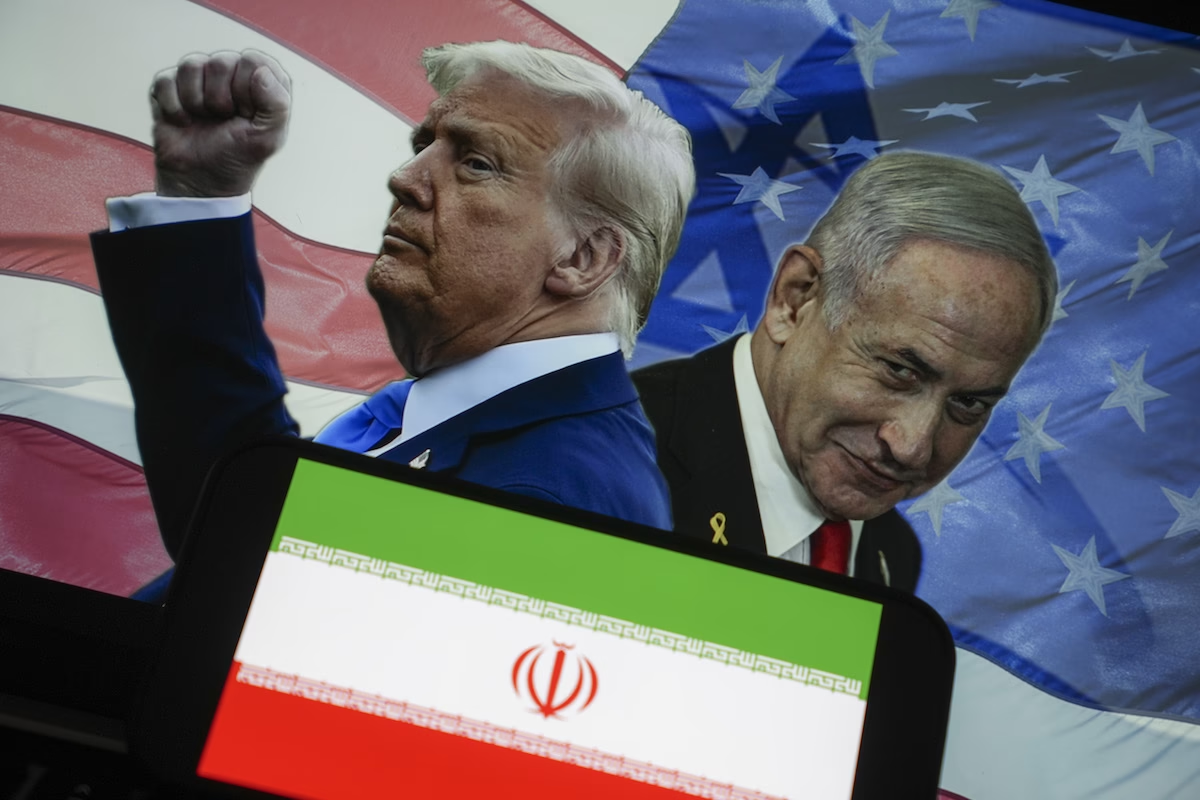


US-Iran Talks Collapse in Pakistan: Diplomatic Breakdown Raises Fresh Concerns Over Regional Stability
BY DEFENCE JOURNALIST SAHIL | T.I.N. NETWORK
A High-Stakes Diplomatic Effort Ends Without Breakthrough
In a significant setback to ongoing global diplomatic efforts, high-level negotiations between the United States and Iran, hosted in Islamabad, have collapsed without yielding any agreement. The talks, which stretched over several hours and were marked by intense deliberations, were seen as a crucial opportunity to ease mounting tensions in the Middle East. However, the outcome has instead underscored the persistent mistrust and deep-rooted differences that continue to define relations between Washington and Tehran.
The negotiations were facilitated by , which has increasingly sought to position itself as a regional mediator amid evolving geopolitical alignments. The failure of these talks not only reflects the complexities of U.S.-Iran relations but also raises broader concerns about the effectiveness of third-party mediation in one of the world’s most volatile regions.
JD Vance Confirms Deadlock, Signals Strategic Messaging
The outcome of the negotiations was confirmed by U.S. Vice President , who acknowledged that while discussions were “substantive,” they ultimately failed to produce a tangible agreement. His statement carried both diplomatic acknowledgment and strategic messaging, as he remarked that the lack of an agreement was “bad news for Iran much more than it is for the United States.”
This framing indicates Washington’s attempt to project confidence and maintain pressure on Tehran, even in the face of stalled diplomacy. It also reflects a broader U.S. approach that combines negotiation with strategic deterrence, signaling that while dialogue remains open, concessions will not come easily.
Core Disputes: Nuclear Program and Sovereignty Concerns
At the heart of the failed talks were long-standing disagreements over Iran’s nuclear program and broader regional security dynamics. The United States has consistently pushed for stricter limitations on Iran’s nuclear activities, seeking to prevent any potential pathway to weaponization. These demands are rooted in global non-proliferation concerns and the strategic imperative of maintaining stability in the Middle East.
Iran, on the other hand, has remained steadfast in its position that its nuclear program is for peaceful purposes and has resisted any conditions it perceives as infringing upon its sovereignty. For Tehran, the issue is not merely technical but deeply political, tied to national pride, strategic autonomy, and resistance against perceived Western pressure.
The inability to bridge these positions once again highlights the enduring legacy of mistrust that has plagued U.S.-Iran relations for decades, particularly since the collapse of previous agreements like the Joint Comprehensive Plan of Action (JCPOA).
Strait of Hormuz: A Strategic Flashpoint in Focus
Another critical aspect of the discussions revolved around tensions in the , one of the most vital maritime chokepoints in the world. Nearly a fifth of global oil supplies pass through this narrow corridor, making it a focal point of international security concerns.
Any escalation in this region has immediate global repercussions, impacting energy markets, shipping routes, and economic stability. The talks aimed to address mechanisms to de-escalate tensions and ensure the free flow of commerce. However, the absence of consensus on this front further amplifies fears of potential disruptions, especially in an already volatile geopolitical climate.
Pakistan’s Role as Mediator: Strategic Ambitions and Limitations
The hosting of these high-profile talks by underscores Islamabad’s ambition to reassert itself as a key diplomatic player in regional and global affairs. By facilitating dialogue between two adversaries, Pakistan aimed to enhance its international standing and demonstrate its capacity as a neutral intermediary.
However, the failure of the talks also highlights the limitations of such mediation efforts, particularly when dealing with deeply entrenched conflicts involving major powers. While Pakistan’s role provided a platform for dialogue, it could not overcome the fundamental divergences that ultimately derailed the negotiations.
Implications for Regional Stability and Global Security
The collapse of the talks carries significant implications for regional stability. With no agreement in place, the risk of escalation remains high, particularly in flashpoints like the Persian Gulf and surrounding areas. The absence of diplomatic progress could embolden hardline elements on both sides, reducing the space for compromise and increasing the likelihood of confrontation.
From a global perspective, the failure also affects broader non-proliferation efforts and undermines confidence in diplomatic mechanisms as a means of conflict resolution. Allies and adversaries alike will be closely monitoring the situation, recalibrating their strategies in response to the evolving dynamics.
Future Prospects: Dialogue Remains Open but Uncertain
Despite the setback, both the United States and Iran have not completely ruled out the possibility of future negotiations. Diplomatic channels, though strained, remain open, indicating that neither side is willing to abandon dialogue entirely. However, the path forward appears uncertain, with significant challenges ahead.
The current impasse suggests that any future breakthrough will require not only political will but also innovative diplomatic approaches that can address the core concerns of both parties. Confidence-building measures, incremental agreements, and broader multilateral engagement may be necessary to revive the stalled process.
Conclusion: A Reminder of Persistent Geopolitical Fault Lines
The collapse of the U.S.-Iran talks in Islamabad serves as a stark reminder of the enduring complexities that define international diplomacy in the 21st century. It highlights how historical grievances, strategic rivalries, and competing national interests continue to shape outcomes, often limiting the scope for resolution.
As tensions persist and uncertainties grow, the world watches closely, aware that the stakes extend far beyond the negotiating table—impacting regional peace, global security, and the delicate balance of power in an increasingly multipolar world.
पाकिस्तान में अमेरिका-ईरान वार्ता विफल: लंबी बातचीत के बावजूद नहीं बना समझौता, क्षेत्रीय तनाव बढ़ने की आशंका
BY DEFENCE JOURNALIST SAHIL | T.I.N. NETWORK
उच्च स्तरीय कूटनीतिक प्रयास का अंत बिना किसी नतीजे के
इस्लामाबाद में आयोजित अमेरिका और ईरान के बीच उच्च स्तरीय वार्ता बिना किसी ठोस समझौते के समाप्त हो गई, जिससे वैश्विक कूटनीतिक प्रयासों को बड़ा झटका लगा है। कई घंटों तक चली इस मैराथन बातचीत को मध्य-पूर्व में बढ़ते तनाव को कम करने की दिशा में एक महत्वपूर्ण अवसर माना जा रहा था, लेकिन इसका परिणाम इसके ठीक उलट सामने आया। यह घटनाक्रम एक बार फिर यह दर्शाता है कि अंतरराष्ट्रीय कूटनीति में सिर्फ बातचीत ही पर्याप्त नहीं होती, बल्कि आपसी विश्वास, रणनीतिक संतुलन और राजनीतिक इच्छाशक्ति भी उतनी ही जरूरी होती है। इस वार्ता का विफल होना इस बात का संकेत है कि अमेरिका और ईरान के बीच दशकों पुरानी खाई अब भी उतनी ही गहरी बनी हुई है।
उपराष्ट्रपति जे.डी. वेंस का बयान: बातचीत हुई, लेकिन नतीजा नहीं
अमेरिका के उपराष्ट्रपति ने इस वार्ता के निष्कर्ष की पुष्टि करते हुए कहा कि दोनों पक्षों के बीच “गंभीर और सार्थक बातचीत” हुई, लेकिन किसी भी प्रकार का समझौता नहीं हो सका। उन्होंने यह भी कहा कि यह स्थिति “ईरान के लिए अमेरिका से कहीं अधिक बुरी खबर है,” जो स्पष्ट रूप से एक कूटनीतिक संदेश के रूप में देखा जा रहा है। इस बयान से यह संकेत मिलता है कि अमेरिका अपनी स्थिति को मजबूत और दबाव बनाने वाली रणनीति के रूप में पेश करना चाहता है। वेंस के इस बयान के पीछे यह भी संकेत छिपा है कि अमेरिका भविष्य की वार्ताओं में भी अपनी शर्तों से पीछे हटने को तैयार नहीं है।
मुख्य विवाद: परमाणु कार्यक्रम और संप्रभुता का टकराव
इस पूरी वार्ता का सबसे बड़ा और केंद्रीय मुद्दा ईरान का परमाणु कार्यक्रम रहा, जिस पर अमेरिका लगातार सख्त प्रतिबंध और निगरानी की मांग करता रहा है। अमेरिका का मानना है कि ईरान के परमाणु कार्यक्रम पर कड़ी सीमाएं लगाना वैश्विक सुरक्षा के लिए जरूरी है, ताकि किसी भी प्रकार के परमाणु हथियार निर्माण की संभावना को रोका जा सके। वहीं दूसरी ओर ईरान ने हमेशा यह दावा किया है कि उसका परमाणु कार्यक्रम पूरी तरह से शांतिपूर्ण उद्देश्यों के लिए है और उसने अमेरिका की उन शर्तों को स्वीकार करने से इनकार कर दिया जिन्हें वह अपनी संप्रभुता में हस्तक्षेप मानता है। यही टकराव इस वार्ता की विफलता का मुख्य कारण बना, जहां दोनों पक्ष अपने-अपने रुख से पीछे हटने को तैयार नहीं दिखे।
हॉर्मुज जलडमरूमध्य: वैश्विक ऊर्जा सुरक्षा का संवेदनशील बिंदु
वार्ता के दौरान को लेकर बढ़ते तनाव पर भी विस्तार से चर्चा हुई। यह जलडमरूमध्य वैश्विक ऊर्जा आपूर्ति का एक बेहद महत्वपूर्ण मार्ग है, जहां से दुनिया का एक बड़ा हिस्सा तेल का परिवहन होता है। इस क्षेत्र में किसी भी प्रकार की अस्थिरता का सीधा असर वैश्विक बाजारों, तेल की कीमतों और आर्थिक संतुलन पर पड़ता है। हालांकि इस मुद्दे पर भी दोनों पक्षों के बीच कोई ठोस सहमति नहीं बन पाई, जिससे भविष्य में यहां तनाव बढ़ने की आशंका और अधिक गहरा गई है। यह स्थिति न केवल क्षेत्रीय बल्कि वैश्विक स्तर पर भी चिंता का विषय बन चुकी है।
पाकिस्तान की मध्यस्थता: कूटनीतिक महत्व और सीमाएं
इस पूरी वार्ता की मेजबानी ने की, जो खुद को एक उभरते हुए क्षेत्रीय मध्यस्थ के रूप में स्थापित करने की कोशिश कर रहा है। पाकिस्तान के लिए यह एक बड़ा अवसर था, जहां वह वैश्विक मंच पर अपनी भूमिका को मजबूत कर सकता था और खुद को एक विश्वसनीय संवादकर्ता के रूप में प्रस्तुत कर सकता था। हालांकि वार्ता का विफल होना यह भी दिखाता है कि केवल मंच उपलब्ध कराना ही पर्याप्त नहीं होता, बल्कि जब तक मूल मुद्दों पर सहमति नहीं बनती, तब तक किसी भी मध्यस्थ की भूमिका सीमित ही रहती है। इसके बावजूद, पाकिस्तान की यह पहल उसके कूटनीतिक महत्वाकांक्षाओं को जरूर उजागर करती है।
क्षेत्रीय और वैश्विक प्रभाव: बढ़ती अनिश्चितता और तनाव
इस वार्ता के विफल होने का असर केवल अमेरिका और ईरान तक सीमित नहीं रहेगा, बल्कि इसका व्यापक प्रभाव पूरे मध्य-पूर्व और वैश्विक सुरक्षा पर पड़ेगा। इस असफलता से क्षेत्र में पहले से मौजूद तनाव और अधिक बढ़ सकता है, जिससे सैन्य टकराव की संभावना भी बढ़ जाती है। साथ ही, यह वैश्विक कूटनीतिक प्रयासों पर भी सवाल खड़ा करता है कि क्या वर्तमान परिस्थितियों में बातचीत के जरिए बड़े विवादों का समाधान संभव है। ऊर्जा बाजार, अंतरराष्ट्रीय व्यापार और सुरक्षा व्यवस्था—all अब इस स्थिति से प्रभावित हो सकते हैं, जिससे आने वाले समय में अस्थिरता बढ़ने की आशंका है।
भविष्य की राह: बातचीत की संभावना, लेकिन रास्ता कठिन
हालांकि यह वार्ता किसी समझौते के बिना समाप्त हो गई, लेकिन दोनों देशों ने भविष्य में बातचीत की संभावना को पूरी तरह से खारिज नहीं किया है। यह संकेत देता है कि कूटनीतिक रास्ते अभी पूरी तरह बंद नहीं हुए हैं, लेकिन आगे का रास्ता बेहद कठिन और जटिल होगा। विश्वास बहाली, छोटे-छोटे समझौते और बहुपक्षीय सहयोग जैसे कदम ही भविष्य में किसी बड़े समाधान की दिशा में रास्ता खोल सकते हैं। फिलहाल, स्थिति एक ऐसे मोड़ पर खड़ी है जहां हर अगला कदम बेहद सावधानी और रणनीतिक सोच के साथ उठाना होगा।
कूटनीति की सीमाएं और भू-राजनीतिक वास्तविकता
इस्लामाबाद में हुई अमेरिका-ईरान वार्ता की विफलता यह स्पष्ट कर देती है कि अंतरराष्ट्रीय संबंधों में केवल बातचीत ही पर्याप्त नहीं होती, बल्कि इसके पीछे मजबूत राजनीतिक इच्छाशक्ति और आपसी विश्वास का होना भी जरूरी है। यह घटनाक्रम एक बार फिर यह दिखाता है कि वैश्विक राजनीति में पुराने मतभेद और रणनीतिक प्रतिस्पर्धा किस तरह नए समाधान के रास्ते में बाधा बनते हैं। आने वाले समय में यह देखना बेहद महत्वपूर्ण होगा कि क्या दोनों देश अपने मतभेदों को दूर कर पाते हैं या यह गतिरोध और गहरा होता जाएगा, जिससे पूरे क्षेत्र की स्थिरता पर गंभीर असर पड़ सकता है।



Leave a Reply