



Air Force Officers May Get Support to Crack Civil Services Exam
Officers interested in participating are advised to complete the survey forms circulated through official channels at the earliest.
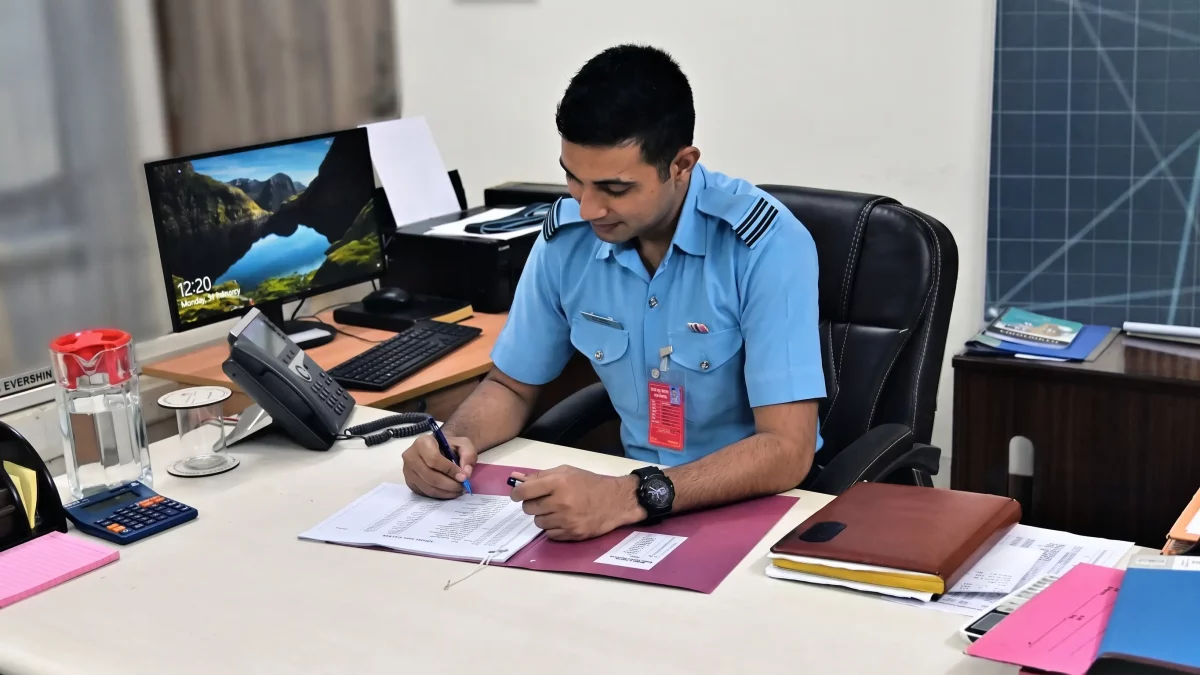
New Delhi, May 5, 2026 — The Indian Air Force has taken a proactive step towards supporting its officers who aspire to transition into the civil services by initiating a formal demand survey to assess interest in preparatory facilities for the Union Public Service Commission (UPSC) Civil Services Examination.
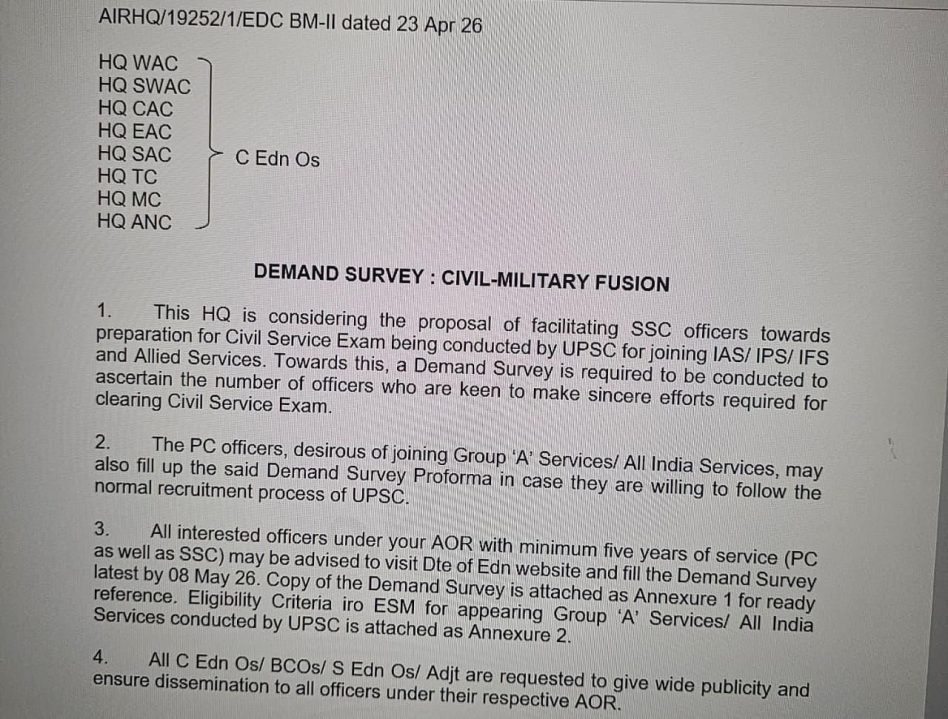
In a letter circulated to all Air Force commands, headquarters has directed a comprehensive survey to determine how many officers, particularly those with at least five years of service, wish to prepare for the prestigious examination that recruits for the Indian Administrative Service (IAS), Indian Police Service (IPS), Indian Foreign Service (IFS) and other Group ‘A’ services. The move signals a significant shift in institutional thinking, recognising that many officers may seek fulfilling second careers in administration after completing their military tenure.
Details of the Initiative
Air Force sources confirm that the headquarters is actively considering a proposal to extend targeted facilities to Short Service Commission (SSC) officers for UPSC preparation. The primary objective is to provide structured support to those who wish to build careers in civil administration following their defence service. Permanent Commission officers have also been invited to participate in the survey; however, they will be required to clear the UPSC examination through the standard recruitment process applicable to all candidates.
The survey form, which officers have been asked to complete, seeks to gauge the seriousness of interest and the scale of potential demand. No specific facilities—such as study leave, access to coaching, library resources or dedicated preparation time—have been announced yet. Decisions on the nature and extent of support will be taken only after the survey results are analysed. This measured approach allows the Air Force to align any future policy with actual requirements while ensuring that operational commitments remain unaffected.
Context and Rationale
The initiative comes at a time when career mobility between the armed forces and civil services is gaining greater acceptance. Short Service Commission officers in the Indian Air Force typically serve a fixed tenure, often ranging from 10 to 14 years, after which many seek stable, long-term opportunities outside uniform. The Civil Services Examination remains one of the most respected career pathways in India, offering administrative authority, policy influence and a structured progression.
UPSC rules already provide certain relaxations for ex-servicemen, including age concessions of up to five years (subject to conditions) and additional attempts in some categories. By exploring preparatory support while officers are still serving, the Air Force aims to reduce the personal and financial burden associated with competitive examination preparation and to facilitate smoother career transitions.
This development also reflects a broader institutional recognition that retaining talent and maintaining high morale requires offering meaningful post-service options. Officers who have demonstrated leadership, discipline, crisis management and domain expertise in aviation, logistics and security can bring valuable perspectives to civil administration.
Potential Implications
If implemented, the proposed facilities could include a combination of study leave, access to professional coaching modules, curated study material and, where feasible, reduced operational commitments during critical preparation phases. Such measures would mirror successful models adopted by certain state governments and public sector organisations that support employees preparing for competitive examinations.
For serving officers, the initiative represents an opportunity to plan their careers with greater clarity. Those who successfully clear the UPSC examination could join the civil services with the advantage of prior leadership experience, potentially strengthening civil-military synergy in governance.
At the organisational level, the Air Force stands to benefit from improved retention among officers who feel their long-term aspirations are valued. At the same time, the service will need to balance any preparatory support with the imperative of maintaining operational readiness. The survey results will be critical in determining whether the demand justifies dedicated resources without compromising core military functions.
Forward Outlook
The demand survey marks only the first stage of what could evolve into a formal policy framework. Should the response indicate substantial interest, Air Force Headquarters is expected to formulate detailed guidelines in consultation with relevant stakeholders. The timeline for any final decision remains dependent on the survey’s findings and internal deliberations.
This development underscores the evolving nature of career pathways in India’s defence services. As the armed forces increasingly emphasise talent management and officer well-being, initiatives that support diverse post-service aspirations are likely to gain further traction.
Officers interested in participating are advised to complete the survey forms circulated through official channels at the earliest. For the latest updates, personnel are encouraged to refer to official Air Force communications.
The Indian Air Force’s willingness to explore structured support for civil services preparation reflects a forward-looking approach that balances institutional priorities with individual career goals. As the survey progresses, it will be closely watched by serving officers, defence aspirants and policy observers alike for its potential to set a precedent across the three services.