



Army Chief Fined ₹2 Lakh by High Court Over Veteran Pension Delay
While on military duty in June 2017, Major Pandere developed a medical condition diagnosed as cystitis cystica glandularis at the Delhi Cantonment Base Hospital.
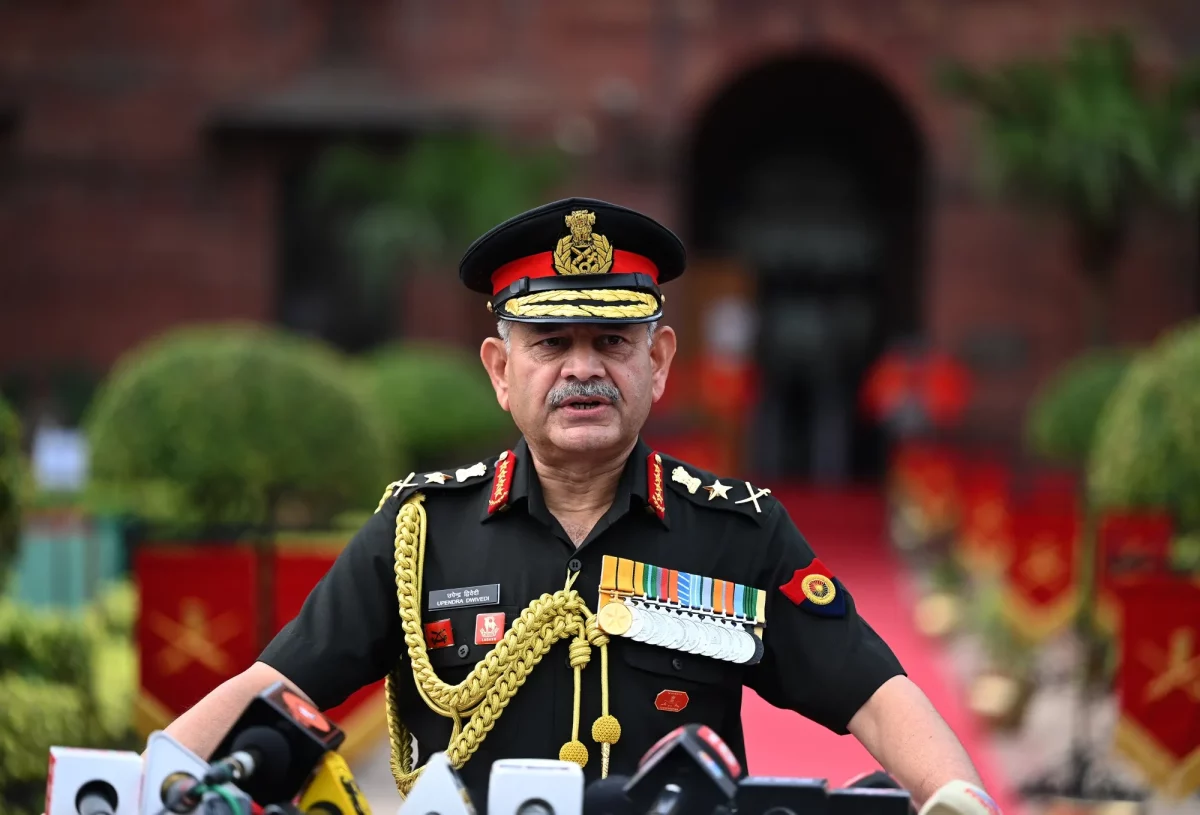
In a significant order underscoring judicial accountability in matters concerning veterans’ entitlements, the Punjab and Haryana High Court has imposed a personal cost of ₹2 lakh on Chief of the Army Staff General Upendra Dwivedi and Defence Secretary Rajesh Kumar Singh for failing to implement court directions granting disability pension to a retired Army Major, despite repeated judicial orders.
Justice Sudeepti Sharma, in her order dated 30 April 2026 passed in a contempt petition, directed that the amount be equally deducted from the salaries of the two senior officials and paid to the petitioner, Major (Retd) Rajdeep Dinkar Pandere, through a demand draft. The court granted one final opportunity to the respondents to file a compliance affidavit, observing that a previous “last opportunity” had been extended with an explicit warning of costs in the event of non-compliance.
Background of the Case
Major Rajdeep Dinkar Pandere, a resident of Pune, was commissioned into the Indian Army on 15 September 2012 in a physically fit condition. He served with 4 Ladakh Scouts based in Leh and undertook field, peace, special action group, and high-altitude postings during his approximately 10 years of service. He was released from the Army on 14 September 2022.
While on military duty in June 2017, Major Pandere developed a medical condition diagnosed as cystitis cystica glandularis at the Delhi Cantonment Base Hospital. He underwent surgery and was placed in a low medical category on 19 September 2017. Over the following years, he was examined by Categorisation and Recategorisation Medical Boards on six occasions and underwent a total of 24 surgeries. He also developed a kidney-related ailment, with his serum creatinine level assessed at 1.13 mg/dl.
On 2 September 2022, the Release Medical Board at Western Command Hospital, Chandimandir, assessed his disability at 15 per cent for life but declared it “neither attributable to nor aggravated by military service,” without providing any specific parameters or reasons for the assessment. His subsequent request for disability pension was rejected on 23 November 2022.
Armed Forces Tribunal and High Court Rulings
Aggrieved by the rejection, Major Pandere approached the Chandigarh Bench of the Armed Forces Tribunal. In its order dated 10 October 2024 in OA No. 1939 of 2023, the Tribunal held that the disability was attributable to military service. It directed that the disability be assessed at 40 per cent in accordance with the Guide to Medical Officers (Military Pensions), 2008, based on the serum creatinine level, and rounded off to 50 per cent for life as per Supreme Court guidelines. The pension was made effective from 1 July 2022.
The Tribunal strongly criticised the Release Medical Board, stating: “We failed to understand what parameter was adopted by the Release Medical Board for assessing the disability at 15 per cent for life and to declare the disability of the applicant as neither attributable to nor aggravated by military service at the time of release from service.”
The Union of India challenged the Tribunal’s order before the Punjab and Haryana High Court. On 28 July 2025, a Division Bench dismissed the writ petition, observing that Major Pandere’s entitlement to disability pension “cannot be doubted.” Subsequently, on 31 October 2025, the High Court disposed of Major Pandere’s civil writ petition seeking implementation of the Tribunal’s order.
Contempt Proceedings and Non-Compliance
Despite the clear judicial directions, the military authorities failed to issue the necessary sanction letter or Pension Payment Order, and no payment was made even after more than two months had elapsed. Major Pandere was therefore constrained to file a contempt petition against Defence Secretary Rajesh Kumar Singh and Army Chief General Upendra Dwivedi, alleging wilful non-compliance with the court’s orders.
During the hearings, counsel for the petitioner, Rajesh Sehgal, submitted that despite the passage of considerable time and explicit judicial directions, the respondents had neither filed a compliance affidavit nor released the entitled benefits.
High Court’s Order on Costs
In her 30 April 2026 order, Justice Sudeepti Sharma noted that on the previous date of hearing, the court had granted a last opportunity to the respondents to file a compliance affidavit, with the specific condition that failure to do so would result in the imposition of costs of ₹2 lakh. As no compliance affidavit was filed, the court imposed the costs and directed that the amount be equally shared between the two respondents and paid to the petitioner.
The order reads: “On the last date of hearing, last opportunity was granted to the respondents to file a compliance affidavit with a condition that in case of non-filing, a cost of Rs 2 lakh shall be imposed.”
Broader Context
This order comes amid growing judicial scrutiny of delays in the implementation of disability pension orders by the Ministry of Defence. In a related matter concerning Lieutenant Colonel (Retd) SS Bhullar, the same High Court recently imposed total costs of ₹3 lakh on the Chief of the Army Staff, the Defence Secretary, and the Principal Controller of Defence Accounts for similar non-compliance with judicial directions on disability benefits.
Such cases highlight systemic challenges in the timely processing and disbursement of veterans’ entitlements, particularly where Release Medical Boards have assessed disabilities as “neither attributable nor aggravated by service” without adequate reasoning, leading to protracted litigation.
Implications
Legal experts view the imposition of personal costs on the highest-ranking military and civilian defence officials as a strong signal that courts will no longer tolerate administrative lethargy in matters affecting the welfare of retired personnel who have suffered service-related disabilities. The ruling reinforces the principle that once a court has determined entitlement, implementation must follow without undue delay.
As of 5 May 2026, no official statement has been issued by the Ministry of Defence or Army Headquarters regarding the order or any intended course of action. The matter remains listed before the Punjab and Haryana High Court for further compliance.
Major Pandere’s case serves as a stark reminder of the human cost of bureaucratic delays and the critical role of the judiciary in upholding the rights of those who have served the nation.