

CISF–DFI Drone Deal: India’s Critical Infrastructure Security Gets a Major Counter-Drone Boost as RTC Behror Set to Become National Centre of Excellence

FacebookWhatsAppTelegramLinkedInXPrintCopy LinkGoogle TranslateGmailThreadsShare

CISF–DFI Drone Deal: India’s Critical Infrastructure Security Gets a Major Counter-Drone Boost as RTC Behror Set to Become National Centre of Excellence

By Defence Journalist Sahil | T.I.N. NETWORK

NEW DELHI: CISF Moves to Build a Stronger Shield Against the Growing Drone Threat

In a major step towards strengthening the security of India’s critical infrastructure against the rapidly evolving threat posed by unmanned aerial systems, the Central Industrial Security Force (CISF) and the Drone Federation of India (DFI) have signed a Memorandum of Understanding (MoU) aimed at significantly enhancing drone and counter-drone capabilities across CISF-protected installations. The agreement was signed at the CISF Headquarters in New Delhi and represents an important effort to bring together the operational experience of one of India’s principal industrial security forces with the technological capabilities and innovation ecosystem of the country’s rapidly expanding indigenous drone industry. The partnership is particularly significant at a time when drones are increasingly being used not only for surveillance and reconnaissance but also for smuggling, intelligence gathering, disruption and potential attacks against sensitive installations. Under the new collaboration, the two organisations will work towards developing stronger detection, identification, tracking, response, forensic analysis, training and counter-drone mechanisms, while also creating opportunities for Indian drone startups and technology companies to participate in operationally relevant security challenges.

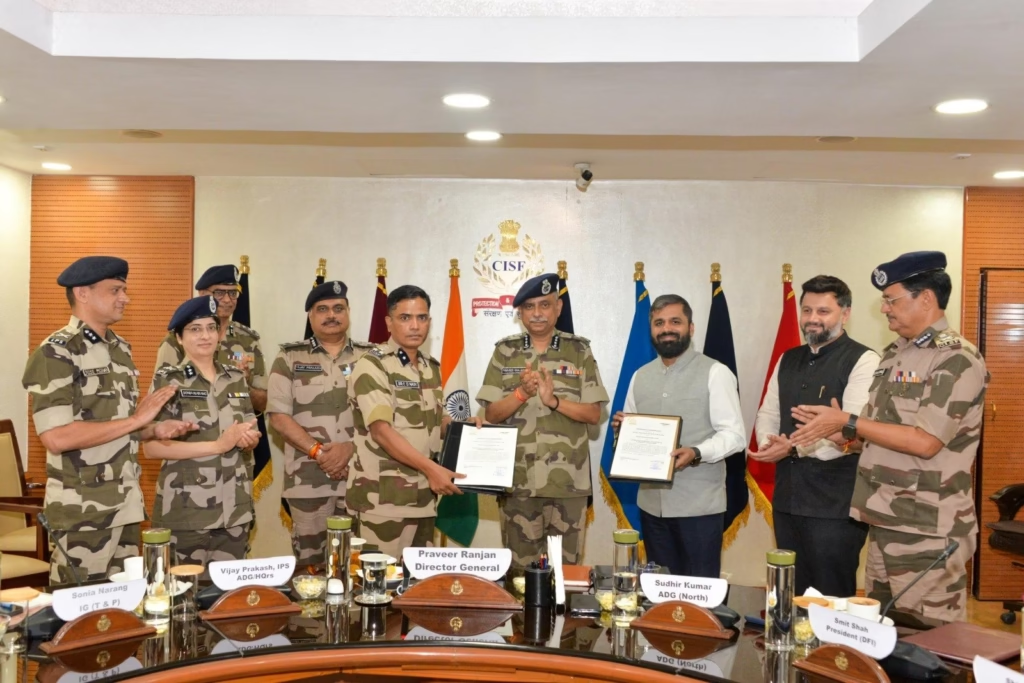
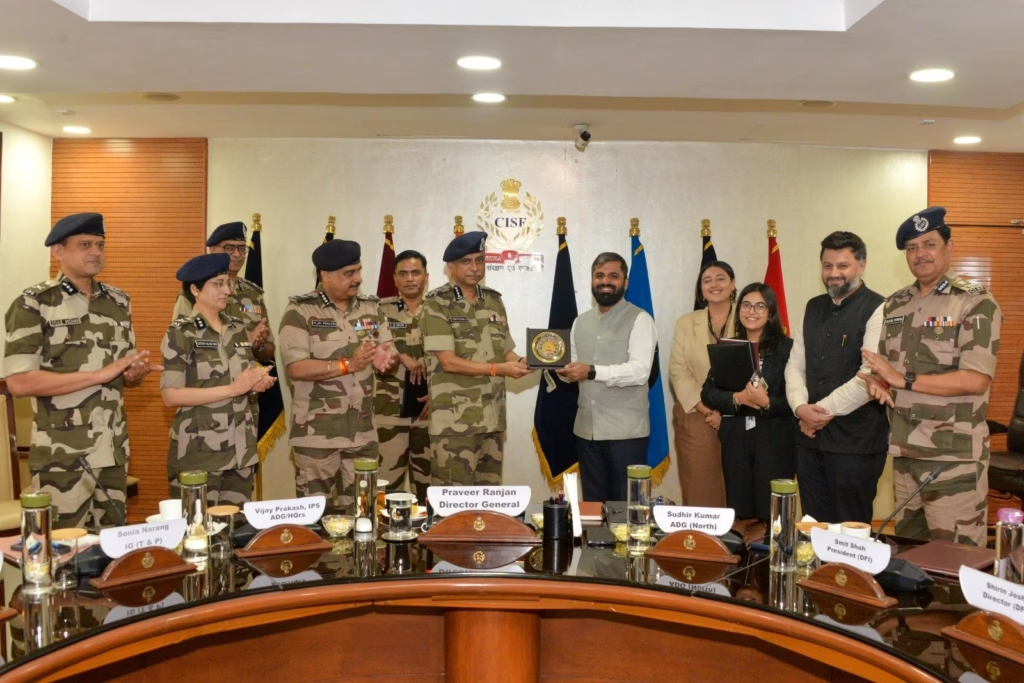
MoU Signed in Presence of CISF Director General Praveer Ranjan

The MoU was formally signed by Dr. C D Naik, Deputy Inspector General and Principal of the MPRTC Behror, on behalf of the CISF, while Shri Smit Shah, President of the Drone Federation of India, signed the agreement on behalf of DFI. The signing ceremony was held in the presence of Shri Praveer Ranjan, Director General of CISF, and senior officers including Shri Sudhir Kumar, ADG North, and Shri Vijay Prakash, ADG Headquarters. Senior representatives of the Drone Federation of India, including Director Shirin Joshi, Associate Director Shivangi Prakash and Chief of Staff Sama Sehgal, also participated in the event. The presence of senior leadership from both organisations underlined the strategic importance being attached to the partnership. Rather than treating drone technology purely as an emerging technological domain, the agreement seeks to integrate it into the larger operational security architecture of CISF, covering both the use of drones for legitimate security applications and the ability to counter hostile or rogue unmanned aerial systems.

CISF Guards More Than 370 Critical Installations Across India

The significance of the agreement becomes even clearer when viewed against the enormous security responsibility carried by the CISF. The force currently protects more than 370 units and installations across the country, including highly sensitive establishments belonging to sectors such as aviation, nuclear energy, space, petroleum and other strategically important areas. These installations are critical to India’s economic functioning, national security and strategic infrastructure, making their protection against emerging forms of aerial intrusion an increasingly important operational requirement. A hostile drone capable of penetrating the security perimeter of a sensitive facility could potentially be used to conduct surveillance, identify vulnerabilities, deliver illicit material or create disruption. Consequently, the ability to detect an unidentified drone at an early stage, determine whether it represents a threat and respond quickly has become an essential component of modern installation security. The CISF, as the nodal agency designated for handling aerial threats at vital installations, is therefore seeking to develop a more systematic and technologically advanced approach to the drone challenge.

From Border Lessons to Critical Infrastructure Protection

The evolution of drone threats in India has demonstrated that unmanned aerial systems can no longer be treated merely as recreational or commercial technology. Their availability, increasing range, improved cameras and sensors, autonomous capabilities and relatively low operating costs have transformed them into tools that can potentially be exploited by hostile actors. CISF’s experience at sensitive border-linked and critical infrastructure units has reinforced the importance of being prepared for such threats before they materialise. The force’s approach is increasingly shifting towards a layered security model in which surveillance, detection, identification, tracking, decision-making and response mechanisms work together. The new partnership with DFI is intended to strengthen this approach by connecting operational requirements with India’s indigenous technology ecosystem and by creating a mechanism through which new technologies can be evaluated in realistic security scenarios.

More Than 3,000 CISF Personnel Already Trained in Drone and Anti-Drone Operations

CISF has already begun incorporating drone technology into its operational activities and training programmes. According to the details of the MoU, more than 3,000 CISF personnel have formally received training related to drone and anti-drone protocols. This growing pool of trained personnel provides the force with an important foundation for expanding its counter-UAS capabilities. In addition, around 80 CISF units are currently using drones for surveillance, monitoring, threat detection and training purposes. This demonstrates that the force is not approaching drone technology only from a defensive perspective. Drones are increasingly being used as security tools that can provide aerial observation, improve situational awareness and support security personnel in monitoring large and complex areas. At the same time, the force is developing domain expertise so that personnel understand both the opportunities presented by drones and the risks created when similar technologies are used by adversaries.

RTC Behror to Emerge as a Centre of Excellence for Drone and Counter-Drone Systems

One of the most significant objectives of the MoU is the proposed transformation of the CISF Recruit Training Centre at Behror into a comprehensive Centre of Excellence for Drone and Counter-Drone Systems. The initiative is expected to create a dedicated institutional ecosystem where personnel can be trained, technologies can be evaluated, operational procedures can be developed and new threat scenarios can be simulated under controlled conditions. The Centre of Excellence is intended to function not simply as a conventional training facility but as a hub for operational preparedness, experimentation, capacity building and applied research in the field of unmanned aerial systems. The development will be undertaken in accordance with guidelines issued by the Ministry of Home Affairs, ensuring that the capabilities developed at Behror remain aligned with the broader national security framework.

Why Behror Could Become a Key Hub for India’s Counter-Drone Preparedness

The proposed Centre of Excellence at Behror could play an important role in bridging the gap between technological innovation and real-world security requirements. Drone technology is developing at a rapid pace, and conventional training models can quickly become outdated if they do not evolve alongside the technology. A dedicated centre can allow CISF personnel to regularly encounter new types of drone platforms, different flight profiles and changing operational scenarios in controlled environments. It can also provide an opportunity to evaluate detection and response systems before their deployment at sensitive installations. The facility could eventually serve as a platform where security personnel, technology developers, researchers and startups interact to identify operational gaps and develop practical solutions. This approach could help create a more responsive counter-drone ecosystem in which technology is tested against realistic requirements rather than developed in isolation.

DFI to Connect CISF With India’s Growing Drone Startup Ecosystem

Under the agreement, the Drone Federation of India will facilitate structured engagement between CISF and Indian drone startups, technology companies and other relevant players in the domestic unmanned systems ecosystem. This component is particularly important because India has witnessed rapid growth in indigenous drone manufacturing, software, autonomy, sensors, communications and related technologies. Bringing these companies into direct interaction with security agencies could help accelerate the development of solutions designed around actual operational requirements. Instead of simply procuring finished systems, the partnership creates the possibility of continuous engagement in which security personnel can communicate their challenges, technology companies can demonstrate solutions and both sides can jointly identify areas requiring further development. Such collaboration could contribute to the larger objective of building an indigenous and self-reliant security technology ecosystem.

Counter-Drone Deployment to Become More Structured and Standardised

A major area of cooperation under the MoU will be the development of Standard Operating Procedures, deployment frameworks and pilot projects for counter-drone systems at CISF-protected establishments. Counter-drone technology is not limited to a single device or mechanism. Effective protection generally requires multiple layers, including detection, identification, tracking, assessment and an appropriate response. Different installations may also have different security requirements depending on their geographical location, infrastructure, surrounding airspace and threat profile. Therefore, standardised operational procedures can help ensure that security personnel understand how to respond when an unidentified or suspicious drone is detected. The proposed collaboration will focus on developing frameworks that can be adapted to different CISF installations while maintaining consistency in training and operational response.

Drone Forensics: Turning Every Incident Into Intelligence

Another important element of the partnership is drone forensics and post-incident analysis. When a suspicious or hostile drone is recovered or intercepted, the information contained within the platform may potentially provide valuable clues about its origin, operator, intended target, flight path and mission. Establishing indigenous forensic capabilities can help investigators systematically examine recovered drones and associated data. The collaboration aims to develop best practices and indigenous forensic tools for analysing rogue drone activity, investigating incidents and conducting post-incident assessments. Such capabilities could allow lessons from one incident to be converted into actionable intelligence and improvements in future security measures. In an evolving threat environment, the ability to learn from every encounter can be as important as the ability to respond to the immediate incident.

Red-Teaming and Joint Drills to Test CISF’s Real-World Preparedness

The MoU also provides for controlled red-teaming exercises and joint drills designed to simulate rogue drone intrusions. These exercises are intended to test the complete response chain, beginning with detection and identification and extending through tracking, escalation, response and post-incident procedures. Red-teaming is particularly valuable because it attempts to expose weaknesses from the perspective of an adversary rather than simply validating existing procedures. By deliberately testing security arrangements against simulated drone intrusions, CISF can identify gaps in sensors, communications, decision-making processes, deployment patterns and response mechanisms. The objective is to ensure that security personnel are prepared not only for predictable scenarios but also for unexpected and rapidly evolving drone threats.

Training to Go Beyond Conventional Classroom Learning

The partnership also places strong emphasis on training and capacity building. Dynamic training modules, student hackathons and challenge programmes are envisaged to expose participants to operational practices, regulatory requirements and different threat scenarios. Such programmes can create a continuous learning environment in which personnel and technology developers work together on emerging challenges. The rapidly changing nature of drone technology means that training cannot remain static. New platforms, autonomous capabilities, navigation methods, sensors and countermeasures continue to emerge, requiring security personnel to update their knowledge regularly. By integrating practical exercises, simulations, technology challenges and operational scenarios into training, CISF can work towards developing a workforce that is better equipped to understand and respond to the full spectrum of drone-related threats.

CISF’s Existing Drone Capability Provides a Strong Foundation

The new MoU does not represent the beginning of CISF’s engagement with drone technology; rather, it builds upon capabilities that the force has already developed. With more than 3,000 personnel trained in drone and anti-drone protocols and around 80 units using drones for surveillance, threat detection and training, the force has already established a significant operational base. The creation of domain experts within CISF further indicates that the organisation is seeking to institutionalise knowledge rather than rely exclusively on external expertise. The next stage is to integrate these capabilities into a more comprehensive system involving training, technology evaluation, counter-drone deployment, forensic analysis and continuous operational testing. The DFI partnership is expected to accelerate this transition.

Aatmanirbhar Bharat Gets a Security Technology Push

The collaboration also carries a broader strategic significance for India’s push towards Aatmanirbhar Bharat in defence and security technology. India’s drone ecosystem includes startups and technology companies working on unmanned aerial platforms, artificial intelligence, autonomy, sensors, communication systems and counter-drone technologies. By creating a structured pathway for these companies to work with CISF, the partnership could encourage the development of indigenous solutions specifically designed for Indian security requirements. The involvement of domestic companies can also help create a feedback loop in which operational experience informs product development and technology improvements subsequently enhance operational capabilities. This model could eventually benefit not only CISF but other security organisations responsible for protecting airports, energy infrastructure, strategic facilities and other critical assets.

DG Praveer Ranjan: Partnership Will Help Identify Gaps in Existing Systems

CISF Director General Shri Praveer Ranjan described the MoU as particularly important for the force’s efforts to develop RTC Behror as a Centre of Excellence for drones and counter-drone systems. He said the partnership with DFI would help advance objectives laid down by the Ministry of Home Affairs and establish Behror as a leading centre for drone and counter-drone capabilities in the country. According to the DG, DFI’s participation would provide CISF with an opportunity to test its preparedness against realistic and evolving drone threats and identify gaps in existing systems, procedures and response mechanisms. His remarks underline an important aspect of the initiative: the objective is not merely to acquire technology but to continuously test whether the technology, procedures and personnel can work together effectively during a real security incident.

DFI President Smit Shah: Indigenous Innovation to Meet Operational Requirements

Drone Federation of India President Shri Smit Shah said the Indian drone industry is fully committed to supporting CISF in safeguarding the country’s critical infrastructure. He emphasised the importance of connecting operational requirements with indigenous technological innovation. According to Shah, testing startup capabilities in realistic scenarios, developing robust forensic tools and creating specialised training platforms would help build a technologically resilient and Aatmanirbhar security architecture. The statement reflects the broader purpose of the collaboration: India’s drone industry is not being positioned merely as a supplier of unmanned systems, but as a potential partner in developing the larger technological ecosystem required to detect, analyse and counter emerging aerial threats.

Why the Drone Threat Is Becoming a New Security Challenge for Critical Infrastructure

The growing availability of drones has fundamentally changed the security environment around sensitive installations. Traditional security architecture has historically focused heavily on threats approaching from the ground, while aviation security has dealt with conventional aircraft operating within regulated airspace. Small drones occupy a different operational space. They can operate at relatively low altitude, potentially approach from unexpected directions and may be difficult to detect depending on their size, construction and operating environment. This creates a requirement for security agencies to develop specialised detection and response mechanisms. The challenge becomes particularly complex around large industrial facilities, airports, power installations, petroleum infrastructure and strategic establishments where even a limited security breach could have significant consequences.

The Future Battlefield and Security Environment Will Demand Counter-UAS Readiness

The proliferation of unmanned systems globally has demonstrated that drones are becoming an increasingly important component of modern military and security operations. Recent conflicts and security incidents around the world have highlighted how relatively inexpensive unmanned platforms can be used for surveillance, targeting, disruption and attacks. Although the CISF operates primarily in the domain of critical infrastructure security rather than conventional battlefield operations, the technological challenge remains relevant. Security forces must prepare for the possibility that techniques developed in military environments could eventually be adapted for attacks or illicit activities against civilian and strategic infrastructure. Developing counter-UAS expertise before such threats become more widespread is therefore a preventive security measure.

From Detection to Response: Building a Layered Counter-Drone Architecture

An effective counter-drone system cannot depend on a single technology. A robust architecture requires a combination of surveillance, detection, identification, tracking, command and control, trained manpower and appropriate response mechanisms. The new CISF–DFI partnership seeks to address precisely this larger ecosystem. The proposed SOPs, pilot projects, forensic capabilities, joint drills and training programmes can collectively contribute to the development of a layered approach. Such a system would allow CISF units to detect suspicious aerial activity earlier, assess the nature of the threat, coordinate their response and subsequently investigate the incident. The objective is to create an integrated security chain rather than treating each drone sighting as an isolated event.

Critical Infrastructure Security Is Entering a New Technological Era

The CISF–DFI MoU reflects a wider transformation taking place in India’s security architecture. Critical infrastructure is increasingly becoming digitally connected, technologically sophisticated and operationally complex. As the nature of threats evolves, physical security forces must also integrate technologies such as drones, artificial intelligence, advanced sensors, data analytics and counter-UAS systems into their daily operations. The proposed Centre of Excellence at Behror could become an important part of this transition by creating a dedicated environment for experimentation, training and operational validation. If implemented effectively, the initiative could help establish a model for how security forces and domestic technology ecosystems can collaborate to address emerging threats.

A Major Step Towards a Technology-Driven CISF

The CISF’s collaboration with the Drone Federation of India marks a significant shift towards a more technology-driven approach to critical infrastructure protection. With responsibility for hundreds of strategically important installations, the force requires capabilities that can evolve as quickly as the threats it faces. The partnership brings together operational experience, specialised training, indigenous technology, applied research and structured testing. The development of RTC Behror as a Centre of Excellence could provide the institutional backbone for these activities, while DFI’s engagement with Indian startups could help ensure that the technological side of the initiative remains innovative and responsive to operational needs.

India’s Counter-Drone Security Architecture Could Gain a New Institutional Hub

The real significance of the MoU may ultimately be measured by what emerges from the Centre of Excellence at Behror. If the facility successfully integrates training, testing, red-teaming, research, drone forensics and engagement with Indian technology companies, it could become an important national hub for counter-drone preparedness. It could also provide a platform for identifying vulnerabilities before they are exploited, allowing CISF to continuously upgrade its procedures and systems. In an environment where unmanned aerial threats are changing rapidly, institutionalising such expertise is critical. The partnership therefore represents more than a conventional MoU; it is an attempt to build a long-term capability that combines people, procedures and technology.

Conclusion: A New Security Shield Against the Drone Threat

The signing of the CISF–DFI MoU marks an important development in India’s efforts to prepare its critical infrastructure for the next generation of aerial threats. With more than 370 protected units, thousands of trained personnel and dozens of units already using drones operationally, CISF has established a substantial foundation. The proposed Centre of Excellence at RTC Behror now has the potential to take this capability to a much higher level by combining training, counter-drone deployment frameworks, forensic analysis, red-teaming, applied research and indigenous technological innovation. As drones become increasingly accessible and sophisticated, the ability to detect, understand and respond to rogue unmanned systems will become an essential part of modern infrastructure security. Through this partnership, CISF and the Indian drone industry are seeking to ensure that India’s critical installations remain protected by a security architecture that is not only technologically advanced but also indigenous, adaptive and prepared for the threats of tomorrow.


CISF–DFI की बड़ी पहल: ड्रोन खतरे से निपटने के लिए मजबूत होगा भारत का सुरक्षा कवच, बहरोड़ बनेगा ड्रोन और काउंटर-ड्रोन सिस्टम का सेंटर ऑफ एक्सीलेंस

BY DEFENCE JOURNALIST SAHIL | T.I.N. NETWORK

नई दिल्ली: देश के महत्वपूर्ण प्रतिष्ठानों की सुरक्षा में ड्रोन के खिलाफ CISF का बड़ा कदम

देश के महत्वपूर्ण और संवेदनशील प्रतिष्ठानों को तेजी से बढ़ते ड्रोन खतरों से सुरक्षित रखने की दिशा में केंद्रीय औद्योगिक सुरक्षा बल यानी CISF ने एक बड़ा कदम उठाया है। CISF और Drone Federation of India यानी DFI के बीच ड्रोन और काउंटर-ड्रोन क्षमताओं को मजबूत करने के लिए एक महत्वपूर्ण Memorandum of Understanding यानी MoU पर हस्ताक्षर किए गए हैं। नई दिल्ली स्थित CISF मुख्यालय में हुए इस समझौते का उद्देश्य केवल ड्रोन तकनीक का इस्तेमाल बढ़ाना नहीं है, बल्कि संदिग्ध और Rogue Drones की पहचान, निगरानी, ट्रैकिंग, प्रतिक्रिया, फोरेंसिक जांच, संयुक्त अभ्यास और भविष्य के खतरों के लिए सुरक्षा बल की तैयारियों को एक नए स्तर पर ले जाना है। देश के एयरपोर्ट, परमाणु प्रतिष्ठान, अंतरिक्ष केंद्र, तेल रिफाइनरी और अन्य महत्वपूर्ण बुनियादी ढांचे की सुरक्षा में CISF की बड़ी भूमिका है। ऐसे में ड्रोन आधारित निगरानी और संभावित हवाई खतरों के बढ़ते इस्तेमाल को देखते हुए यह समझौता भारत की Critical Infrastructure Security Architecture को तकनीकी रूप से और मजबूत करने की दिशा में महत्वपूर्ण कदम माना जा रहा है।

CISF मुख्यालय में हुआ समझौता, DG प्रवीर रंजन समेत वरिष्ठ अधिकारी रहे मौजूद

इस महत्वपूर्ण MoU पर CISF की ओर से डॉ. सी. डी. नायक, DIG एवं Principal, MPRTC Behror ने हस्ताक्षर किए, जबकि Drone Federation of India की ओर से DFI के President श्री स्मित शाह ने समझौते पर हस्ताक्षर किए। कार्यक्रम CISF के Director General श्री प्रवीर रंजन की मौजूदगी में आयोजित हुआ। इस अवसर पर ADG North श्री सुधीर कुमार और ADG Headquarters श्री विजय प्रकाश सहित बल के कई वरिष्ठ अधिकारी उपस्थित रहे। Drone Federation of India की ओर से Director शिरीन जोशी, Associate Director शिवांगी प्रकाश और Chief of Staff समा सहगल ने भी कार्यक्रम में हिस्सा लिया। वरिष्ठ अधिकारियों की मौजूदगी इस बात को दर्शाती है कि CISF ड्रोन और काउंटर-ड्रोन तकनीक को अब केवल एक सहायक तकनीक के तौर पर नहीं बल्कि भविष्य की Critical Infrastructure Security के एक महत्वपूर्ण हिस्से के रूप में देख रहा है।

370 से अधिक महत्वपूर्ण प्रतिष्ठानों की सुरक्षा करता है CISF

इस समझौते का महत्व इसलिए भी बढ़ जाता है क्योंकि CISF देशभर में 370 से अधिक महत्वपूर्ण यूनिट्स और प्रतिष्ठानों की सुरक्षा करता है। इनमें Aviation Sector, Nuclear Installations, Space Centres, Oil Refineries और अन्य संवेदनशील एवं रणनीतिक महत्व के प्रतिष्ठान शामिल हैं। ऐसे प्रतिष्ठानों पर किसी भी प्रकार की हवाई घुसपैठ या अनधिकृत ड्रोन गतिविधि सुरक्षा के लिए गंभीर चुनौती बन सकती है। छोटे आकार के ड्रोन कम ऊंचाई पर उड़ान भरते हुए निगरानी या अन्य अवैध गतिविधियों के लिए इस्तेमाल किए जा सकते हैं। इसलिए किसी Rogue Drone को समय रहते Detect करना, उसकी पहचान करना, उसे Track करना और खतरे के स्तर के अनुसार उचित प्रतिक्रिया देना आधुनिक सुरक्षा व्यवस्था की महत्वपूर्ण जरूरत बन चुका है। CISF को Vital Installations पर Aerial Threats से निपटने के लिए Nodal Agency के रूप में जिम्मेदारी दी गई है और नया MoU इसी जिम्मेदारी को और तकनीकी मजबूती देने की दिशा में आगे बढ़ता कदम है।

सीमा क्षेत्र और संवेदनशील प्रतिष्ठानों से मिले अनुभवों के आधार पर नई तैयारी

ड्रोन खतरे की प्रकृति लगातार बदल रही है। ड्रोन तकनीक अब केवल कैमरा लगाने या हवाई तस्वीरें लेने तक सीमित नहीं रह गई है। आधुनिक ड्रोन अधिक सक्षम सेंसर, बेहतर संचार, लंबी उड़ान क्षमता और विभिन्न प्रकार की स्वायत्त क्षमताओं के साथ विकसित हो रहे हैं। भारत में संवेदनशील सीमा क्षेत्रों और महत्वपूर्ण प्रतिष्ठानों के आसपास सामने आए ड्रोन से जुड़े मामलों ने भी सुरक्षा एजेंसियों के सामने नई चुनौतियां रखी हैं। CISF अब इन अनुभवों के आधार पर अपनी सुरक्षा व्यवस्था को और व्यवस्थित एवं तकनीकी रूप से सक्षम बनाने की दिशा में काम कर रहा है। नई पहल का उद्देश्य ऐसी व्यवस्था तैयार करना है जिसमें ड्रोन की पहचान से लेकर उसके खिलाफ प्रतिक्रिया और घटना के बाद की जांच तक पूरी प्रक्रिया एक Integrated Security Chain के रूप में काम करे।

3,000 से अधिक CISF कर्मियों को ड्रोन और एंटी-ड्रोन प्रशिक्षण

CISF पहले ही ड्रोन तकनीक को अपनी Operational Security और Training Architecture में शामिल कर चुका है। उपलब्ध जानकारी के अनुसार 3,000 से अधिक CISF personnel को ड्रोन और Anti-Drone Protocols का प्रशिक्षण दिया जा चुका है। इसके साथ ही CISF की लगभग 80 Units सक्रिय रूप से ड्रोन तकनीक का इस्तेमाल निगरानी, Monitoring, Threat Detection और Training के लिए कर रही हैं। इसका मतलब यह है कि CISF ड्रोन को केवल खतरे के रूप में नहीं देख रहा, बल्कि सुरक्षा अभियानों में एक उपयोगी तकनीकी माध्यम के रूप में भी इस्तेमाल कर रहा है। वहीं, दूसरी तरफ Force ने Drone Technology के क्षेत्र में Domain Experts की टीम भी विकसित की है, जो CISF के Operational Framework में Drone Technology के बेहतर इस्तेमाल और Counter-Drone Capabilities के विकास में महत्वपूर्ण भूमिका निभा रही है।

RTC Behror बनेगा Drone और Counter-Drone Systems का Centre of Excellence

इस पूरे समझौते की सबसे बड़ी उपलब्धियों में से एक CISF के Recruit Training Centre यानी RTC Behror को Drone और Counter-Drone Systems के लिए एक व्यापक Centre of Excellence के रूप में विकसित करने की योजना है। बहरोड़ में बनने वाला यह Centre केवल प्रशिक्षण देने वाली जगह नहीं होगा, बल्कि यहां Drone Technology, Counter-Drone Systems, Operational Research, Testing, Red-Teaming, Forensics और Capacity Building से जुड़े कई पहलुओं पर काम किया जा सकेगा। इस Centre का विकास Ministry of Home Affairs की Guidelines के अनुरूप किया जाएगा। यदि यह योजना अपने उद्देश्य के अनुरूप विकसित होती है तो RTC Behror भविष्य में देश के लिए Counter-UAS Preparedness का एक महत्वपूर्ण Institutional Hub बन सकता है।

बहरोड़ में तकनीक, प्रशिक्षण और ऑपरेशनल तैयारी का बनेगा संगम

ड्रोन तकनीक तेजी से बदल रही है और यही कारण है कि सुरक्षा बलों की Training भी लगातार बदलती तकनीक के साथ विकसित करनी होगी। RTC Behror में अलग-अलग प्रकार के Drone Threat Scenarios को नियंत्रित वातावरण में Simulate करने की क्षमता विकसित की जा सकती है। यहां CISF personnel को नए Drone Platforms, Detection Systems और Counter-Drone Technologies के साथ परिचित कराया जा सकेगा। इसके अलावा नई तकनीकों को वास्तविक ऑपरेशनल जरूरतों के आधार पर Test करने का अवसर मिलेगा। इसका सबसे बड़ा फायदा यह होगा कि किसी संवेदनशील प्रतिष्ठान पर सिस्टम की तैनाती से पहले उसकी क्षमता और सीमाओं को Training Environment में समझा जा सकेगा।

DFI जोड़ेगा CISF को भारतीय Drone Startups और Technology Companies से

इस साझेदारी का एक महत्वपूर्ण हिस्सा भारत के तेजी से बढ़ते Drone Startup Ecosystem को CISF की Operational Requirements से जोड़ना है। DFI भारतीय Drone Startups और Technology Companies के साथ CISF की Structured Engagement में मदद करेगा। इसका उद्देश्य ऐसी Technologies को सामने लाना है जो वास्तविक सुरक्षा चुनौतियों के समाधान में उपयोगी साबित हो सकती हैं। इससे भारतीय कंपनियों को भी Security Forces की वास्तविक जरूरतों को समझने का मौका मिलेगा। दूसरी तरफ CISF को नए Indigenous Technologies और Innovations का परीक्षण करने का अवसर मिलेगा। इस तरह Operational Requirement और Technological Innovation के बीच एक सीधा संबंध बनाया जा सकेगा।

Counter-Drone Systems की तैनाती के लिए बनेंगे SOP और Deployment Framework

MoU के तहत CISF-protected establishments पर Counter-Drone Systems की Structured Deployment के लिए Standard Operating Procedures यानी SOPs, Deployment Frameworks और Pilot Projects विकसित करने पर काम किया जाएगा। Counter-Drone Security केवल एक मशीन या एक सिस्टम लगाने तक सीमित नहीं होती। इसमें Drone Detection, Identification, Tracking, Threat Assessment, Communication, Command and Control और Response जैसे कई स्तर शामिल होते हैं। अलग-अलग प्रतिष्ठानों की जरूरत भी अलग हो सकती है। ऐसे में SOPs और Deployment Frameworks CISF Units को यह समझने में मदद करेंगे कि किसी संदिग्ध Drone की पहचान होने पर किस प्रकार की प्रक्रिया अपनाई जानी चाहिए और किस स्तर पर किस प्रकार की प्रतिक्रिया आवश्यक है।

Drone Forensics बनेगा Rogue Drone Investigation का नया हथियार

MoU का एक महत्वपूर्ण क्षेत्र Drone Forensics भी है। यदि किसी संदिग्ध Drone को बरामद किया जाता है या वह किसी सुरक्षा घटना में शामिल पाया जाता है, तो उसके अंदर मौजूद तकनीकी जानकारी जांच एजेंसियों के लिए महत्वपूर्ण हो सकती है। Drone का डेटा, Flight Information और अन्य तकनीकी संकेत घटना की जांच में मदद कर सकते हैं। इसी को ध्यान में रखते हुए CISF और DFI Rogue Drone Activity के Analysis, Investigation और Post-Incident Assessment के लिए Indigenous Forensic Tools और Best Practices विकसित करने पर काम करेंगे। इसका उद्देश्य केवल घटना का जवाब देना नहीं बल्कि हर घटना से मिली जानकारी को भविष्य की सुरक्षा व्यवस्था में इस्तेमाल करना भी होगा।

Red-Teaming से परखी जाएगी CISF की असली तैयारी

MoU के तहत Controlled Red-Teaming Exercises और Joint Drills आयोजित किए जाएंगे। इन अभ्यासों का उद्देश्य वास्तविक जैसी परिस्थितियों में यह जांचना होगा कि CISF किसी Rogue Drone Intrusion का सामना कितनी तेजी और प्रभावी तरीके से कर सकता है। अभ्यासों में Drone Intrusion Detection से लेकर Tracking, Response, Escalation और Post-Incident Readiness तक पूरी प्रक्रिया को परखा जाएगा। Red-Teaming का फायदा यह है कि इसमें सुरक्षा व्यवस्था को एक संभावित विरोधी या हमलावर के नजरिए से चुनौती दी जाती है। इससे उन कमियों को सामने लाया जा सकता है जो सामान्य Training Exercises में दिखाई नहीं देतीं। यही वजह है कि भविष्य की Counter-Drone Preparedness के लिए ऐसे अभ्यास बेहद महत्वपूर्ण हो सकते हैं।

Training Modules, Hackathons और Challenge Programmes से बढ़ेगी क्षमता

साझेदारी के तहत Dynamic Training Modules, Student Hackathons और Challenge Programmes भी विकसित किए जाएंगे। इन कार्यक्रमों के माध्यम से Operational Practices, Regulations और अलग-अलग Drone Threat Scenarios को समझने पर जोर दिया जाएगा। Drone Technology इतनी तेजी से बदल रही है कि एक बार प्रशिक्षण हासिल कर लेने के बाद वर्षों तक उसी ज्ञान पर निर्भर रहना पर्याप्त नहीं होगा। Security Personnel को लगातार नई Technologies, नए Threat Patterns और नए Countermeasures के बारे में प्रशिक्षित करना होगा। Hackathons और Challenge Programmes इस प्रक्रिया में युवा तकनीकी प्रतिभाओं और Startups को भी जोड़ सकते हैं, जिससे नए और Innovative Solutions सामने आने की संभावना बढ़ेगी।

आत्मनिर्भर भारत की दिशा में Security Technology को बढ़ावा

CISF और DFI की यह साझेदारी भारत के Aatmanirbhar Bharat अभियान के लिहाज से भी महत्वपूर्ण है। देश में Drone Manufacturing, Artificial Intelligence, Autonomous Systems, Sensors, Communication Technologies और Counter-Drone Systems के क्षेत्र में कई भारतीय कंपनियां और Startups काम कर रहे हैं। यदि इन कंपनियों को सुरक्षा बलों की वास्तविक जरूरतों के साथ सीधे जोड़ा जाता है तो ऐसी Technologies विकसित की जा सकती हैं जो भारतीय परिस्थितियों और सुरक्षा आवश्यकताओं के अनुरूप हों। इससे विदेशी तकनीकों पर निर्भरता कम करने और घरेलू Security Technology Ecosystem को मजबूत करने में मदद मिल सकती है। यह मॉडल भविष्य में अन्य Security Organisations के लिए भी उपयोगी साबित हो सकता है।

DG प्रवीर रंजन ने बताया MoU को क्यों माना जा रहा है महत्वपूर्ण

CISF के Director General श्री प्रवीर रंजन ने कहा कि यह MoU CISF के लिए विशेष महत्व रखता है क्योंकि बल RTC Behror को Drone और Counter-Drone Systems के क्षेत्र में Centre of Excellence के रूप में विकसित करने की दिशा में काम कर रहा है। उन्होंने विश्वास जताया कि CISF और DFI की साझेदारी Ministry of Home Affairs द्वारा निर्धारित उद्देश्यों को आगे बढ़ाने में मदद करेगी और Behror को देश में Drone तथा Counter-Drone Capabilities का Leading Centre बनाने की दिशा में योगदान देगी। उन्होंने यह भी कहा कि DFI की भागीदारी से CISF को वास्तविक और लगातार बदलते Drone Threats के खिलाफ अपनी Preparedness को Test करने का अवसर मिलेगा। इससे मौजूदा Systems, Procedures और Response Mechanisms में मौजूद Gaps की पहचान करने में मदद मिलेगी।

DFI President Smit Shah बोले—Operational Requirements और Indigenous Innovation को जोड़ना लक्ष्य

Drone Federation of India के President श्री स्मित शाह ने कहा कि भारतीय Drone Industry देश के Critical Infrastructure की सुरक्षा में CISF का पूरा सहयोग करने के लिए प्रतिबद्ध है। उन्होंने कहा कि इस Partnership का उद्देश्य Operational Requirements को Indigenous Technological Innovations के साथ जोड़ना है। वास्तविक परिस्थितियों में भारतीय Startups की Capabilities को Test करना, मजबूत Forensic Tools विकसित करना और Specialized Training Platforms तैयार करना इस दिशा में महत्वपूर्ण कदम होंगे। उनके अनुसार यह साझेदारी भारत के लिए एक Technologically Resilient और Aatmanirbhar Security Architecture तैयार करने में योगदान दे सकती है।

क्यों बढ़ रहा है Drone Threat और क्यों जरूरी है Counter-Drone Shield

दुनियाभर में Drone Technology के तेजी से प्रसार ने Security Architecture के सामने नई चुनौती खड़ी कर दी है। पहले सुरक्षा का बड़ा फोकस Ground Threats और Conventional Aviation Threats पर होता था, लेकिन छोटे और कम ऊंचाई पर उड़ने वाले Drones ने सुरक्षा का एक नया आयाम खोल दिया है। ऐसे ड्रोन Surveillance, Intelligence Gathering, Smuggling या अन्य अवैध गतिविधियों के लिए इस्तेमाल किए जा सकते हैं। संवेदनशील प्रतिष्ठानों के आसपास ऐसी गतिविधियों को समय रहते Detect करना इसलिए जरूरी है क्योंकि किसी भी संभावित खतरे का शुरुआती चरण में पता लगने से Security Forces को Response के लिए अधिक समय मिलता है। यही कारण है कि Counter-UAS Capability अब आधुनिक Critical Infrastructure Protection का महत्वपूर्ण हिस्सा बनती जा रही है।

भविष्य की सुरक्षा में Counter-UAS Capability होगी बेहद अहम

दुनियाभर के संघर्षों और सुरक्षा घटनाओं ने यह दिखाया है कि Unmanned Systems आने वाले समय में Security और Warfare दोनों में महत्वपूर्ण भूमिका निभाने वाले हैं। कम लागत वाले Drone Platforms भी Surveillance और अन्य मिशनों के लिए प्रभावी साबित हो सकते हैं। हालांकि CISF का प्राथमिक दायित्व Battlefield Operations नहीं बल्कि Critical Infrastructure Security है, लेकिन Modern Drone Technology से पैदा होने वाली चुनौती उसके लिए भी महत्वपूर्ण है। भविष्य में जिस तरह से Military और Security Technologies विकसित होंगी, उसी के अनुरूप Critical Infrastructure की सुरक्षा व्यवस्था को भी विकसित करना होगा। CISF और DFI का नया MoU इसी भविष्य की चुनौती के लिए पहले से तैयारी करने की दिशा में एक महत्वपूर्ण कदम है।

Detection से Response तक तैयार होगा Layered Counter-Drone Security Model

एक प्रभावी Counter-Drone Architecture केवल एक Anti-Drone Gun या किसी एक Detection System पर निर्भर नहीं हो सकता। इसमें Detection, Identification, Tracking, Threat Assessment, Command and Control, Trained Manpower और उचित Response Mechanism का एक साथ काम करना जरूरी है। CISF और DFI की साझेदारी इसी व्यापक Layered Security Approach को मजबूत करने की दिशा में आगे बढ़ रही है। यदि विभिन्न Technologies, SOPs, Training और Operational Response को एकीकृत किया जाता है तो CISF किसी भी संदिग्ध Drone Activity को पहले Detect करने, उसका Threat Level समझने और उसके बाद उचित कार्रवाई करने में बेहतर स्थिति में होगा।

CISF में Technology-Driven Security Architecture की ओर बड़ा बदलाव

CISF और DFI का यह MoU केवल एक सामान्य तकनीकी साझेदारी नहीं है। यह इस बात का संकेत है कि देश की Critical Infrastructure Security अब तेजी से Technology-Driven हो रही है। आने वाले समय में Drones, Artificial Intelligence, Advanced Sensors, Data Analytics और Counter-UAS Systems जैसे तकनीकी साधन सुरक्षा व्यवस्था का महत्वपूर्ण हिस्सा बन सकते हैं। CISF की मौजूदा Drone Capability, 3,000 से अधिक Trained Personnel और लगभग 80 Units में Drone Use के साथ यदि RTC Behror का Centre of Excellence भी पूरी क्षमता से विकसित होता है, तो यह देश में Counter-Drone Preparedness के लिए एक महत्वपूर्ण संस्थागत आधार तैयार कर सकता है।

भारत के Critical Infrastructure के लिए Drone Threat के खिलाफ नया सुरक्षा कवच

CISF और Drone Federation of India के बीच हुआ यह MoU भारत की Critical Infrastructure Security के लिए एक महत्वपूर्ण तकनीकी और रणनीतिक पहल है। देशभर में 370 से अधिक महत्वपूर्ण प्रतिष्ठानों की सुरक्षा करने वाली CISF के लिए Drone Threat को नजरअंदाज करना संभव नहीं है। ऐसे में 3,000 से अधिक प्रशिक्षित कर्मियों, लगभग 80 Drone-Enabled Units, Domain Experts और अब DFI के साथ इस नई साझेदारी के जरिए बल अपनी Counter-Drone Capabilities को एक व्यापक ढांचे में विकसित करने की दिशा में आगे बढ़ रहा है। RTC Behror को Drone और Counter-Drone Systems का Centre of Excellence बनाने की योजना इस पहल का सबसे महत्वपूर्ण हिस्सा है। यदि Training, Red-Teaming, Forensics, Applied Research, SOP Development और Indigenous Technology Innovation को एक साथ प्रभावी तरीके से लागू किया जाता है, तो बहरोड़ आने वाले समय में भारत की Counter-UAS Preparedness का एक महत्वपूर्ण केन्द्र बन सकता है। बढ़ते Drone Threat के दौर में यह साझेदारी देश के महत्वपूर्ण प्रतिष्ठानों के लिए एक ऐसा सुरक्षा कवच तैयार करने की कोशिश है जो तकनीकी रूप से मजबूत, स्वदेशी, लगातार विकसित होने वाला और भविष्य के हवाई खतरों के लिए तैयार हो।

Categories:
error: Content is protected !!