


“Information Travels Faster Than Facts”: DGMO Lt Gen Abhijit S. Pendharkar Warns of Cognitive Warfare, Misinformation and the Battle for Trust
By Defence Journalist Sahil | T.I.N. NETWORK
New Delhi: DGMO Highlights the Changing Nature of the Battlefield
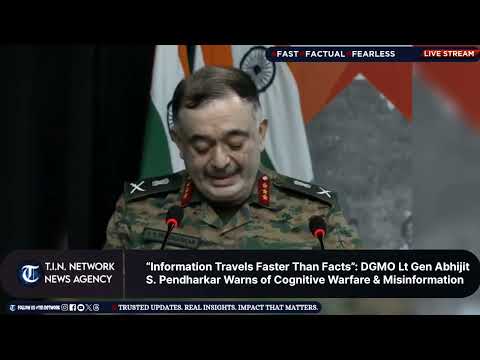
New Delhi witnessed a detailed discussion on the rapidly changing character of modern warfare and national security at the Annual Major Bob Khathing Memorial Lecture 2026, where Director General of Military Operations (DGMO) Lieutenant General Abhijit S. Pendharkar underlined the growing importance of the information and cognitive domains in contemporary conflict. Addressing the gathering, Lt Gen Pendharkar said that the battlefield of today is no longer restricted to conventional military formations, physical territory or kinetic weapons. According to him, the information environment has fundamentally changed, with digital platforms allowing narratives, images, videos and messages to travel at unprecedented speed. He pointed out that a message generated on a single mobile phone can reach thousands of people within minutes and millions within an hour, creating an environment where perception can sometimes move faster than verification and where the speed of information can have direct consequences for security.
“Information Travels Faster Than Facts”
One of the central themes of Lt Gen Pendharkar’s address was the growing gap between the speed at which information spreads and the time required to establish whether that information is accurate. He cautioned that photographs can be removed from their original context, videos can be edited to convey an entirely different meaning, fabricated social-media accounts can create an artificial impression of public opinion, while synthetic narratives repeated continuously can gradually acquire an appearance of credibility. In such an environment, the challenge for security forces is not merely to respond to false information but to operate in a battlespace where public perception itself can become a strategic objective.
The DGMO’s remarks underline an increasingly important reality of modern conflict: information can influence the battlefield even without a single shot being fired. A manipulated video, an old photograph presented as a current event or a fabricated claim attributed to a government or security organisation can potentially trigger fear, confusion or mistrust. The challenge becomes particularly significant during periods of military tension, security operations or civil emergencies, when citizens seek rapid information and unverified material can spread before official agencies have an opportunity to establish the facts.
The Battlefield Has Expanded Into the Cognitive Domain
Lt Gen Pendharkar described the modern battlefield as increasingly influenced by the cognitive domain, where the objective is not necessarily to physically defeat a soldier but to influence what people believe, what they fear, whom they trust and how they perceive events. This represents a significant transformation from traditional concepts of warfare, where military effectiveness was primarily measured through control of terrain, destruction of enemy capabilities and battlefield manoeuvre.
In the cognitive domain, however, the target can be perception itself. The objective may be to create doubt about institutions, weaken public confidence, generate fear or deepen existing social divisions. The DGMO emphasised that hostile actors are increasingly capable of exploiting social-media platforms to distribute fabricated stories, manipulated imagery and misleading narratives. Such campaigns, he said, can attempt to undermine the credibility of security forces and institutions.
The significance of this challenge extends beyond military organisations. In a digitally connected society, citizens, media organisations, government institutions and security forces all operate within the same rapidly moving information ecosystem. Consequently, maintaining credibility and public trust becomes an important component of national security.
Northeast India Presents a Unique Information Environment
The DGMO placed particular emphasis on the Northeast, drawing a connection between the region’s complex social environment and the emerging challenges associated with information warfare. The Northeast is characterised by extraordinary diversity in history, traditions, identities and aspirations. Lt Gen Pendharkar highlighted this diversity as an important context when examining the information environment and security challenges facing the region.
According to the DGMO, hostile narratives do not succeed merely because they are circulated widely. They become effective when they find an audience willing to believe them. This distinction is critical because it shifts the focus from simply counting the number of views, shares or forwards to understanding the underlying question of trust.
A false narrative may receive millions of views and still have limited impact if the public does not consider it credible. Conversely, a relatively small piece of misinformation can have disproportionate consequences if it reaches an audience that already has doubts or grievances. This makes social trust, institutional credibility and responsible communication important components of the security environment.
“Information Warfare Is Ultimately a Contest for Trust”
A particularly significant observation in the DGMO’s address was his assertion that information warfare is ultimately a contest for trust. Lt Gen Pendharkar argued that the most effective response to misinformation cannot simply be the production of more information. Instead, institutions must build credibility over time so that accurate information is trusted when it matters most.
This approach places a greater responsibility on security organisations to communicate with accuracy, consistency and transparency wherever operational circumstances permit. The DGMO stressed that speed, accuracy and credibility must work together. Information that is accurate but arrives too late may fail to counter a rapidly spreading false narrative, while information that is fast but inaccurate can damage institutional credibility.
The challenge therefore lies in achieving the correct balance between rapid communication and responsible verification. In an environment where social-media platforms can transform a local incident into a national or international discussion within minutes, communication has become an integral component of modern security operations.
Major Bob Khathing’s Legacy and the Importance of Trust
Linking his observations to the life and legacy of Major Bob Khathing, Lt Gen Pendharkar highlighted the continuing relevance of leadership in the Northeast. He said Major Khathing’s life serves as a reminder that leadership in the region requires an understanding of both security and society.
The DGMO stressed that national integration is strengthened not only by securing territory but also by building trust among people. This principle has wider relevance for modern security operations because military effectiveness ultimately depends on the relationship between security forces and the communities among whom they operate.
The lesson from Major Khathing’s legacy, as highlighted during the lecture, is that security cannot be viewed exclusively through a territorial or kinetic lens. Building confidence, understanding local communities and maintaining communication are equally important in creating a stable security environment.
Every Soldier Is Also an Ambassador of the Organisation
Lt Gen Pendharkar also addressed the responsibility carried by individual soldiers and leaders during security operations. He described security as an inclusive concept, in which people and institutions are equally affected. For the armed forces, this creates an important responsibility because actions taken on the ground can produce consequences far beyond their immediate operational effect.
He therefore emphasised that every soldier is also an ambassador of the organisation. Professional conduct, respect for the local population and adherence to the highest standards of discipline, he noted, are not merely ethical requirements. They directly contribute to the credibility and legitimacy of the security forces.
In the contemporary information environment, even a local incident can be recorded on a mobile phone and rapidly distributed across social-media platforms. An individual action can consequently become a national narrative within a short period. This makes discipline, professionalism and respectful engagement with civilians important not only from an ethical perspective but also from an information and national-security standpoint.
From the Traditional Battlefield to a 360-Degree Security Environment
Reflecting on the transformation he has witnessed during his military career, Lt Gen Pendharkar told the audience that the nature of military service and warfare has changed dramatically from the environment in which senior officers began their careers. He described the transformation as effectively a “360-degree” change, highlighting how technology, information networks and new forms of conflict have expanded the battlefield.
The contemporary soldier may therefore have to operate simultaneously in multiple domains — physical, technological, informational and cognitive. Conventional military capabilities remain essential, but their effectiveness increasingly interacts with the ability of institutions to manage information, maintain public confidence and counter hostile narratives.
This transformation also means that military leadership requires a broader understanding of society and technology. The ability to operate effectively in the cognitive domain is becoming increasingly important alongside traditional combat skills.
Why Countering Misinformation Requires More Than More Information
The DGMO’s remarks also carried an important message for institutions and security forces dealing with misinformation. Simply flooding the information space with additional messages may not necessarily defeat a false narrative. If an audience does not trust the institution communicating the correction, even factually accurate information can struggle to gain acceptance.
This is why credibility must be developed continuously rather than only during a crisis. Transparent communication, professional conduct, consistency and engagement with communities can collectively establish the institutional trust that becomes critical during emergencies.
In this context, the DGMO’s emphasis on truth, credibility and responsible communication reflects a broader shift in the understanding of national security. The information environment cannot be treated as a secondary issue. It has become an operational environment in its own right.
The Message for the Next Generation of Military Leaders
The Annual Major Bob Khathing Memorial Lecture 2026 therefore offered a wider message for the next generation of military leaders. Modern leadership requires an understanding not only of weapons, tactics and operational planning but also of people, perceptions, technology and information.
The security forces are increasingly required to operate in an environment where an adversary may attempt to influence public opinion without directly confronting military forces. The ability to recognise manipulation, communicate responsibly and maintain trust can therefore become as important as physical battlefield capabilities in certain circumstances.
Lt Gen Pendharkar’s remarks also reinforce the idea that national security is ultimately people-centric. Territory must be secured, but lasting stability depends upon the confidence of the population and the credibility of the institutions responsible for protecting it.
A New Security Equation: Speed, Accuracy, Credibility and Trust
The DGMO’s address brought together several interconnected elements of modern security — the speed of digital communication, the rise of manipulated content, the emergence of cognitive warfare, the importance of local communities, the professional conduct of soldiers and the need for institutional credibility.
His central message was clear: truth must remain at the heart of the information environment, but truth must also reach people with sufficient speed and credibility to remain effective. In the age of smartphones, artificial intelligence, edited videos and rapidly spreading social-media narratives, the battle for public trust has become an increasingly important component of national security.
The Annual Major Bob Khathing Memorial Lecture 2026 thus provided a significant platform to examine how India’s security forces must adapt to an evolving battlespace. From the Northeast to the wider national security environment, the emerging challenge is no longer limited to protecting physical territory. It increasingly involves protecting public confidence, institutional credibility and the integrity of information itself.
“जानकारी तथ्यों से तेज़ यात्रा करती है”: DGMO लेफ्टिनेंट जनरल अभिजीत एस. पेंढारकर ने कॉग्निटिव वॉरफेयर, फेक नैरेटिव और भरोसे की जंग पर चेताया
BY DEFENCE JOURNALIST SAHIL | T.I.N. NETWORK
नई दिल्ली में आधुनिक युद्ध के बदलते स्वरूप पर DGMO का बड़ा संबोधन
नई दिल्ली में आयोजित Annual Major Bob Khathing Memorial Lecture 2026 में भारतीय सेना के Director General of Military Operations यानी DGMO लेफ्टिनेंट जनरल अभिजीत एस. पेंढारकर ने आधुनिक युद्ध और राष्ट्रीय सुरक्षा के बदलते स्वरूप पर विस्तार से बात की। उन्होंने कहा कि आज का युद्धक्षेत्र केवल जमीन, हथियार, सैनिकों और पारंपरिक सैन्य अभियानों तक सीमित नहीं रह गया है। आधुनिक युद्ध का एक बेहद महत्वपूर्ण क्षेत्र अब इन्फॉर्मेशन डोमेन और कॉग्निटिव डोमेन बन चुका है, जहां लोगों की सोच, उनकी धारणा, उनका भरोसा और घटनाओं को देखने का नजरिया भी संघर्ष का हिस्सा बन गया है। DGMO ने इस बदलते वातावरण की गंभीरता को रेखांकित करते हुए कहा कि आज हम ऐसे दौर में रह रहे हैं जहां “information travels faster than facts”, यानी जानकारी तथ्यों की पुष्टि से कहीं ज्यादा तेजी से लोगों तक पहुंच जाती है।
एक मोबाइल से लाखों लोगों तक पहुंच सकती है जानकारी
लेफ्टिनेंट जनरल पेंढारकर ने कहा कि आज एक मोबाइल फोन से तैयार किया गया संदेश कुछ ही मिनटों में हजारों लोगों तक और एक घंटे के भीतर लाखों लोगों तक पहुंच सकता है। यही तेजी आधुनिक सुरक्षा व्यवस्था के सामने एक नई चुनौती खड़ी करती है। उन्होंने समझाया कि किसी तस्वीर को उसके वास्तविक संदर्भ से अलग करके पेश किया जा सकता है, किसी वीडियो को एडिट करके उसका अर्थ पूरी तरह बदल दिया जा सकता है और किसी फर्जी सोशल मीडिया अकाउंट के जरिए ऐसा माहौल बनाया जा सकता है जैसे कोई राय या जनमत वास्तव में व्यापक स्तर पर मौजूद हो। उन्होंने कहा कि यदि किसी कृत्रिम या fabricated narrative को लगातार दोहराया जाए तो धीरे-धीरे वह लोगों के सामने विश्वसनीय दिखाई देने लग सकता है। यही कारण है कि सुरक्षा बलों के लिए आज का सूचना वातावरण पहले की तुलना में कहीं ज्यादा जटिल हो गया है।
फेक फोटो, एडिटेड वीडियो और सिंथेटिक नैरेटिव बन रहे नई चुनौती
DGMO ने विशेष रूप से इस बात पर जोर दिया कि आधुनिक सूचना युद्ध में किसी झूठ को केवल झूठ के रूप में पेश करना जरूरी नहीं होता। कई बार एक पुरानी तस्वीर को नई घटना से जोड़कर, किसी वास्तविक वीडियो को गलत संदर्भ में पेश करके या किसी घटना की एडिटेड क्लिप को सोशल मीडिया पर वायरल करके लोगों की धारणा को प्रभावित किया जा सकता है। इसी तरह fabricated accounts और coordinated narratives के जरिए ऐसा माहौल बनाया जा सकता है कि कोई विशेष विचार व्यापक जनमत बन चुका है। लगातार दोहराया गया एक झूठ कई बार लोगों को इसलिए विश्वसनीय लगने लगता है क्योंकि वह उन्हें बार-बार दिखाई देता है। इस तरह सूचना की मात्रा और उसकी सत्यता के बीच अंतर आधुनिक सुरक्षा व्यवस्था के लिए गंभीर चुनौती बन गया है।
अब युद्ध केवल सैनिक को हराने का नाम नहीं, सोच को प्रभावित करना भी लक्ष्य
लेफ्टिनेंट जनरल पेंढारकर ने कहा कि आज का battlefield तेजी से cognitive domain से प्रभावित हो रहा है। इस डोमेन में किसी सैनिक को शारीरिक रूप से हराना ही उद्देश्य नहीं होता, बल्कि लोगों को यह प्रभावित करना भी लक्ष्य हो सकता है कि वे क्या मानते हैं, किस चीज से डरते हैं, किस पर भरोसा करते हैं और किसी घटना को किस नजरिए से देखते हैं। यह आधुनिक युद्ध के स्वरूप में एक बड़ा बदलाव है। पारंपरिक युद्ध में जहां सैन्य ताकत, भूभाग पर नियंत्रण और दुश्मन की सैन्य क्षमता को नुकसान पहुंचाना प्रमुख लक्ष्य होते थे, वहीं कॉग्निटिव वॉरफेयर में perception itself becomes a battlefield। लोगों की सोच और विश्वास को प्रभावित करके किसी देश या संस्था की विश्वसनीयता कमजोर करने का प्रयास किया जा सकता है।
नॉर्थईस्ट बना कॉग्निटिव और इंफॉर्मेशन वॉरफेयर का महत्वपूर्ण संदर्भ
DGMO ने नॉर्थईस्ट को इस चुनौती के संदर्भ में विशेष रूप से महत्वपूर्ण बताया। उन्होंने कहा कि नॉर्थईस्ट का इतिहास, परंपराएं, पहचान, सामाजिक संरचना और आकांक्षाएं बेहद विविध हैं। ऐसे वातावरण में किसी भी hostile actor के लिए fabricated stories, manipulated images और misleading narratives के जरिए लोगों की धारणा को प्रभावित करने की कोशिश एक गंभीर चुनौती बन सकती है। उन्होंने कहा कि hostile narrative केवल इसलिए सफल नहीं होता क्योंकि उसे बहुत बड़ी संख्या में लोगों तक पहुंचाया गया है। वह तब ज्यादा प्रभावी होता है जब उसे देखने वाला व्यक्ति उस narrative पर विश्वास करने के लिए तैयार हो। यही कारण है कि information warfare को केवल सोशल मीडिया पर views, shares या forwards की संख्या से नहीं समझा जा सकता। इसके केंद्र में trust यानी भरोसा मौजूद है।
“Information Warfare Ultimately a Contest for Trust”
लेफ्टिनेंट जनरल पेंढारकर के संबोधन का सबसे महत्वपूर्ण संदेश यह रहा कि information warfare ultimately a contest for trust है। यानी सूचना युद्ध मूल रूप से भरोसे की लड़ाई है। उन्होंने यह संकेत दिया कि misinformation का मुकाबला केवल और अधिक information फैलाकर नहीं किया जा सकता। यदि लोगों को संस्था या स्रोत पर भरोसा ही नहीं है तो सही जानकारी भी अपेक्षित प्रभाव पैदा नहीं कर पाएगी। इसके लिए संस्थागत credibility को लंबे समय तक बनाए रखना जरूरी है। जब किसी संकट की स्थिति पैदा हो, तब जनता को यह विश्वास होना चाहिए कि सुरक्षा एजेंसियां और सरकारी संस्थाएं जो जानकारी दे रही हैं, वह विश्वसनीय और सत्यापित है।
स्पीड, एक्यूरेसी और क्रेडिबिलिटी को साथ लेकर चलना जरूरी
DGMO ने कहा कि आज के सूचना वातावरण में speed, accuracy और credibility तीनों को एक साथ काम करना होगा। केवल सही जानकारी देना पर्याप्त नहीं है, क्योंकि यदि वह बहुत देर से पहुंचती है तो उससे पहले गलत जानकारी लाखों लोगों तक पहुंच चुकी हो सकती है। दूसरी तरफ यदि जल्दबाजी में गलत या अधूरी जानकारी जारी कर दी जाए तो उससे संस्था की credibility को नुकसान हो सकता है। इसलिए आधुनिक सुरक्षा व्यवस्था के लिए चुनौती यह है कि सही जानकारी को पर्याप्त तेजी के साथ और विश्वसनीय तरीके से लोगों तक पहुंचाया जाए। यही संतुलन भविष्य के information environment में अत्यंत महत्वपूर्ण होने वाला है।
मेजर बॉब खाथिंग की विरासत से जोड़ा नेतृत्व और राष्ट्रीय एकीकरण का संदेश
अपने संबोधन के दौरान लेफ्टिनेंट जनरल पेंढारकर ने Major Bob Khathing की विरासत का उल्लेख करते हुए कहा कि उनका जीवन यह याद दिलाता है कि नॉर्थईस्ट में नेतृत्व के लिए केवल security की समझ पर्याप्त नहीं है, बल्कि society को समझना भी जरूरी है। उन्होंने कहा कि राष्ट्रीय एकीकरण केवल territory को सुरक्षित करने से मजबूत नहीं होता, बल्कि लोगों के बीच trust build करने से भी मजबूत होता है। यह संदेश वर्तमान सुरक्षा वातावरण में और भी महत्वपूर्ण हो जाता है क्योंकि सुरक्षा बल जिन इलाकों में काम करते हैं, वहां स्थानीय आबादी के साथ विश्वास और संवाद ऑपरेशनल वातावरण को सीधे प्रभावित कर सकता है।
हर सैनिक संगठन का एंबेसडर है: DGMO
लेफ्टिनेंट जनरल पेंढारकर ने सुरक्षा को एक inclusive concept बताया, जिसमें लोग और संस्थाएं दोनों प्रभावित होते हैं। उन्होंने कहा कि सुरक्षा बलों के लिए इसका अर्थ यह है कि हर सैनिक और हर नेता की जिम्मेदारी केवल अपने तत्काल ऑपरेशनल task तक सीमित नहीं है। जमीन पर किसी सैनिक या यूनिट की कार्रवाई का असर उसके तत्काल परिणाम से कहीं आगे तक जा सकता है। इसी संदर्भ में उन्होंने कहा कि हर सैनिक उस संगठन का एक ambassador भी है। सैनिक का professional conduct, स्थानीय लोगों के प्रति सम्मान और सर्वोच्च स्तर के discipline का पालन केवल नैतिक जिम्मेदारी नहीं है, बल्कि यह सुरक्षा बलों की credibility को भी प्रभावित करता है।
मोबाइल कैमरे के दौर में एक स्थानीय घटना बन सकती है राष्ट्रीय नैरेटिव
आज के सोशल मीडिया युग में किसी सैन्य या सुरक्षा अभियान से जुड़ी छोटी घटना भी कुछ ही मिनटों में रिकॉर्ड होकर हजारों और लाखों लोगों तक पहुंच सकती है। ऐसे में किसी एक व्यक्ति का व्यवहार भी पूरे संगठन की image और credibility को प्रभावित कर सकता है। यही कारण है कि security forces के लिए discipline और professionalism का महत्व पहले से कहीं ज्यादा बढ़ गया है। किसी इलाके में स्थानीय नागरिकों के साथ सम्मानजनक व्यवहार केवल ground-level relations का विषय नहीं रह गया है, बल्कि वह information environment में भी महत्वपूर्ण भूमिका निभाता है। एक सकारात्मक interaction trust को मजबूत कर सकता है, जबकि एक गलत घटना को hostile narrative में बदला जा सकता है।
सैन्य सेवा में आया 360 डिग्री बदलाव
अपने सैन्य अनुभव का उल्लेख करते हुए DGMO ने कहा कि जिस वातावरण में आज के वरिष्ठ अधिकारी commissioned हुए थे, वहां से लेकर वर्तमान समय तक दुनिया और military life में “360 degrees” बदलाव आया है। उनका यह कथन आधुनिक युद्ध के व्यापक परिवर्तन को दर्शाता है। आज का सैनिक केवल conventional battlefield में लड़ने के लिए तैयार नहीं होता, बल्कि उसे technology, drones, cyber systems, social media, information operations और cognitive challenges से भी प्रभावित battlefield environment में काम करना पड़ता है। आधुनिक सैन्य नेतृत्व के लिए अब technology और tactics के साथ-साथ समाज, सूचना और perception की समझ भी आवश्यक होती जा रही है।
फेक नैरेटिव के खिलाफ केवल ज्यादा जानकारी देना पर्याप्त नहीं
DGMO के संबोधन में एक महत्वपूर्ण बात यह भी रही कि misinformation का मुकाबला केवल ज्यादा information पैदा करके नहीं किया जा सकता। यदि जनता किसी संस्था पर भरोसा नहीं करती तो उसके द्वारा जारी correction भी प्रभावी नहीं हो सकता। इसलिए credibility किसी crisis के समय अचानक तैयार नहीं की जा सकती। उसे लगातार professional conduct, accurate communication, consistency और public engagement के जरिए मजबूत करना पड़ता है। जब किसी संकट के समय hostile narrative सामने आता है, तब पहले से मौजूद institutional trust ही यह तय कर सकता है कि जनता किस narrative को अधिक विश्वसनीय मानती है।
नॉर्थईस्ट में सुरक्षा का अर्थ केवल भूभाग की रक्षा नहीं
DGMO के संबोधन में नॉर्थईस्ट का संदर्भ इस बात को भी रेखांकित करता है कि राष्ट्रीय सुरक्षा को केवल geographical control के नजरिए से नहीं देखा जा सकता। किसी क्षेत्र की स्थायी सुरक्षा के लिए वहां रहने वाले लोगों का विश्वास, स्थानीय परिस्थितियों की समझ और सुरक्षा बलों तथा नागरिक समाज के बीच बेहतर संबंध महत्वपूर्ण होते हैं। Major Bob Khathing की विरासत को इसी संदर्भ में याद करते हुए DGMO ने संकेत दिया कि मजबूत राष्ट्रीय एकीकरण के लिए security और society को साथ लेकर चलना जरूरी है।
नई पीढ़ी के सैन्य नेतृत्व के लिए बड़ा संदेश
Annual Major Bob Khathing Memorial Lecture 2026 में DGMO का संबोधन आने वाली पीढ़ी के सैन्य नेतृत्व के लिए भी महत्वपूर्ण संदेश लेकर आया। आधुनिक सैन्य अधिकारी को अब केवल weapons, tactics और operational planning की समझ होना पर्याप्त नहीं है। उसे technology, information networks, social dynamics, public perception और cognitive warfare की भी समझ विकसित करनी होगी। विरोधी देश या hostile actors हमेशा प्रत्यक्ष सैन्य टकराव का रास्ता नहीं चुनते। कई बार लोगों के विश्वास, डर और धारणा को प्रभावित करके भी किसी देश की सुरक्षा व्यवस्था और संस्थागत credibility को चुनौती दी जा सकती है।
राष्ट्रीय सुरक्षा की नई परिभाषा में भरोसा सबसे महत्वपूर्ण हथियार
DGMO लेफ्टिनेंट जनरल अभिजीत एस. पेंढारकर के पूरे संबोधन का सार यही रहा कि आधुनिक राष्ट्रीय सुरक्षा में territory और technology के साथ trust भी एक महत्वपूर्ण strategic asset बन चुका है। एक मजबूत सेना के पास आधुनिक हथियार, प्रशिक्षित सैनिक और तकनीकी क्षमता होना जरूरी है, लेकिन जनता का विश्वास और संस्थाओं की credibility भी उतनी ही महत्वपूर्ण है। यदि information environment में झूठ तेजी से फैलता है तो उसके खिलाफ सबसे प्रभावी दीर्घकालिक जवाब केवल अधिक information नहीं, बल्कि truth, credibility और responsible communication है।
Annual Major Bob Khathing Memorial Lecture 2026 ने इसी बदलती हुई security reality को सामने रखा। आज का battlefield जमीन से लेकर डिजिटल स्क्रीन तक फैल चुका है। जहां एक तरफ सैनिक physical front पर देश की सुरक्षा करते हैं, वहीं दूसरी तरफ information और cognitive domain में भी narratives की लड़ाई जारी रहती है। ऐसे माहौल में भारतीय सुरक्षा बलों के लिए operational preparedness के साथ-साथ public trust, professional conduct, accurate communication और information integrity को मजबूत करना आने वाले समय की महत्वपूर्ण आवश्यकता बनता जा रहा है।