



BY DEFENCE JOURNALIST SAHIL | T.I.N. NETWORK
Fake Army Officer Sparks Security Scare in Rajasthan: Impostor Posing as ECHS Vigilance Officer Accesses Hospital Records Before Escaping
Military Uniform, Lieutenant Colonel Rank Badges, Sensitive Medical Records and a Dramatic Escape Raise Serious Security Questions in Chirawa
A Shocking Security Breach Unfolds in Rajasthan’s Chirawa
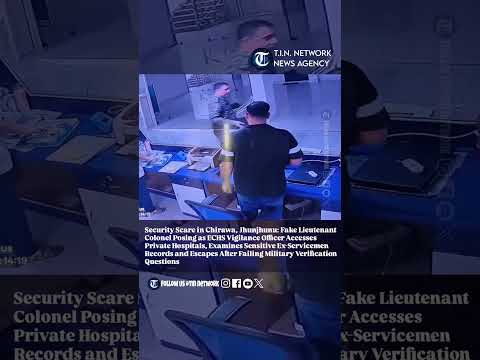
A shocking case of impersonation and potential security breach has emerged from Chirawa in Rajasthan’s Jhunjhunu district, where a man allegedly disguised as a senior Indian Army officer managed to enter multiple private hospitals and conduct what appeared to be an official inspection before his identity was exposed. The incident has triggered concern among military authorities, healthcare institutions, and security agencies because the suspect reportedly gained access to sensitive information related to Ex-Servicemen Contributory Health Scheme (ECHS) beneficiaries while posing as an authorized vigilance officer.
According to preliminary information, the suspect, believed to be between 30 and 35 years of age, arrived in Chirawa wearing a complete Indian Army uniform carrying the insignia of a Lieutenant Colonel. The individual introduced himself as an ECHS Vigilance Officer from Delhi and confidently began conducting inspections at private hospitals empaneled under the ECHS network. His appearance, military bearing, and detailed knowledge of military healthcare procedures initially convinced hospital managements that he was a genuine officer on official duty.
The incident has now raised a series of alarming questions regarding identity verification procedures, misuse of military uniforms, access to sensitive records, and the possibility that the suspect may have been gathering information for purposes far more serious than simple fraud.
The Arrival of the Alleged Impostor
The drama reportedly began early Wednesday morning when a black-colored vehicle carrying the suspect entered Chirawa. Witnesses described the man as well-groomed, confident, and dressed in a military uniform carrying rank badges resembling those worn by a Lieutenant Colonel of the Indian Army.
His appearance immediately commanded respect and authority. Hospital staff members reportedly had little reason initially to doubt his credentials because he appeared familiar with military terminology, ECHS procedures, and administrative systems used in defence healthcare facilities.
Upon entering the hospitals, he reportedly informed management officials that he had arrived from Delhi on a vigilance inspection assignment related to ECHS operations. Since vigilance inspections are a recognized part of administrative oversight mechanisms, the claim appeared credible to many staff members.
The suspect then began interacting with hospital administrators, reviewing documents, and asking detailed questions regarding medical treatment provided to ex-servicemen and their dependents.
Inspection of Three Private Hospitals Raises Concerns
Sources indicate that the alleged fake officer visited at least three private hospitals located near Chungi Naka and Khetri Road areas of Chirawa. During these visits, he reportedly demanded access to records concerning ECHS beneficiaries, including outpatient department registrations, hospitalization details, treatment records, patient documentation, and administrative files.
Hospital officials later admitted that the suspect demonstrated considerable knowledge about military healthcare systems. His familiarity with procedures, terminology, reimbursement processes, and documentation standards reportedly helped him gain the confidence of hospital staff.
For several hours, the suspect allegedly moved between departments examining records and questioning personnel. Because he appeared to be conducting an official inspection, staff members cooperated and responded to his queries.
The possibility that sensitive information may have been viewed by an unauthorized individual has now become one of the most serious aspects of the case.
The First Signs of Suspicion
While the suspect initially succeeded in convincing hospital authorities, certain irregularities eventually attracted attention.
Several administrators reportedly noticed that despite claiming to be a senior vigilance officer, he was not accompanied by any military escort, security personnel, staff officers, or administrative support team. For an officer allegedly conducting official inspections across multiple healthcare facilities, this appeared unusual.
Questions also began emerging regarding documentation and authorization letters. As discussions progressed, some hospital officials started probing deeper into his background.
One hospital director reportedly engaged him in an extended conversation about Army structures, military administration, and service-related matters. During the discussion, the suspect allegedly appeared uncomfortable and struggled to answer several technical questions that a genuine serving officer would likely have addressed with ease.
This became the turning point that triggered further verification.
ECHS Polyclinic Steps In
As doubts intensified, hospital managements contacted the ECHS Polyclinic in Chirawa and informed officials about the ongoing inspection.
The matter was immediately brought to the attention of Colonel Dalip Singh Shekhawat, who serves as the officer in charge of the ECHS Polyclinic.
Recognizing the seriousness of the situation, Colonel Shekhawat reportedly initiated verification procedures and personally spoke to the suspect over the phone. During the conversation, he asked several technical and administrative questions relating to ECHS operations and military procedures.
According to officials, the responses failed to satisfy verification standards. The suspect allegedly could not answer several important questions accurately, strengthening suspicions that he was not an authorized military representative.
The realization that a potentially fake officer was moving freely through civilian hospitals under the guise of an official inspection immediately elevated the matter into a security concern.
Army Personnel Rush to Apprehend the Suspect
After concluding that something was seriously wrong, the ECHS Polyclinic dispatched a team consisting of Subedar Major Hira Singh and ALD Jitendra Kumar to locate and detain the individual for questioning.
However, by the time the team arrived, the suspect appeared to have sensed that his cover was about to be blown.
Officials believe that after realizing verification efforts were underway, he quickly informed hospital personnel that he needed to inspect another facility and left the premises.
Accompanied by his driver, the suspect entered his vehicle and fled the area before authorities could intercept him.
Reports indicate that pursuing personnel followed him up to Pilod, but the suspect managed to evade capture and disappeared before he could be apprehended.
Why the Incident Is Being Treated Seriously
What makes the case particularly concerning is that it goes beyond ordinary impersonation.
The suspect was not merely pretending to be a government official. He allegedly impersonated a serving Army officer and specifically claimed to be an ECHS Vigilance Officer conducting official inspections.
Such impersonation carries significant implications because military officers enjoy a high degree of trust, particularly in institutions connected with defence services.
Moreover, ECHS records contain information related to retired military personnel, veterans, and their dependents. Unauthorized access to such information raises concerns about privacy, data security, identity misuse, and possible intelligence gathering.
Security experts point out that impersonation involving military uniforms is treated with particular seriousness because it can potentially be exploited for fraud, espionage, reconnaissance, or access to restricted information.
What Was the Real Objective?
Investigators are now attempting to answer the most important question: what exactly was the suspect trying to achieve?
One possibility is that he intended to commit financial fraud by collecting information related to healthcare claims and reimbursement systems.
Another theory is that he was gathering sensitive personal data linked to ex-servicemen and defence families.
Some officials are also examining whether the incident was part of a larger organized operation involving impersonation of military personnel.
At this stage, authorities have not publicly confirmed any specific motive. However, investigators are reportedly analyzing witness statements, vehicle descriptions, CCTV footage, visitor records, and communication trails to identify the suspect and determine his objectives.
Army Headquarters Informed, Security Review Underway
Following the incident, a detailed report has reportedly been forwarded to Army Headquarters and relevant authorities.
Military officials are expected to assess whether similar incidents have occurred elsewhere and whether the suspect may have targeted other ECHS-linked facilities in different regions.
Hospitals associated with defence healthcare programs have also been advised to strengthen verification mechanisms and ensure that no records are shared without proper authorization, identity confirmation, and official documentation.
The incident has highlighted the need for stricter protocols whenever individuals claim to represent military, intelligence, or government agencies.
A Wake-Up Call for Healthcare Institutions
The Chirawa episode serves as a stark reminder that appearances can sometimes be deceptive. The suspect’s ability to gain access to multiple hospitals demonstrates how uniforms, authority, and technical knowledge can be used to create a false sense of legitimacy.
Healthcare institutions, particularly those dealing with veterans and defence personnel, are now being urged to implement multi-layered verification systems before granting access to records or allowing inspections.
As investigators continue their search, residents of Chirawa and the wider defence community remain eager to learn the identity of the mysterious man who confidently entered hospitals as a Lieutenant Colonel, inspected sensitive files, and vanished before authorities could catch him.
Whether the incident was a sophisticated fraud attempt, a data-gathering operation, or something even more serious remains a question that investigators are now working urgently to answer.
झुंझुनूं के चिड़ावा में फौजी वर्दी पहनकर पहुंचा ‘नकली लेफ्टिनेंट कर्नल’! ECHS विजिलेंस अधिकारी बन निजी अस्पतालों में घुसा, पूर्व सैनिकों के संवेदनशील रिकॉर्ड खंगाले, सेना से जुड़े सवालों में फंसा तो ड्राइवर संग फरार; आर्मी हेडक्वार्टर तक पहुंची रिपोर्ट
फौजी वर्दी में आया ‘नकली अफसर’! ईसीएचएस विजिलेंस अधिकारी बन अस्पतालों में घुसा, संवेदनशील रिकॉर्ड खंगालकर फरार
चिड़ावा में सेना की वर्दी पहनकर पहुंचा शख्स, तीन अस्पतालों में की जांच, शक होने पर भाग निकला; आर्मी मुख्यालय तक पहुंची रिपोर्ट
राजस्थान के झुंझुनूं जिले के चिड़ावा शहर से एक ऐसा मामला सामने आया है जिसने न केवल स्वास्थ्य विभाग बल्कि सेना और सुरक्षा एजेंसियों को भी सतर्क कर दिया है। एक युवक कथित तौर पर भारतीय सेना के लेफ्टिनेंट कर्नल की वर्दी पहनकर निजी अस्पतालों में पहुंचा, खुद को दिल्ली से आया ईसीएचएस विजिलेंस अधिकारी बताया और कई घंटों तक अस्पताल प्रशासन को अपने प्रभाव में रखकर संवेदनशील दस्तावेजों की जांच करता रहा। जब उसकी पहचान पर सवाल उठने लगे तो वह मौके से फरार हो गया। अब पूरा मामला सुरक्षा एजेंसियों की जांच के दायरे में है और यह पता लगाने की कोशिश की जा रही है कि आखिर उसका असली मकसद क्या था।
सुबह-सुबह काली कार में पहुंचा ‘अफसर’, वर्दी देखकर सभी हुए प्रभावित
प्रत्यक्षदर्शियों के अनुसार बुधवार सुबह लगभग सात बजे एक काले रंग की कार चिड़ावा शहर में पहुंची। कार से उतरा युवक पूरी सैन्य वर्दी में था। उसकी वर्दी पर लेफ्टिनेंट कर्नल स्तर की रैंक लगी हुई थी, जिसमें अशोक स्तंभ और स्टार स्पष्ट दिखाई दे रहे थे। उसकी चाल-ढाल, बातचीत का तरीका और आत्मविश्वास देखकर किसी को भी संदेह नहीं हुआ कि वह सेना का अधिकारी नहीं है।
अस्पताल पहुंचते ही उसने स्वयं को दिल्ली से आया ईसीएचएस विजिलेंस अधिकारी बताया। सेना और पूर्व सैनिकों से जुड़े चिकित्सा तंत्र के बारे में उसकी जानकारी इतनी विस्तृत थी कि अस्पताल प्रशासन ने उसे वास्तविक अधिकारी मान लिया।
तीन निजी अस्पतालों में घुसकर मांगे मरीजों के रिकॉर्ड
सूत्रों के अनुसार आरोपी ने चुंगी नाका और खेतड़ी रोड क्षेत्र स्थित तीन निजी अस्पतालों का निरीक्षण किया। निरीक्षण के दौरान उसने ईसीएचएस योजना के अंतर्गत इलाज कराने वाले पूर्व सैनिकों और उनके आश्रितों से जुड़े रिकॉर्ड देखने की मांग की।
उसने ओपीडी रजिस्टर, भर्ती मरीजों की जानकारी, उपचार संबंधी दस्तावेज, मेडिकल रिकॉर्ड, बिलिंग और अन्य प्रशासनिक फाइलों का अवलोकन किया। अस्पताल कर्मियों को यह सब सामान्य प्रक्रिया लगा क्योंकि वे उसे सेना का अधिकृत अधिकारी समझ रहे थे।
कई अस्पतालों में उसे महत्वपूर्ण दस्तावेज भी दिखाए गए। यही कारण है कि अब यह मामला केवल फर्जीवाड़े तक सीमित नहीं रह गया है बल्कि संवेदनशील सूचनाओं तक संभावित पहुंच का मामला बन गया है।
एक छोटी सी गलती ने खोल दी पूरी पोल
हालांकि शुरुआत में सब कुछ सामान्य दिखाई दे रहा था, लेकिन कुछ समय बाद अस्पताल प्रबंधन को कई बातें असामान्य लगने लगीं। सबसे पहले अधिकारियों ने गौर किया कि कथित तौर पर इतना बड़ा सैन्य अधिकारी अकेला घूम रहा था। उसके साथ न कोई सुरक्षाकर्मी था, न कोई स्टाफ अधिकारी और न ही कोई आधिकारिक टीम।
इसके बाद एक अस्पताल के निदेशक ने उससे सेना और सैन्य प्रशासन से जुड़े कुछ तकनीकी सवाल पूछे। बताया जाता है कि इन सवालों पर युवक घबरा गया और संतोषजनक जवाब नहीं दे सका। यहीं से शक की सुई तेजी से उसकी ओर घूमने लगी।
ईसीएचएस पॉलिक्लिनिक को दी गई सूचना, शुरू हुई असली जांच
अस्पताल प्रबंधन ने तुरंत चिड़ावा ईसीएचएस पॉलिक्लिनिक से संपर्क किया और पूरे घटनाक्रम की जानकारी दी। मामला प्रभारी अधिकारी कर्नल दलीप सिंह शेखावत तक पहुंचा।
कर्नल शेखावत ने तुरंत संदिग्ध व्यक्ति से फोन पर संपर्क किया और उससे कई तकनीकी प्रश्न पूछे। लेकिन वह इन सवालों का सही उत्तर नहीं दे पाया। इससे स्पष्ट हो गया कि मामला गंभीर है और सामने वाला व्यक्ति संभवतः फर्जी पहचान का इस्तेमाल कर रहा है।
इसके बाद स्थिति को सुरक्षा खतरे के रूप में लेते हुए तत्काल कार्रवाई शुरू कर दी गई।
पकड़ने पहुंची टीम, लेकिन आरोपी हो गया फरार
ईसीएचएस पॉलिक्लिनिक से सूबेदार मेजर हीरासिंह और एएलडी जितेंद्र कुमार की टीम को आरोपी को पकड़ने के लिए रवाना किया गया। लेकिन तब तक कथित फर्जी अधिकारी को शायद इस बात का अंदाजा हो चुका था कि उसकी सच्चाई सामने आ चुकी है।
उसने अस्पताल कर्मियों को बताया कि उसे एक अन्य अस्पताल का निरीक्षण करना है और तुरंत वहां से निकल गया। अपने ड्राइवर के साथ कार में बैठकर वह तेजी से फरार हो गया।
सुरक्षा टीम ने उसका पीछा भी किया और पिलोद क्षेत्र तक पहुंची, लेकिन आरोपी हाथ नहीं आया। उसके बाद वह कहां गया, किस दिशा में गया और कौन था, यह अब तक रहस्य बना हुआ है।
सिर्फ ठगी या कोई बड़ा नेटवर्क?
जांच एजेंसियों के सामने सबसे बड़ा सवाल यह है कि आरोपी का वास्तविक उद्देश्य क्या था। क्या वह केवल लोगों को प्रभावित कर ठगी करना चाहता था? क्या वह अस्पतालों से वित्तीय जानकारी जुटा रहा था? या फिर वह पूर्व सैनिकों और उनके परिवारों से जुड़ी संवेदनशील जानकारी एकत्रित कर रहा था?
कुछ सुरक्षा विशेषज्ञों का मानना है कि सेना की वर्दी पहनकर संस्थानों में प्रवेश करना सामान्य अपराध नहीं माना जा सकता। यदि किसी व्यक्ति ने योजनाबद्ध तरीके से सैन्य पहचान अपनाई है, सैन्य प्रक्रियाओं की जानकारी हासिल की है और संवेदनशील रिकॉर्ड तक पहुंच बनाई है, तो उसके पीछे अधिक गंभीर उद्देश्य भी हो सकते हैं।
यही कारण है कि जांच एजेंसियां इस मामले को केवल फर्जी अधिकारी के रूप में नहीं बल्कि संभावित सुरक्षा जोखिम के तौर पर भी देख रही हैं।
सेना मुख्यालय तक पहुंची रिपोर्ट, बढ़ी सुरक्षा सतर्कता
घटना की विस्तृत रिपोर्ट सेना मुख्यालय को भेजी जा रही है। साथ ही संबंधित एजेंसियों को भी जानकारी दे दी गई है ताकि आरोपी की पहचान की जा सके और यह पता लगाया जा सके कि कहीं उसने अन्य शहरों में भी इसी प्रकार की गतिविधियां तो नहीं कीं।
अस्पतालों को निर्देश दिए गए हैं कि भविष्य में किसी भी अधिकारी को रिकॉर्ड उपलब्ध कराने से पहले उसकी पहचान, अधिकृत आदेश और विभागीय सत्यापन अवश्य किया जाए।
चिड़ावा की घटना ने खड़े किए कई बड़े सवाल
यह घटना केवल एक व्यक्ति द्वारा वर्दी पहन लेने की कहानी नहीं है। यह उस भरोसे की कहानी भी है जो सेना की वर्दी को देखकर समाज स्वतः कर लेता है। यही भरोसा इस कथित आरोपी ने अपने पक्ष में इस्तेमाल किया और कई संस्थानों तक पहुंच बना ली।
अब पूरा क्षेत्र यह जानना चाहता है कि आखिर सेना की वर्दी पहनकर अस्पतालों में निरीक्षण करने वाला यह व्यक्ति कौन था, उसके पीछे कौन लोग थे और वह किन उद्देश्यों से संवेदनशील जानकारी जुटा रहा था।
जब तक इन सवालों के जवाब नहीं मिलते, चिड़ावा का यह मामला सुरक्षा और प्रशासनिक सतर्कता के लिए एक बड़ी चेतावनी बना रहेगा।