



Social Media Can Lead to “Weaponisation of Society” With Very Little Time to React: Maj Gen I.S. Bhinder
New Delhi: The growing influence of social media platforms and the rapid spread of information have emerged as a major security challenge, with senior Assam Rifles leadership warning that online narratives can potentially contribute to the “weaponisation of society or communities” and leave security forces with very little time to respond.
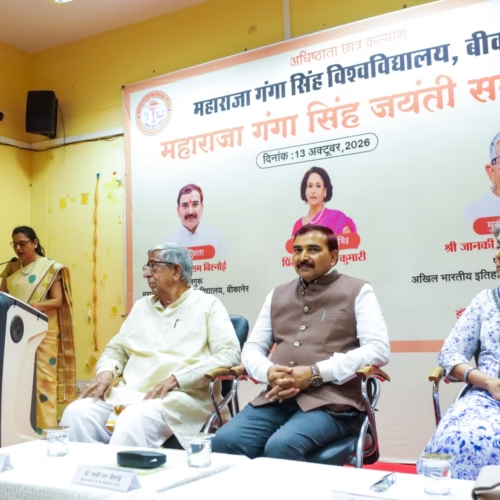
Speaking at the Maj Gen B.C. K. Bhattacharyya Memorial Lecture in New Delhi in August 2026, Major General I.S. Bhinder, Inspector General Assam Rifles (East), underlined the difficulty posed by the speed at which information now travels through platforms such as Facebook, Instagram and WhatsApp groups.
Maj Gen Bhinder said the security establishment was grateful to Lieutenant General Vikas Lakhera, AVSM, SM, Director General Assam Rifles, for his introductory remarks and for highlighting the pressing challenges confronting the security forces on a daily basis.
He particularly drew attention to the changing information environment, where social media platforms can rapidly amplify information, narratives and messages across communities.
“With the spread of information through Facebook, Instagram and WhatsApp groups, it can lead to the weaponisation of society or communities, giving us very little time to react,” Maj Gen Bhinder said.
He described the situation as a major challenge and acknowledged that security agencies are still looking for effective solutions to deal with the speed, scale and impact of such information flows.
The remarks come amid growing concern among security agencies over the use of social media not merely as a communication platform but as a potential tool for influencing public opinion, creating mistrust and rapidly mobilising communities.
The issue is particularly significant in the Northeast, where security forces operate in a complex environment involving ethnic sensitivities, insurgency-related challenges, border concerns and diverse local communities. In such an environment, an unverified photograph, edited video, misleading claim or inflammatory message can potentially travel across multiple online groups before authorities have sufficient time to establish the facts.
The wider discussion at the memorial lecture focused on the emerging threat posed by misinformation, false narratives and the potential weaponisation of social media against security forces. The event brought together senior military officers, veterans, strategic affairs experts, academics, media professionals and scholars.
The lecture also highlighted a fundamental transformation in the nature of the information battlefield. Earlier, propaganda and misinformation generally required organised networks, conventional media channels or significant resources. Today, smartphones and social media platforms allow information to be generated and disseminated almost instantly, significantly reducing the time available for authorities to verify, assess and respond.
This creates a new challenge for security forces: the battle is not limited to the physical domain but increasingly extends into the information environment.
Maj Gen Bhinder’s remarks therefore point towards the need for faster verification mechanisms, stronger communication strategies and greater public awareness so that communities can distinguish between genuine information and deliberately manipulated narratives.
The concerns expressed at the lecture also underline the importance of cooperation between security agencies, civil administration, technology platforms, media organisations and local communities. Countering misinformation cannot rely solely on reactive measures after a false narrative has already gone viral.
The warning is particularly relevant at a time when social media platforms such as Facebook, Instagram and WhatsApp have become deeply integrated into everyday communication. A message originating from a single device can potentially reach thousands of users within minutes and expand rapidly through closed and open digital networks.
The challenge, as highlighted by Maj Gen Bhinder, is therefore not simply controlling information but ensuring that accurate information can reach people quickly enough to prevent misinformation from influencing public behaviour.
The comments form part of a broader security debate over the changing character of conflict, where psychological operations, information warfare, digital propaganda and manipulation of public sentiment can complement conventional security threats.
The memorial lecture thus brought the focus back to a critical question for India’s security establishment: how can institutions respond effectively when information can move faster than facts?
Maj Gen Bhinder’s assessment suggests that the answer will require more than traditional security responses. It will require a comprehensive approach combining technological capabilities, intelligence, rapid communication, community engagement, media literacy and institutional coordination.
The Assam Rifles and other security organisations operating in the Northeast face the additional challenge of maintaining public trust while responding to rapidly changing narratives. In this environment, speed of response, credibility of information and engagement with local communities could become increasingly important components of the security architecture.
The remarks also reinforce the significance of the information domain as an emerging front in national security. As social media continues to evolve, the ability to detect coordinated narratives, verify information and communicate credible facts rapidly is likely to become an increasingly important part of India’s broader security preparedness.
By Defence Journalist Sahil | T.I.N. NETWORK
सोशल मीडिया से हो सकता है “समाज और समुदायों का हथियारीकरण”, प्रतिक्रिया के लिए मिल रहा बेहद कम समय: मेजर जनरल आई.एस. भिंडर
नई दिल्ली: सोशल मीडिया के तेजी से बढ़ते प्रभाव और सूचनाओं के बेहद तेज प्रसार ने राष्ट्रीय सुरक्षा के सामने एक नई और गंभीर चुनौती खड़ी कर दी है। अगस्त 2026 में नई दिल्ली में आयोजित मेजर जनरल बी.सी.के. भट्टाचार्य मेमोरियल लेक्चर के दौरान असम राइफल्स के इंस्पेक्टर जनरल ईस्ट, मेजर जनरल आई.एस. भिंडर ने चेतावनी दी कि Facebook, Instagram और WhatsApp जैसे प्लेटफॉर्म पर सूचनाओं का तेज प्रसार समाज और समुदायों के “हथियारीकरण” यानी Weaponisation of Society or Communities की स्थिति पैदा कर सकता है।
मेजर जनरल आई.एस. भिंडर ने अपने संबोधन में असम राइफल्स के महानिदेशक लेफ्टिनेंट जनरल विकास लखेड़ा, AVSM, SM के शुरुआती संबोधन और उनके द्वारा सामने रखी गई चुनौतियों का उल्लेख करते हुए कहा कि यह एक ऐसा दबावपूर्ण मुद्दा है, जिसका सामना सुरक्षा बल रोजाना कर रहे हैं।
उन्होंने कहा कि आज सूचना जिस गति से सोशल मीडिया के माध्यम से फैलती है, उसने सुरक्षा एजेंसियों के लिए चुनौती को और जटिल बना दिया है।
मेजर जनरल भिंडर ने कहा, “Facebook, Instagram और WhatsApp groups के माध्यम से सूचना के प्रसार के साथ यह समाज या समुदायों के हथियारीकरण का कारण बन सकता है, जिससे हमारे पास प्रतिक्रिया देने के लिए बहुत कम समय रह जाता है। यह बहुत चुनौतीपूर्ण है और हम अभी तक इसका समाधान खोजने की प्रक्रिया में हैं।”
मेजर जनरल भिंडर का यह बयान ऐसे समय में आया है जब सुरक्षा एजेंसियां लगातार इस बात पर ध्यान दे रही हैं कि सोशल मीडिया केवल सूचना और संवाद का माध्यम नहीं रह गया है, बल्कि इसका इस्तेमाल जनमत को प्रभावित करने, गलत सूचनाओं को फैलाने, अविश्वास पैदा करने और समुदायों को तेजी से प्रभावित करने के लिए भी किया जा सकता है।
विशेष रूप से पूर्वोत्तर भारत जैसे संवेदनशील क्षेत्र में यह चुनौती और गंभीर हो जाती है। यहां सुरक्षा बलों को विभिन्न जातीय, सामाजिक और राजनीतिक संवेदनशीलताओं, उग्रवाद से जुड़े मुद्दों, सीमाई चुनौतियों और स्थानीय समुदायों के बीच विश्वास बनाए रखने जैसे कई स्तरों पर काम करना पड़ता है। ऐसे वातावरण में सोशल मीडिया पर प्रसारित होने वाला कोई पुराना फोटो, एडिट किया गया वीडियो, भ्रामक दावा या अपुष्ट संदेश कुछ ही समय में बड़ी संख्या में लोगों तक पहुंच सकता है।
इस स्थिति में सबसे बड़ी चुनौती यह है कि जब तक सुरक्षा एजेंसियां किसी सूचना की सत्यता की जांच कर पाएं, तब तक वह सूचना कई सोशल मीडिया ग्रुपों और प्लेटफॉर्मों पर फैल चुकी होती है।
मेजर जनरल भिंडर के बयान का महत्वपूर्ण पहलू यही है कि सूचना और प्रतिक्रिया के बीच का समय लगातार कम होता जा रहा है। आधुनिक डिजिटल युग में किसी व्यक्ति के मोबाइल फोन से तैयार किया गया कंटेंट कुछ ही मिनटों में हजारों लोगों तक पहुंच सकता है और इसके बाद वह तेजी से अलग-अलग नेटवर्क तथा समुदायों में फैल सकता है।
यह स्थिति पारंपरिक सूचना युद्ध की प्रकृति को भी बदल रही है। पहले गलत सूचना या प्रचार को बड़े संगठित नेटवर्क, मीडिया प्लेटफॉर्म या संसाधनों की जरूरत होती थी। लेकिन अब स्मार्टफोन और सोशल मीडिया के कारण कोई भी व्यक्ति सूचना का निर्माता और प्रसारक बन सकता है।
यही कारण है कि सुरक्षा बलों के लिए चुनौती अब केवल जमीन पर मौजूद खतरे तक सीमित नहीं है। Information Domain यानी सूचना का क्षेत्र भी राष्ट्रीय सुरक्षा का महत्वपूर्ण हिस्सा बनता जा रहा है।
मेमोरियल लेक्चर के दौरान सोशल मीडिया के जरिए गलत नैरेटिव और सुरक्षा बलों के खिलाफ फैलाए जाने वाले भ्रामक प्रचार के खतरे पर व्यापक चर्चा हुई। कार्यक्रम में वरिष्ठ सैन्य अधिकारी, पूर्व सैन्य अधिकारी, रणनीतिक मामलों के विशेषज्ञ, शिक्षाविद, मीडिया पेशेवर और शोधकर्ता शामिल हुए।
इस चर्चा ने यह सवाल भी सामने रखा कि जब सोशल मीडिया पर किसी गलत या भ्रामक सूचना की रफ्तार तथ्यों की पुष्टि की गति से कहीं अधिक हो, तब सुरक्षा एजेंसियां किस तरह प्रभावी ढंग से प्रतिक्रिया दें।
मेजर जनरल भिंडर की चिंता केवल फेक न्यूज तक सीमित नहीं है। उनका संकेत उस स्थिति की ओर है, जब डिजिटल प्लेटफॉर्म पर लगातार फैलने वाले संदेश किसी समुदाय की भावनाओं को प्रभावित कर सकते हैं और देखते ही देखते सामाजिक स्तर पर तनाव पैदा कर सकते हैं।
ऐसी स्थिति में केवल बाद में खंडन जारी करना पर्याप्त नहीं हो सकता। आवश्यकता इस बात की है कि गलत सूचना की पहचान, तथ्य-जांच और सही जानकारी के प्रसार की प्रक्रिया पहले से अधिक तेज बनाई जाए।
इसके लिए सुरक्षा एजेंसियों, प्रशासन, मीडिया, तकनीकी प्लेटफॉर्म और स्थानीय समुदायों के बीच बेहतर समन्वय की आवश्यकता हो सकती है। साथ ही आम लोगों में भी डिजिटल और मीडिया साक्षरता बढ़ाना महत्वपूर्ण होगा, ताकि वे किसी संदेश, फोटो या वीडियो को बिना सत्यापन के आगे प्रसारित करने से पहले उसकी विश्वसनीयता जांच सकें।
मेजर जनरल भिंडर के बयान ने यह स्पष्ट किया कि भविष्य की सुरक्षा चुनौतियां केवल सीमा, युद्धक्षेत्र या पारंपरिक सैन्य क्षमताओं तक सीमित नहीं रहेंगी। Narrative, perception और information warfare भी सुरक्षा व्यवस्था का महत्वपूर्ण हिस्सा बन चुके हैं।
पूर्वोत्तर में तैनात असम राइफल्स जैसे बलों के लिए यह चुनौती और महत्वपूर्ण है क्योंकि उन्हें एक ओर सुरक्षा अभियान चलाने होते हैं और दूसरी ओर स्थानीय जनता के बीच विश्वास और संवाद भी बनाए रखना होता है। गलत सूचना का तेज प्रसार इस विश्वास को प्रभावित कर सकता है।
ऐसे में विश्वसनीय सूचना की तेज उपलब्धता, स्थानीय समुदायों के साथ लगातार संपर्क और सोशल मीडिया नैरेटिव की समय रहते पहचान सुरक्षा व्यवस्था के महत्वपूर्ण हिस्से बन सकते हैं।
मेजर जनरल आई.एस. भिंडर की टिप्पणी दरअसल बदलते हुए सूचना युद्ध की गंभीर तस्वीर सामने रखती है। आज चुनौती केवल यह नहीं है कि कौन सी सूचना सही है या गलत, बल्कि यह भी है कि सही तथ्य लोगों तक गलत सूचना से पहले कितनी तेजी से पहुंचाए जा सकते हैं।
इसीलिए आने वाले समय में राष्ट्रीय सुरक्षा के मोर्चे पर तकनीक, खुफिया तंत्र, सोशल मीडिया मॉनिटरिंग, त्वरित तथ्य-जांच, रणनीतिक संचार और समुदाय आधारित जागरूकता की भूमिका और अधिक महत्वपूर्ण होने की संभावना है।
मेमोरियल लेक्चर में उठाया गया यह मुद्दा इस व्यापक वास्तविकता की ओर इशारा करता है कि डिजिटल युग में समाज की सुरक्षा और सूचना की सुरक्षा एक-दूसरे से तेजी से जुड़ती जा रही हैं।
रिपोर्ट: Defence Journalist Sahil | T.I.N. NETWORK