



DRDO Successfully Flight-Tests Indigenous Long Range Land Attack Cruise Missile from Odisha
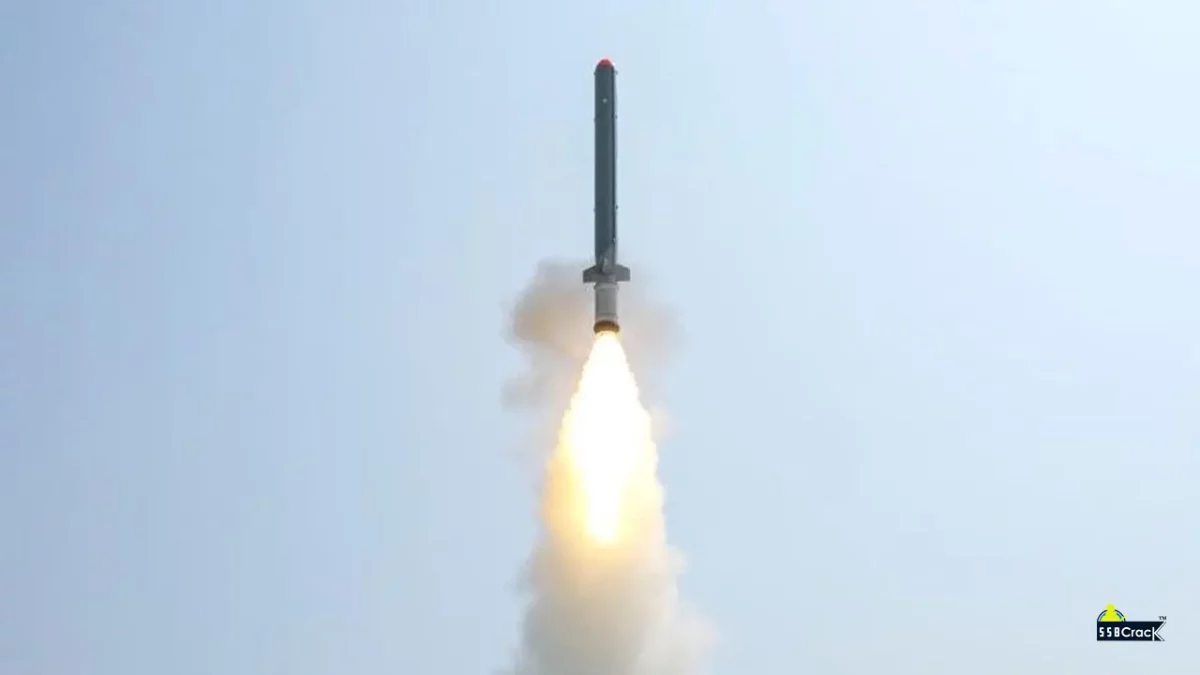
New Delhi: In a significant boost to India’s indigenous missile development programme, the Defence Research and Development Organisation has successfully conducted a flight test of the indigenously developed Long Range Land Attack Cruise Missile from Dr APJ Abdul Kalam Island off the coast of Odisha.
According to DRDO, the Long Range Land Attack Cruise Missile, commonly known as LRLACM, successfully completed its designated flight and achieved all the mission objectives established for the trial. The test validated several critical technologies and demonstrated the progress made by India in developing an indigenous long-range precision-strike capability.
The missile and its associated subsystems have been designed and developed by DRDO with substantial participation from Indian public-sector and private-sector defence industries. The successful flight test is being viewed as an important milestone in India’s efforts to reduce dependence on imported weapon systems and establish a strong domestic ecosystem for the development and production of advanced missiles.
During the trial, the missile’s navigation, guidance, propulsion, flight-control and other critical systems reportedly performed in accordance with the planned mission parameters. Data collected during the test will now be analysed by DRDO scientists to assess the performance of individual subsystems across different phases of the flight.
The successful validation of these technologies is particularly important because a long-range cruise missile must maintain an accurate flight path over an extended distance while continuously adjusting its altitude, direction and speed. Such missiles depend on sophisticated guidance algorithms, reliable onboard computers, advanced avionics and an efficient propulsion system to reach distant targets with a high degree of accuracy.
The LRLACM programme is intended to provide the Indian Armed Forces with the capability to engage strategically important land-based targets from considerable stand-off distances. This would allow the launch platform and its operating personnel to remain away from heavily defended areas while the missile proceeds towards its designated target.
Long-range land-attack cruise missiles have emerged as an important element of modern warfare because of their ability to carry out precision strikes against command centres, communication facilities, airfields, logistics hubs and other high-value military infrastructure. Their comparatively low-altitude flight profiles and ability to navigate through predetermined waypoints can make detection and interception more challenging for hostile air-defence systems.
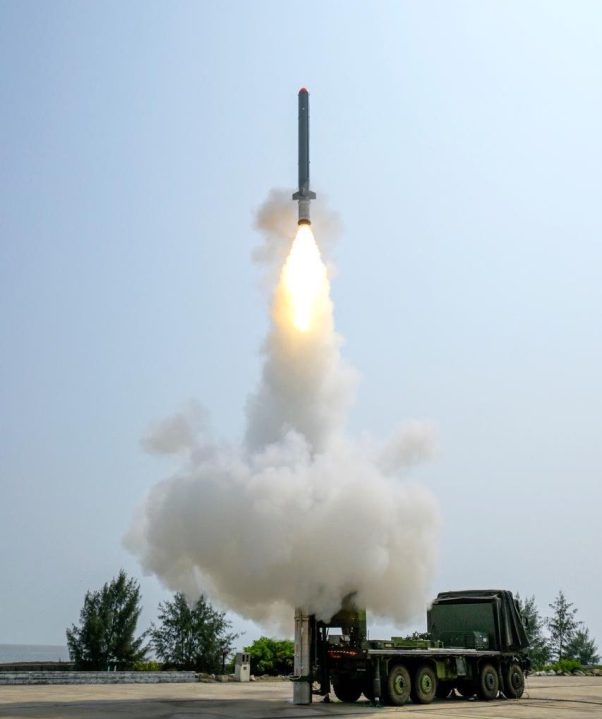
The latest test represents further progress from the maiden flight trial of the LRLACM conducted by DRDO from the Integrated Test Range at Chandipur, Odisha, on November 12, 2024. During that test, the missile was launched from a mobile articulated launcher and followed the desired flight path using waypoint navigation.
The maiden trial had demonstrated the missile’s ability to conduct different manoeuvres while flying at varying altitudes and speeds. Its performance was monitored through radar, electro-optical tracking systems and telemetry equipment positioned at different locations to provide comprehensive coverage of the flight trajectory.
The LRLACM has been developed as a flexible weapon system capable of being adapted for deployment from different platforms. The missile was initially configured for launch from a mobile ground-based articulated launcher and is also planned for deployment from frontline Indian Navy warships through a universal vertical launch module.
This multi-platform capability could eventually allow the missile to be operated from land as well as sea, providing greater operational flexibility to the Indian Armed Forces. Mobile ground-based launchers would enable the system to be repositioned according to operational requirements, while ship-based deployment would significantly expand the geographical area from which precision land-attack missions could be undertaken.
The missile programme incorporates technologies developed across several DRDO laboratories, supported by Indian defence manufacturers involved in the production, integration and testing of its components. The participation of domestic industry from the development stage is expected to facilitate a smoother transition from developmental trials to production once the weapon system completes the required testing and evaluation process.
The successful flight test also highlights India’s growing competence in critical missile technologies, including indigenous propulsion, navigation, flight control, avionics, mission software and system integration. Mastery of these technologies is essential for the development of reliable long-range weapons capable of functioning in complex operational environments.
For India, an indigenous long-range cruise missile capability carries both operational and strategic significance. It can strengthen conventional deterrence by giving the Armed Forces the ability to strike important targets located deep inside hostile territory without necessarily employing manned aircraft in highly contested airspace.
The stand-off nature of the weapon can also improve the survivability of launch platforms and personnel. Depending on the operational configuration, such missiles can be used to penetrate or bypass enemy air-defence networks and conduct coordinated precision strikes against multiple targets.
The development of LRLACM complements India’s wider range of indigenous missile systems covering tactical, ballistic, air-defence, anti-radiation and anti-ship roles. It also reflects DRDO’s effort to establish a broad portfolio of precision-guided weapons suited to the evolving requirements of the Army, Navy and Air Force.
However, the successful flight test represents a developmental milestone rather than immediate operational induction. The missile is expected to undergo further trials under different flight, environmental and operational conditions before its configuration is finalised and the system is cleared for production and deployment.
These subsequent tests would be aimed at establishing consistency, reliability and accuracy while validating the complete weapon system under conditions similar to those likely to be encountered during military operations. Feedback from the Armed Forces is also expected to play an important role in refining the missile before its eventual induction.
The latest achievement is another major step towards the government’s Aatmanirbhar Bharat initiative in the defence sector. By developing the missile, its subsystems and associated technologies within the country, India is seeking to create sovereign capability in an area that has traditionally been dominated by a small group of technologically advanced nations.
The programme is also expected to strengthen India’s defence-industrial base by creating opportunities for domestic companies involved in propulsion systems, electronics, composite structures, guidance equipment, launch systems and precision manufacturing.
The successful flight test from Dr APJ Abdul Kalam Island underscores the steady progress being made by DRDO and its industry partners in the field of long-range precision weapons. Once fully developed and inducted, the LRLACM is expected to significantly enhance the deep-strike options available to the Indian Armed Forces and strengthen the country’s overall conventional deterrence posture.