



Lieutenant General Vijay Oberoi Passes Away at 84
Lieutenant General Vijay Oberoi is survived by his wife, Mrs Daulat Oberoi, daughter Rashmi Oberoi, and family.
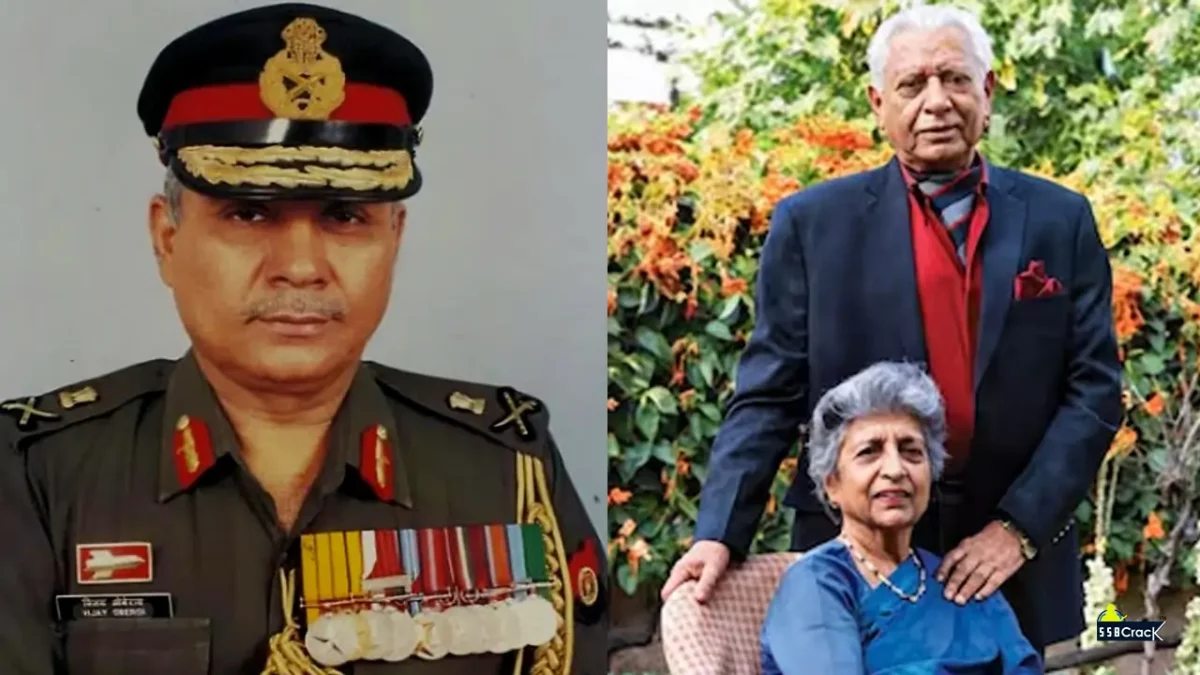
The Indian Army and the wider defence community are mourning the passing of Lieutenant General Vijay Oberoi, PVSM, AVSM, VSM (Retd), a distinguished soldier, strategic thinker, institution-builder, and lifelong champion of India’s war-disabled veterans. He passed away on 14 June 2026 at the age of 84 after battling the cumulative effects of severe war injuries sustained more than six decades earlier, including the amputation of his right leg, along with age-related ailments. He breathed his last at the Army Hospital (Command Hospital), Chandigarh/Chandimandir.
Tributes have poured in from across the military fraternity, with former Chief of Army Staff General V.K. Singh describing him as “a decorated soldier-scholar” whose life exemplified courage that transcended physical limitation. Senior veterans and serving officers have hailed him as “a General of rare breed” and “one of the last of the kind” — a truthful, forthright leader who never hesitated to advocate for the dignity and welfare of soldiers.
Early Life, Commissioning and the Defining Moment of 1965
Born in 1941 in Chakwal (now in Pakistan), Lieutenant General Oberoi belonged to a family with deep military traditions. He was commissioned into the 1st Maratha Light Infantry — the storied “Jangi Paltan” raised in 1768 — in June 1961, after graduating from the National Defence Academy (XVIII Course, G Squadron). Soldiering, for him and his generation, was not merely a profession but a covenant of duty, honour and courage — the regimental motto he lived by throughout his career and beyond.
The defining trial of his life came early. On 27 August 1965, during the Indo-Pakistani War, then-Captain Vijay Oberoi was grievously wounded in fierce action against Pakistani infiltrators in the Dachigam Forest near Srinagar in Jammu and Kashmir. His right leg was severely damaged and subsequently amputated. He underwent initial treatment at Military Hospital Delhi, followed by nine months of recovery and rehabilitation at Military Hospital Pune, where he was fitted with a primitive wooden prosthetic limb crafted by army artisans.
For most officers, such a catastrophic injury at the age of 24 would have ended a field career. For Lieutenant General Oberoi, it became the beginning of a different kind of soldiering — one defined by extraordinary resilience. He chose to remain in the infantry, refusing to let disability define or limit him. Through rigorous physical conditioning (swimming, squash, cycling and golf), unyielding determination and an innate zest for life, he not only returned to active duty but competed on equal terms with his able-bodied peers.
A Career of Distinction and Leadership at the Highest Levels
Lieutenant General Oberoi’s subsequent career stands as one of the most remarkable in the history of the Indian Army. He won a competitive vacancy to the Staff College, served with distinction in command and staff appointments, and rose steadily through the ranks. His key appointments included service in the Military Operations, Training and Intelligence Directorates at Army Headquarters; as an instructor at the College of Combat; and as Military Adviser (Attaché) in Malaysia.
He was only the second infantry officer (after General K. Sundarji) to command an armoured division. He later served as Director General Military Operations (DGMO), General Officer Commanding-in-Chief of the Army Training Command, and General Officer Commanding-in-Chief of the Western Command (15 October 1999 – 29 September 2000). He culminated his distinguished service as Vice Chief of Army Staff from 1 October 2000 to 30 September 2001, when he superannuated after more than 40 years of exemplary service. He also served with pride as Colonel of the Maratha Light Infantry Regiment.
A graduate of the US Army War College, he brought a sharp, analytical mind to operational planning, military policy and strategic thought. His decorations — Param Vishisht Seva Medal (PVSM), Ati Vishisht Seva Medal (AVSM) and Vishisht Seva Medal (VSM) — reflected a career marked by sustained professional excellence rather than any single spectacular act.
Post-Retirement: Champion of the War-Wounded and Institution Builder
Retirement did not diminish Lieutenant General Oberoi’s commitment to the Army or its soldiers. He remained a tireless advocate for the welfare, dignity and financial security of war-disabled veterans. He founded and served as President of the War Wounded Foundation, working to ensure that those who returned from battle wounded but alive were never relegated to the margins of national gratitude. He famously and consistently argued that “war-disabled soldiers should be treated at par with martyrs.”
He was the founding Director of the Centre for Land Warfare Studies (CLAWS), the Indian Army’s premier think tank, where he nurtured rigorous military scholarship for over 16 years. A prolific writer and respected strategic analyst, he contributed extensively to professional journals, authored books including works on India’s wars since Independence, and penned a deeply personal memoir, No Commas; No Pauses; No Full Stops, dedicated to the jawans of the Maratha Light Infantry.
Even in his seventies, he continued to inspire. At the age of 72, he ran the Mumbai Marathon on his prosthetic leg — a powerful demonstration that “spirit never retires.” He remained intellectually active and morally courageous, speaking with clarity and truth on issues of national security, leadership and soldier welfare until the very end.
Personal Life: A Testament to Love, Resilience and Family
Behind the public figure was a deeply human story of love and partnership. While recovering in Pune after his amputation, he met Daulat, then a 20-year-old college student and daughter of a senior officer’s widow from the same regiment. Their courtship — conducted on crutches amid the challenges of rehabilitation — blossomed into a devoted marriage solemnised on 22 January 1967. They celebrated their golden jubilee in 2017. Mrs Daulat Oberoi remained his steadfast companion and pillar of strength through decades of demanding service and post-retirement advocacy.
The couple had two daughters — Rashmi (a writer) and Manisha — and were blessed with grandchildren. Lieutenant General Oberoi’s family reflected India’s pluralistic ethos, with a rich tapestry of interfaith and inter-community bonds across generations. His personal memoir and family accounts reveal a man of warmth, humour, intellectual curiosity and quiet dignity who never allowed physical limitation to diminish his engagement with life or his sense of responsibility toward others.
Enduring Legacy
Lieutenant General Vijay Oberoi leaves behind a legacy that transcends ranks, medals and appointments. He embodied the highest traditions of the Indian Army: courage in the face of adversity, professional excellence, intellectual rigour and an unwavering commitment to the welfare of the soldier. For generations of war-wounded personnel — including many injured in later conflicts — he served as a living example that disability resides in the mind, not the limb, and that a life of purpose and service remains possible regardless of physical challenges.
His life and work reinforced the principle that those who sacrifice for the nation deserve not only honour in death but dignity, opportunity and respect in life. The War Wounded Foundation and CLAWS stand as institutional testaments to his vision.
The Indian Army has lost one of its most respected and beloved officers. The nation has lost a true patriot whose story will continue to inspire defence aspirants, serving personnel and veterans alike.
Lieutenant General Vijay Oberoi is survived by his wife, Mrs Daulat Oberoi, daughter Rashmi Oberoi, and family. The defence community extends its deepest condolences to the bereaved family and prays for eternal peace to the departed soul.