



PM Modi’s Security Convoy Debate: Former R&AW Chief Samant Goel Warns Against Downsizing Protection in an Era of Drones, Snipers and Global Terror Threats
Former Intelligence Chief Says Prime Minister’s Security Is Not a Symbol of Power, but the Nation’s Most Critical Defensive Shield
By Defence Journalist Sahil
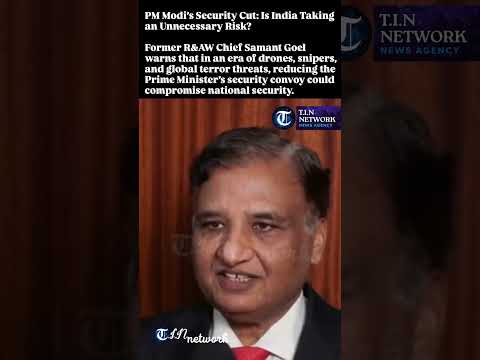
At a time when the global security environment is becoming increasingly unpredictable and technologically complex, former Research and Analysis Wing (R&AW) Secretary Samant Goel has issued a strong and unambiguous warning against any reduction in the security arrangements surrounding Prime Minister Narendra Modi. Speaking in New Delhi, the veteran intelligence officer argued that the Prime Minister’s protection should be strengthened rather than reduced, especially given the evolution of modern threats that now include armed drones, precision sniper systems, lone-wolf actors, and transnational extremist networks.
Goel’s remarks have triggered an important national debate that goes far beyond the optics of a smaller motorcade. At the heart of the issue lies a strategic question: how should India protect its most consequential political leader in an era where threats are more dispersed, more technologically advanced, and more difficult to detect than ever before?
Security Is Determined by Threat Perception, Not Public Optics
Samant Goel emphasized that security should never be viewed as a status symbol. In his assessment, protective arrangements are determined solely by threat perception, intelligence inputs, and vulnerability analysis. While some public figures may seek visible security as a matter of prestige, the Prime Minister’s protection is fundamentally different. It is designed to preserve continuity of governance and safeguard a constitutional office whose functioning is central to national stability.
The debate over convoy size can therefore be misleading. A shorter convoy may appear efficient and modest, but the true measure of security effectiveness lies in unpredictability, redundancy, and the ability to absorb or neutralize an attack.
Why Prime Ministerial Security Is a National Security Imperative
The Prime Minister is not merely a political leader; he is the principal decision-maker during crises involving war, terrorism, diplomatic emergencies, and natural disasters. Any successful attack on the Prime Minister would have consequences extending far beyond personal tragedy. It could trigger political shock, market volatility, adversary opportunism, and a profound psychological impact on the nation.
For this reason, the protection of the Prime Minister is treated as one of the highest national security priorities. Security arrangements are intended to ensure that decision-making capacity remains intact under all circumstances.
Samant Goel’s Warning: This Is Not the Time to Reduce Security
Goel noted that the international security environment remains highly volatile. He pointed to multiple assassination attempts targeting US President Donald Trump, despite the United States being one of the most security-conscious countries in the world. His core argument was clear: if advanced democracies continue to face serious threats despite extensive protective systems, India should exercise even greater caution.
He stated that reducing visible or operational layers of security at such a time is not in the national interest.
PM Modi Has Been Under Threat for More Than Two Decades
According to Goel, Narendra Modi has lived under significant threat since his tenure as Chief Minister of Gujarat began more than two decades ago. Over the years, his political profile and strong positions on national security have made him a prominent target for hostile actors, including extremist organizations and adversarial elements operating across borders.
The continuity of this threat environment means that any change in security posture must be approached with exceptional care.
The Changing Threat Landscape: Drones, Snipers and Precision Attacks
Modern protective security is no longer limited to preventing conventional attacks. Armed drones can bypass traditional perimeter defenses. Long-range sniper systems allow attackers to engage targets from concealed positions. Commercial technologies can be adapted for malicious use at relatively low cost.
These developments require multi-layered countermeasures, including route sanitization, aerial surveillance, anti-drone systems, electronic monitoring, and deception techniques.
Why Convoy Size Matters
Goel highlighted the importance of anonymity within the convoy. If the Prime Minister travels in a very small convoy, it becomes easier for an attacker to infer which vehicle carries the principal. Larger formations, supported by decoy vehicles and security assets, complicate hostile planning and reduce the probability of a successful strike.
The goal is not visual grandeur but operational uncertainty.
Unpredictability as a Protective Principle
Protective doctrine worldwide is built on the principle of denying adversaries certainty. Attackers seek predictability in routes, timing, and vehicle identification. Effective security arrangements disrupt that certainty through layered planning and tactical flexibility.
A convoy is therefore one element in a broader architecture designed to create ambiguity and buy reaction time.
Lessons from International Assassination Attempts
History demonstrates that even well-protected leaders remain targets. The assassination of world leaders and repeated attempts against high-profile figures underscore the need for constant reassessment. Goel’s reference to attacks on Donald Trump reinforces the point that determined adversaries adapt quickly.
Security systems must evolve faster than the threats they are designed to defeat.
The Cross-Border Threat to India’s Leadership
India continues to face threats from state-sponsored terrorism, extremist organizations, and intelligence networks hostile to its interests. Any leader perceived as taking a firm stance on national security can become a symbolic target.
In this context, the Prime Minister’s security cannot be treated as a matter of administrative convenience.
Domestic Radicalization and Lone-Wolf Risks
Beyond organized groups, security planners must account for self-radicalized individuals inspired by online propaganda. Such actors may operate independently and with little detectable coordination, making prevention more challenging.
Their unpredictability increases the need for robust protective measures.
Security Signaling to Foreign Governments
Goel also raised a diplomatic consideration. Foreign governments closely observe the security arrangements maintained for visiting leaders in their home countries. If India significantly reduces protective protocols domestically, other countries may infer a lower threat environment and calibrate their own arrangements accordingly.
This could have implications for the Prime Minister’s security during overseas visits.
International Visits and Reciprocal Protection Standards
When the Prime Minister travels abroad, host nations coordinate with Indian security teams. Domestic standards influence expectations and planning assumptions. Maintaining strong protocols at home helps reinforce the seriousness with which India approaches executive protection.
Consistency strengthens both operational planning and diplomatic messaging.
Security Is About Preparedness, Not Appearance
Public debate often focuses on the visibility of security, but professionals evaluate resilience, intelligence integration, and response capacity. Effective security may appear understated while still being highly robust. Conversely, visible reductions can create perceptions that are not aligned with underlying risk.
Threat-based planning must remain the governing principle.
The Role of the SPG and Multi-Agency Coordination
The Special Protection Group (SPG), supported by intelligence agencies, local police, and specialized units, forms the backbone of the Prime Minister’s security. Protective planning incorporates route assessment, advance reconnaissance, communications, medical support, and contingency response.
Each component is designed to address specific vulnerabilities.
Counter-Drone Measures Become Essential
The rise of small unmanned aerial systems has transformed VIP security worldwide. Protective teams now need detection and neutralization capabilities capable of responding within seconds to aerial threats.
For a high-value target such as the Prime Minister, anti-drone protection is no longer optional.
Why Redundancy Saves Lives
Security planners rely on overlapping layers so that if one barrier fails, others remain in place. This concept of redundancy applies to vehicles, personnel, communications, and evacuation options.
Reducing layers without a compelling operational rationale can narrow the margin for error.
Psychological Impact of a Security Breach
Any attack on a sitting Prime Minister would have profound effects on national morale and public confidence. The symbolic consequences would be immense, regardless of whether governance continuity mechanisms functioned effectively.
Preventing such a scenario is a strategic necessity.
Balancing Accessibility and Protection
Democratic leaders must remain visible and connected to citizens, but accessibility must be reconciled with realistic threat assessments. The objective is not isolation but carefully managed exposure.
Professional security frameworks are designed to preserve both engagement and safety.
Samant Goel’s Core Message
The former R&AW chief’s position is straightforward: this is a period of elevated global and regional risk, and India should strengthen—not reduce—the Prime Minister’s security architecture. In his assessment, doing otherwise is inconsistent with the threat environment and not in the national interest.
A Strategic Question, Not a Symbolic One
The debate over convoy size should not be framed as one of simplicity versus excess. The real issue is whether India’s highest office is being protected according to current and emerging threats. In a world shaped by drones, precision weapons, and asymmetric tactics, executive security must remain dynamic and uncompromising.
As Samant Goel’s comments underscore, the protection of the Prime Minister is ultimately the protection of the nation’s leadership continuity, strategic decision-making, and institutional stability. In that context, security is not a symbol of privilege. It is a cornerstone of national resilience.
प्रधानमंत्री मोदी की सुरक्षा में कटौती पर पूर्व रॉ प्रमुख सामंत गोयल की दोटूक चेतावनी: “यह सादगी का नहीं, राष्ट्रीय सुरक्षा का प्रश्न है”; ड्रोन, स्नाइपर और वैश्विक आतंकी खतरे के दौर में प्रधानमंत्री की सुरक्षा और मजबूत करने की जरूरत
प्रधानमंत्री की सुरक्षा कोई दिखावा नहीं, राष्ट्र की सुरक्षा व्यवस्था का सबसे महत्वपूर्ण कवच
By Defence Journalist Sahil
प्रधानमंत्री नरेंद्र मोदी के सुरक्षा काफिले को छोटा किए जाने की चर्चा के बीच भारत की बाहरी खुफिया एजेंसी रिसर्च एंड एनालिसिस विंग (R&AW) के पूर्व प्रमुख सामंत गोयल ने अत्यंत स्पष्ट और गंभीर शब्दों में कहा है कि प्रधानमंत्री की सुरक्षा में किसी भी प्रकार की कटौती वर्तमान वैश्विक और क्षेत्रीय सुरक्षा परिस्थितियों के मद्देनज़र उचित नहीं मानी जा सकती। उनका कहना है कि प्रधानमंत्री की सुरक्षा किसी व्यक्ति विशेष की प्रतिष्ठा या दिखावे का विषय नहीं है, बल्कि यह भारत की राष्ट्रीय सुरक्षा संरचना का सबसे संवेदनशील और महत्वपूर्ण हिस्सा है। जिस पद पर बैठा व्यक्ति युद्ध, आतंकवाद, सीमा संकट, कूटनीतिक निर्णय और आपातकालीन राष्ट्रीय परिस्थितियों में अंतिम निर्णय लेता है, उसकी सुरक्षा में कोई भी ढिलाई सीधे राष्ट्रहित को प्रभावित कर सकती है।
सामंत गोयल के बयान ने इस बहस को एक नए दृष्टिकोण से सामने रखा है। उन्होंने स्पष्ट कहा कि आज दुनिया भर में सुरक्षा खतरे अधिक जटिल, तकनीकी रूप से उन्नत और अप्रत्याशित हो चुके हैं। ऐसे समय में प्रधानमंत्री की सुरक्षा को कम करना नहीं, बल्कि नए खतरों के अनुरूप लगातार मजबूत करना समय की मांग है।
“सुरक्षा कभी स्टेटस सिंबल नहीं होती”: खतरे के आकलन के आधार पर तय होती है सुरक्षा व्यवस्था
पूर्व रॉ प्रमुख ने कहा कि सुरक्षा को कभी भी स्टेटस सिंबल के रूप में नहीं देखा जाना चाहिए। लोकतंत्र में कई बार कुछ नेताओं के लिए सुरक्षा व्यवस्था राजनीतिक प्रतिष्ठा का हिस्सा बन जाती है, लेकिन प्रधानमंत्री की सुरक्षा का प्रश्न इससे पूरी तरह अलग है। प्रधानमंत्री को दी जाने वाली सुरक्षा केवल और केवल खतरे के स्तर, खुफिया इनपुट और संवेदनशीलता के विश्लेषण के आधार पर तय की जाती है।
उन्होंने यह भी कहा कि यदि प्रधानमंत्री केवल दो वाहनों के काफिले में यात्रा करते हैं तो यह पता लगाना अपेक्षाकृत आसान हो जाता है कि वे किस वाहन में बैठे हैं। सुरक्षा विज्ञान का मूल सिद्धांत यही है कि संभावित हमलावर को लक्ष्य की पहचान और मूवमेंट के बारे में अनिश्चितता बनी रहनी चाहिए। काफिले की संरचना इस रणनीति का महत्वपूर्ण हिस्सा होती है।
प्रधानमंत्री नरेंद्र मोदी पिछले 25 वर्षों से लगातार खतरे के दायरे में
सामंत गोयल ने याद दिलाया कि नरेंद्र मोदी जब से गुजरात के मुख्यमंत्री बने, तभी से वे विभिन्न आतंकी और कट्टरपंथी संगठनों के निशाने पर रहे हैं। राष्ट्रीय सुरक्षा, आतंकवाद और सीमापार गतिविधियों पर उनकी सख्त नीतियों ने उन्हें भारत विरोधी तत्वों के लिए एक प्रमुख लक्ष्य बना दिया है।
प्रधानमंत्री बनने के बाद उनकी अंतरराष्ट्रीय भूमिका और प्रभाव में भारी वृद्धि हुई है। भारत की विदेश नीति, रक्षा नीति, आतंकवाद के खिलाफ आक्रामक रुख और वैश्विक मंचों पर बढ़ती प्रतिष्ठा के कारण वे उन शक्तियों के निशाने पर रहते हैं जो भारत की प्रगति और रणनीतिक मजबूती से असहज हैं।
वैश्विक सुरक्षा वातावरण अत्यंत अस्थिर: अमेरिका जैसे देश में भी शीर्ष नेताओं पर हमले
पूर्व रॉ प्रमुख ने कहा कि वर्तमान अंतरराष्ट्रीय माहौल बेहद अस्थिर है। उन्होंने उदाहरण दिया कि अमेरिका जैसे देश, जिसे दुनिया के सबसे सुरक्षित देशों में गिना जाता है, वहां भी राष्ट्रपति डोनाल्ड ट्रंप पर कई हमले हो चुके हैं। यदि इतनी विकसित सुरक्षा व्यवस्था वाले देशों में भी खतरे बने हुए हैं, तो भारत को और अधिक सतर्क रहने की आवश्यकता है।
यह उदाहरण इस बात को रेखांकित करता है कि शीर्ष नेतृत्व की सुरक्षा में कोई भी ढिलाई संभावित खतरे को बढ़ा सकती है। सुरक्षा के क्षेत्र में “कम खतरा” जैसी धारणा अक्सर भ्रामक साबित हो सकती है।
ड्रोन और स्नाइपर गन ने बदल दिया है वीवीआईपी सुरक्षा का पूरा स्वरूप
आज के दौर में सुरक्षा खतरे पारंपरिक हमलों तक सीमित नहीं हैं। छोटे ड्रोन विस्फोटक ले जा सकते हैं, निगरानी कर सकते हैं और भीड़भाड़ वाले क्षेत्रों में अचानक हमला कर सकते हैं। लंबी दूरी की स्नाइपर प्रणालियां हमलावरों को दूर से सटीक निशाना लगाने की क्षमता देती हैं।
ऐसी स्थिति में सुरक्षा एजेंसियों को केवल जमीनी सुरक्षा नहीं, बल्कि हवाई निगरानी, इलेक्ट्रॉनिक काउंटर मेजर्स, रेडियो फ्रीक्वेंसी मॉनिटरिंग और बहु-स्तरीय प्रतिक्रिया प्रणाली विकसित करनी पड़ती है। प्रधानमंत्री की सुरक्षा अब एक अत्यंत जटिल तकनीकी संरचना बन चुकी है।
छोटा काफिला सादगी का प्रतीक हो सकता है, लेकिन सुरक्षा विशेषज्ञों के लिए यह जोखिम का विषय
जनता की नजर में छोटा काफिला सादगी और दक्षता का प्रतीक दिखाई दे सकता है, लेकिन सुरक्षा विशेषज्ञों के लिए इसका मूल्यांकन अलग दृष्टिकोण से किया जाता है। यदि वाहन कम होंगे तो हमलावर के लिए लक्ष्य की पहचान आसान हो सकती है। इससे प्रतिक्रिया विकल्प और भ्रम की रणनीति सीमित हो जाती है।
सुरक्षा व्यवस्थाओं का उद्देश्य प्रदर्शन नहीं, बल्कि जोखिम को न्यूनतम करना होता है। यही कारण है कि काफिले का आकार केवल दृश्य प्रभाव नहीं, बल्कि एक रणनीतिक निर्णय होता है।
प्रधानमंत्री की सुरक्षा पर हमला केवल व्यक्ति पर हमला नहीं, भारत की स्थिरता पर आघात होगा
प्रधानमंत्री देश की कार्यपालिका के केंद्र में होते हैं। किसी भी संकट—चाहे वह युद्ध हो, आतंकी हमला हो, आर्थिक आपातकाल हो या कूटनीतिक तनाव—में अंतिम निर्णय उन्हीं के स्तर पर लिया जाता है। ऐसे में प्रधानमंत्री की सुरक्षा में सेंध केवल एक व्यक्ति पर हमला नहीं होगी, बल्कि भारत की शासन प्रणाली और राष्ट्रीय मनोबल पर सीधा प्रहार होगी।
ऐसी घटना का प्रभाव राजनीतिक, आर्थिक, सामरिक और मनोवैज्ञानिक स्तर पर व्यापक होगा।
विदेशों में भी भारत की सुरक्षा नीति का संदेश जाता है
सामंत गोयल ने कहा कि जब प्रधानमंत्री विदेश यात्रा पर जाते हैं तो मेजबान देश भारत में अपनाए जा रहे सुरक्षा मानकों को ध्यान में रखते हैं। यदि भारत अपने प्रधानमंत्री की सुरक्षा में कमी करता हुआ दिखाई देता है, तो अन्य देशों की सुरक्षा एजेंसियां भी खतरे के स्तर को कम आंक सकती हैं।
इसलिए घरेलू सुरक्षा व्यवस्था केवल आंतरिक मामला नहीं, बल्कि अंतरराष्ट्रीय समन्वय का भी महत्वपूर्ण संकेत है।
एसपीजी और बहु-स्तरीय सुरक्षा तंत्र की भूमिका
प्रधानमंत्री की सुरक्षा केवल कुछ वाहनों का काफिला नहीं है। इसमें विशेष सुरक्षा समूह (SPG), खुफिया एजेंसियां, राज्य पुलिस, एंटी-ड्रोन इकाइयां, संचार विशेषज्ञ, चिकित्सा दल और त्वरित प्रतिक्रिया टीमें शामिल होती हैं। प्रत्येक स्तर किसी विशिष्ट खतरे को ध्यान में रखकर तैयार किया जाता है।
यह एक जीवंत प्रणाली है जो हर यात्रा, कार्यक्रम और खतरे के आकलन के साथ निरंतर अपडेट होती रहती है।
लोन-वुल्फ हमले और ऑनलाइन कट्टरपंथ का नया खतरा
आज सबसे बड़ी चुनौतियों में से एक ऐसे व्यक्तियों का खतरा है जो किसी संगठन से औपचारिक रूप से जुड़े बिना ऑनलाइन कट्टरपंथ से प्रभावित होकर हमला कर सकते हैं। ऐसे हमलों का पूर्वानुमान लगाना कठिन होता है क्योंकि इनकी योजना सीमित संपर्क के साथ बनाई जाती है।
इसलिए सुरक्षा व्यवस्था को अधिक सतर्क, बहुआयामी और तकनीकी रूप से सक्षम बनाए रखना आवश्यक है।
प्रधानमंत्री की सुरक्षा पर कोई समझौता नहीं होना चाहिए
पूर्व रॉ प्रमुख का स्पष्ट मत है कि प्रधानमंत्री की सुरक्षा आज देश की सर्वोच्च प्राथमिकताओं में से एक होनी चाहिए। उन्होंने कहा कि इसमें किसी प्रकार की कमी नहीं होनी चाहिए। परिस्थितियों को देखते हुए इसकी समीक्षा कर इसे और मजबूत करना चाहिए।
उनका संदेश केवल प्रशासनिक सलाह नहीं, बल्कि दशकों के खुफिया अनुभव पर आधारित राष्ट्रीय सुरक्षा का आकलन है।
राष्ट्रीय सुरक्षा के बदलते दौर में स्पष्ट संदेश
प्रधानमंत्री मोदी की सुरक्षा में कटौती पर उठी चर्चा के बीच सामंत गोयल की टिप्पणी यह याद दिलाती है कि आधुनिक सुरक्षा चुनौतियां पारंपरिक सीमाओं से कहीं आगे निकल चुकी हैं। ड्रोन, स्नाइपर, साइबर निगरानी, लोन-वुल्फ हमले और सीमापार आतंकी नेटवर्क ऐसे खतरे हैं जिनसे निपटने के लिए किसी भी प्रकार की लापरवाही की गुंजाइश नहीं है।
प्रधानमंत्री की सुरक्षा केवल एक व्यक्ति की सुरक्षा नहीं, बल्कि भारत की रणनीतिक निरंतरता, शासन की स्थिरता और राष्ट्रीय आत्मविश्वास की रक्षा है। ऐसे में यदि सुरक्षा विशेषज्ञ यह कहते हैं कि सुरक्षा कम करने का समय नहीं है, तो यह चेतावनी गंभीरता से लेने योग्य है।