










BY DEFENCE JOURNALIST SAHIL | T.I.N. NETWORK
“रॉ प्रमुख और पूर्व रॉ चीफ की चेतावनी: सेंट्रल एशिया में चीन का बढ़ता वर्चस्व, रूस की घटती पकड़ और भारत के लिए डिजिटल संप्रभुता से जुड़ी उभरती राष्ट्रीय सुरक्षा चुनौतियां”
सेंट्रल एशिया: नई वैश्विक प्रतिस्पर्धा का उभरता केंद्र
सेंट्रल एशिया आज केवल भौगोलिक दृष्टि से ही नहीं बल्कि रणनीतिक और आर्थिक दृष्टि से भी दुनिया का सबसे महत्वपूर्ण क्षेत्र बनकर उभरा है। ऊर्जा संसाधनों, गैस, तेल और दुर्लभ खनिजों से भरपूर यह इलाका अब महाशक्तियों के बीच प्रतिस्पर्धा का केंद्र बन चुका है। वैश्विक शक्तियां यहां अपने प्रभाव को बढ़ाने के लिए आर्थिक निवेश, इंफ्रास्ट्रक्चर निर्माण और राजनीतिक गठजोड़ का सहारा ले रही हैं। इस क्षेत्र में जो देश अपनी पकड़ मजबूत करेगा, वह आने वाले दशकों में वैश्विक ऊर्जा और व्यापारिक संतुलन को नियंत्रित करने की स्थिति में होगा।
सामंत गोयल की चेतावनी: सीमित खरीदारों वाला संसाधन-समृद्ध शतरंज
पूर्व रॉ प्रमुख सामंत गोयल ने जिस तरह सेंट्रल एशिया को “सीमित खरीदारों वाला संसाधन-समृद्ध शतरंज” बताया, वह आज पूरी तरह सटीक साबित हो रहा है। इस क्षेत्र में संसाधन तो प्रचुर मात्रा में हैं, लेकिन उन्हें खरीदने और नियंत्रित करने वाले खिलाड़ी सीमित हैं। ऐसे में प्रतिस्पर्धा बेहद तीव्र हो गई है, जहां हर शक्ति अपने हितों को सुरक्षित करने के लिए दीर्घकालिक रणनीति बना रही है। गोयल की यह टिप्पणी इस बात की ओर इशारा करती है कि आने वाले समय में यहां संघर्ष केवल आर्थिक नहीं बल्कि रणनीतिक भी होगा।
चीन का बढ़ता वर्चस्व: बेल्ट एंड रोड के जरिए मजबूत पकड़
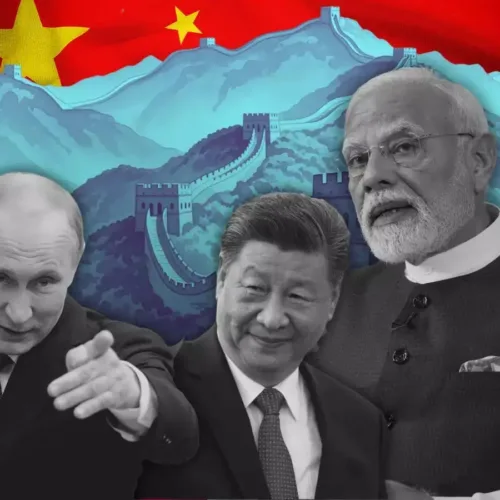
ने पिछले एक दशक में सेंट्रल एशिया में अपनी पकड़ को बेहद मजबूत कर लिया है। बेल्ट एंड रोड इनिशिएटिव के माध्यम से चीन ने न केवल इंफ्रास्ट्रक्चर विकसित किया बल्कि आर्थिक रूप से भी इन देशों को अपने साथ जोड़ लिया। सड़कों, रेल नेटवर्क, पाइपलाइनों और बंदरगाहों के जरिए चीन ने इस क्षेत्र को अपने आर्थिक प्रभाव में समाहित कर लिया है। यह रणनीति केवल व्यापार तक सीमित नहीं है, बल्कि इसके जरिए चीन राजनीतिक और रणनीतिक प्रभाव भी स्थापित कर रहा है।
रूस की घटती पकड़: पारंपरिक प्रभाव क्षेत्र में चुनौती
, जो कभी सेंट्रल एशिया का सबसे बड़ा शक्ति केंद्र था, अब अपनी स्थिति को कमजोर होते हुए देख रहा है। सोवियत संघ के विघटन के बाद भी रूस ने लंबे समय तक इस क्षेत्र में अपनी पकड़ बनाए रखी, लेकिन चीन की आर्थिक ताकत ने धीरे-धीरे उसे पीछे छोड़ना शुरू कर दिया है। रूस के लिए यह स्थिति केवल आर्थिक नुकसान नहीं बल्कि रणनीतिक असंतुलन का संकेत है, जो भविष्य में उसकी वैश्विक भूमिका को प्रभावित कर सकता है।
रूस-चीन संबंध: सहयोग या छुपी प्रतिस्पर्धा?
पहली नजर में रूस और चीन के बीच मजबूत साझेदारी दिखाई देती है, लेकिन इस सहयोग के भीतर प्रतिस्पर्धा की एक गहरी परत छुपी हुई है। चीन का बढ़ता प्रभाव रूस के लिए दीर्घकालिक खतरा बन सकता है, खासकर तब जब यह प्रभाव रूस के सुदूर पूर्वी क्षेत्रों तक पहुंचने लगे। ऐसे में यह सवाल उठता है कि क्या यह साझेदारी स्थायी है या केवल परिस्थितियों का परिणाम। विशेषज्ञ मानते हैं कि आने वाले समय में यह संबंध तनावपूर्ण भी हो सकते हैं।
पाकिस्तान की रणनीति: दो महाशक्तियों के बीच संतुलन का खेल
लगातार और चीन के बीच संतुलन बनाने की कोशिश कर रहा है। एक तरफ वह चीन के साथ सीपीईसी जैसे प्रोजेक्ट्स के जरिए जुड़ा हुआ है, वहीं दूसरी तरफ अमेरिका के साथ भी अपने संबंध बनाए रखना चाहता है। यह रणनीति अल्पकालिक लाभ दे सकती है, लेकिन दीर्घकाल में यह पाकिस्तान के लिए जोखिम भरी साबित हो सकती है, क्योंकि दोनों महाशक्तियों के बीच बढ़ती प्रतिस्पर्धा उसे दबाव में ला सकती है।
भारत की रणनीतिक पहल: आर्मेनिया और INSTC के जरिए संतुलन
ने इस बदलते परिदृश्य में अपनी अलग रणनीति तैयार की है। के साथ बढ़ते संबंध और (INSTC) के जरिए भारत एक वैकल्पिक कनेक्टिविटी मॉडल विकसित कर रहा है। यह पहल भारत को सेंट्रल एशिया और यूरोप तक सीधी पहुंच देती है और चीन के प्रभाव को संतुलित करने में मदद करती है।
रणनीतिक असमंजस: क्या भारत अपनी गति खो रहा है?
हाल के संकेत यह दर्शाते हैं कि भारत की इस रणनीति में कुछ असमंजस पैदा हो रहा है। INSTC से दूरी बनाने की खबरों ने यह सवाल खड़ा किया है कि क्या भारत अपनी दीर्घकालिक योजना को लेकर पूरी तरह स्पष्ट है। यदि यह गति धीमी होती है, तो इसका फायदा चीन जैसे देश उठा सकते हैं, जो पहले से ही इस क्षेत्र में अपनी पकड़ मजबूत कर चुके हैं।
स्टारलिंक का प्रवेश: तकनीकी प्रगति या सुरक्षा का खतरा?
को में पायलट प्रोजेक्ट के रूप में अनुमति मिलने से भारत के डिजिटल क्षेत्र में एक नया अध्याय शुरू हो गया है। यह कदम दूरदराज के इलाकों में इंटरनेट पहुंचाने के लिए महत्वपूर्ण है, लेकिन इसके साथ ही यह राष्ट्रीय सुरक्षा के लिए नई चुनौतियां भी लेकर आता है। विदेशी नियंत्रण वाले नेटवर्क पर निर्भरता भविष्य में जोखिम पैदा कर सकती है।
पराग जैन की चेतावनी: आधुनिक युद्ध का बदलता स्वरूप
रॉ प्रमुख पराग जैन ने आधुनिक युद्ध के बदलते स्वरूप को लेकर गंभीर चेतावनी दी है। युद्ध से यह स्पष्ट हो गया है कि अब युद्ध केवल पारंपरिक हथियारों से नहीं लड़े जाते, बल्कि तकनीक, डेटा और नेटवर्क के जरिए भी लड़े जाते हैं। ड्रोन और सैटेलाइट नेटवर्क का संयोजन युद्ध के मैदान को पूरी तरह बदल रहा है।
ड्रोन और सैटेलाइट का गठजोड़: नई युद्ध रणनीति
आज के समय में कम लागत वाले ड्रोन, जब सैटेलाइट डेटा और आर्टिफिशियल इंटेलिजेंस से जुड़ते हैं, तो वे बेहद खतरनाक हथियार बन जाते हैं। ये ड्रोन लो-एल्टीट्यूड पर उड़ते हुए दुश्मन के ठिकानों पर सटीक हमला कर सकते हैं और पारंपरिक रक्षा प्रणालियों को चकमा दे सकते हैं। यह तकनीक भविष्य के युद्ध की दिशा तय कर रही है।
डिजिटल निर्भरता के खतरे: नियंत्रण और निगरानी का जोखिम
विदेशी सैटेलाइट नेटवर्क पर निर्भरता भारत के लिए गंभीर खतरा बन सकती है। किसी भी संकट के समय सेवा बाधित होना या डेटा का दुरुपयोग राष्ट्रीय सुरक्षा को प्रभावित कर सकता है। यह जोखिम केवल तकनीकी नहीं बल्कि रणनीतिक भी है, क्योंकि यह देश की संप्रभुता को प्रभावित करता है।
डिजिटल संप्रभुता: भारत के लिए अनिवार्य रणनीतिक आवश्यकता
आज के दौर में डिजिटल संप्रभुता राष्ट्रीय सुरक्षा का एक महत्वपूर्ण हिस्सा बन चुकी है। भारत को अपने स्वदेशी सैटेलाइट नेटवर्क और डिजिटल इंफ्रास्ट्रक्चर को मजबूत करना होगा। यह केवल तकनीकी विकास नहीं बल्कि एक रणनीतिक आवश्यकता है, जो देश को भविष्य के खतरों से सुरक्षित रखेगी।
बदलती दुनिया में भारत के सामने रणनीतिक चुनौती
वैश्विक राजनीति तेजी से बदल रही है, जहां कोई भी गठबंधन स्थायी नहीं है। चीन का विस्तार, रूस की चिंता, पाकिस्तान की रणनीति और डिजिटल युद्ध का बढ़ता प्रभाव यह दर्शाता है कि भारत को अपने कदम बेहद सावधानी से उठाने होंगे। आने वाले समय में वही देश सफल होगा, जो अपनी रणनीति में स्पष्टता, निरंतरता और आत्मनिर्भरता बनाए रखेगा।
BY DEFENCE JOURNALIST SAHIL | T.I.N. NETWORK
Central Asia to Cyberspace: India’s Strategic Crossroads Amid China’s Expansion, Russia’s Unease, and the Rising Risks of Digital Dependence
A Shifting Eurasian Chessboard: Central Asia’s Strategic Value and Power Competition
Central Asia today stands at the heart of a silent yet intense geopolitical contest, a region rich in hydrocarbons, rare earth minerals, and strategic transit corridors. Former R&AW Chief aptly described it as a “resource-rich chessboard with limited buyers,” where influence is no longer defined merely by military presence but by economic penetration, infrastructure investments, and long-term connectivity projects. Over the past decade, has methodically entrenched itself as the dominant economic stakeholder through expansive investments, trade linkages, and its ambitious Belt and Road Initiative. This has gradually tilted the regional balance, placing Beijing in a commanding position across key Central Asian economies. However, beneath this apparent cooperation lies an undercurrent of strategic discomfort for , which historically considered Central Asia as its traditional sphere of influence. As Chinese economic power deepens and transitions into strategic leverage, Moscow faces the risk of being edged out of a region it once dominated uncontested.
China’s Expanding Footprint and Russia’s Strategic Anxiety
What appears today as tactical alignment between Moscow and Beijing may not sustain indefinitely. China’s growing appetite for influence is no longer confined to Central Asia but is visibly extending toward the Russian Far East, a region rich in natural resources yet sparsely populated and economically underdeveloped. This evolving dynamic introduces long-term anxieties within Russian strategic circles. While Russia remains militarily powerful, its economic limitations compared to China are becoming increasingly evident. Beijing’s investments, infrastructure dominance, and control over supply chains could gradually transform it from a partner into a competitor, potentially eroding Moscow’s leverage not only in Central Asia but within its own peripheral regions. The geopolitical implication is clear: partnerships driven by necessity today may morph into rivalries tomorrow, especially in a world defined by transactional alliances and shifting power equations.
Pakistan’s Balancing Act: Between Washington and Beijing
Parallel to these developments, continues to navigate a delicate and often unstable balancing act between and China. Islamabad’s strategic recalibration reflects not strength but compulsion, as it attempts to extract benefits from both sides while avoiding complete dependence on either. Its deepening ties with China through projects like the China-Pakistan Economic Corridor have strengthened economic and military cooperation, yet Pakistan remains wary of overreliance. Simultaneously, its periodic engagements with Washington underscore the need to retain strategic flexibility. However, this dual alignment lacks stability and is driven by short-term calculations rather than a coherent long-term vision. In a rapidly evolving geopolitical landscape, such balancing acts are inherently fragile, leaving Pakistan exposed to pressure from both sides.
India’s Emerging Eurasian Strategy: Armenia and the NSTC Vision
Amid this complex geopolitical environment, has been quietly but steadily shaping an alternative strategic axis. Its engagement with and its active push for the (INSTC) represent a long-term vision to establish itself as a key player in Eurasian connectivity. The corridor, linking India to Central Asia, Russia, and Europe via the Caspian Sea, offers a viable alternative to routes dominated by China. Beyond trade, it provides strategic depth by reducing dependence on vulnerable maritime chokepoints and creating new geopolitical partnerships. India’s outreach to Armenia further signals its intent to engage in regions where competing powers are vying for influence, thereby reinforcing its role as a credible and independent stakeholder in Eurasian geopolitics.
Concerns Over Strategic Drift: Is India Losing Momentum?
However, recent concerns suggest that India’s strategic momentum in this direction may be facing uncertainty. Reports indicating a possible distancing from the INSTC framework have raised serious questions about policy coherence and long-term planning. In geopolitics, consistency is as critical as capability, and any perceived withdrawal or slowdown can create vacuums that rival powers are quick to exploit. For India, which has invested diplomatic capital in building alternative connectivity frameworks, a retreat at this stage could weaken its positioning in Central Asia and beyond. The stakes are not merely economic but deeply strategic, as connectivity corridors often translate into influence corridors in the modern geopolitical order.
Starlink’s Entry into India: Connectivity or Strategic Vulnerability?
At the same time, a new dimension of strategic concern is emerging within India’s internal ecosystem. Reports of being allowed pilot-level entry in the northeastern state of mark a significant development in the country’s digital landscape. On the surface, the move addresses a critical need—bridging connectivity gaps in remote and underserved regions through satellite-based internet. However, beneath this technological advancement lies a deeper strategic question: the growing footprint of foreign-controlled digital infrastructure within India. In an era where data is power, control over communication networks directly translates into influence over information flows, security systems, and even operational capabilities during conflict scenarios.
Modern Warfare Redefined: Lessons from Ukraine and the Rise of Network-Centric Combat
Current R&AW Chief has underscored a crucial transformation in modern warfare—one that extends beyond conventional military strength into the domain of data, networks, and real-time intelligence integration. The ongoing conflict involving has demonstrated how low-cost drones, when integrated with satellite networks, can achieve high-impact results. These systems leverage artificial intelligence, real-time satellite feeds, and low-altitude flight paths to bypass traditional air defense mechanisms. The result is a battlefield where speed, precision, and connectivity outweigh sheer firepower. Such technologies democratize warfare, enabling even smaller actors to challenge more powerful adversaries by exploiting network-centric vulnerabilities.
The Hidden Risks of External Satellite Dependence
While satellite-based systems like Starlink offer undeniable advantages in connectivity and operational efficiency, they also introduce significant vulnerabilities. Dependence on externally controlled infrastructure creates the risk of operational denial during critical moments, whether through service disruption, geopolitical pressure, or strategic manipulation. Additionally, concerns around data security, surveillance, and potential backdoor access cannot be ignored. In conflict scenarios, the ability to control, disrupt, or manipulate communication networks can decisively influence outcomes. For a country like India, which faces complex security challenges across multiple fronts, such dependencies could become critical fault lines.
Digital Sovereignty as National Security: India’s Imperative Path Forward
The convergence of geopolitics and technology has fundamentally altered the definition of national security. Control over data pipelines, communication networks, and digital infrastructure is now as important as control over land, sea, and air domains. For India, this necessitates a strong push toward indigenous satellite internet capabilities and self-reliant digital ecosystems. Initiatives aimed at developing domestic alternatives to foreign-controlled systems are not merely economic choices but strategic imperatives. Digital sovereignty ensures that India retains full control over its communication architecture, safeguarding it against external interference and enhancing its resilience in times of crisis.
Conclusion: Navigating a World of Transactional Alliances and Strategic Uncertainty
The evolving global order is increasingly defined by transactional relationships, where alliances are fluid and driven by immediate interests rather than enduring trust. China’s expansion, Russia’s strategic unease, Pakistan’s balancing act, and the rise of network-centric warfare collectively underscore the complexity of the current geopolitical landscape. For India, the challenge lies in maintaining strategic clarity and consistency—whether in advancing connectivity projects like the INSTC or safeguarding its digital ecosystem from external vulnerabilities. As the lines between physical and digital battlefields continue to blur, the choices made today will shape India’s position in the emerging world order. In this high-stakes environment, strategic autonomy—both geopolitical and digital—remains India’s most critical asset.


Add Comment